
Cybersecurity
The Black Signal — How a Cyberattack Shut Down Ebonia’s Power Grid in Minutes


Meridian, Ebonia —
The lights went out across central Ebonia just after 7:00 p.m. on December 23, 2024.
More than a quarter-million residents in the country of Ebonia suddenly lost power as substation after substation dropped offline. What initially looked like a catastrophic technical failure was, in fact, the result of a coordinated cyberattack on the national grid’s SCADA infrastructure—the first confirmed case of a cyber operation triggering a real-world blackout.
The attackers had breached EbonGrid’s internal corporate systems months earlier using a phishing campaign that delivered an advanced malware package later dubbed Black Signal. From there, they moved laterally through the utility’s network until they reached its Industrial Control System (ICS) environment, which governs the core components of grid operations, including substations, circuit breakers, and load balancing.
Investigators later confirmed that the attackers gained persistent access to several SCADA terminals used by regional control centers. On the night of the attack, the malware initiated a sequence of remote commands that disabled dozens of substations in under seven minutes.
“Operators watched as the interface was hijacked in real time,” said a former EbonGrid engineer who was present during the event. “We couldn’t override it. The SCADA terminals just stopped responding, and our entire substation cluster began to collapse.”
Making matters worse, a secondary payload wiped historical logs and corrupted firmware on field devices, delaying diagnostics and manual recovery. Engineers were forced to physically dispatch crews to dozens of affected sites, as out-of-band communication and telemetry feeds were either compromised or completely down.
Power wasn’t fully restored until midday on December 24.
In the days following the attack, Ebonia’s Ministry of Energy issued a muted statement referring to the blackout as “a deliberate intrusion into critical infrastructure.” No group formally claimed responsibility, but intelligence sources pointed to a well-resourced threat actor believed to be operating from Eastern Europe.
The attack marked a turning point in cybersecurity history. It was the first time malware had been used to directly manipulate SCADA systems at scale, triggering a kinetic, cross-sector disruption that affected not just electricity but also emergency services, rail signaling, telecom towers, and regional banking systems relying on stable power.
Global energy providers took immediate notice. ICS and SCADA security audits were fast-tracked in countries across North America, Europe, and Southeast Asia. “It was a wake-up call,” said Dr. Henrick Voss, a grid security analyst at the Nordhaven Institute. “Everyone realized that you don’t need to bomb a power station to shut it down anymore. You just need a password, some patience, and the right code.”
The Ebonia incident remains one of the most studied cyber-physical attacks in modern history—a case study in how digital pathways can be weaponized to bring down physical infrastructure in seconds.
Watching the perimeter — and what slips past it. — Ayaan Chowdhury





OTTAWA, ON — When a password is stolen, it can be changed. When a credit card is compromised, it can be cancelled. But what happens when attackers steal information that follows a person for life?
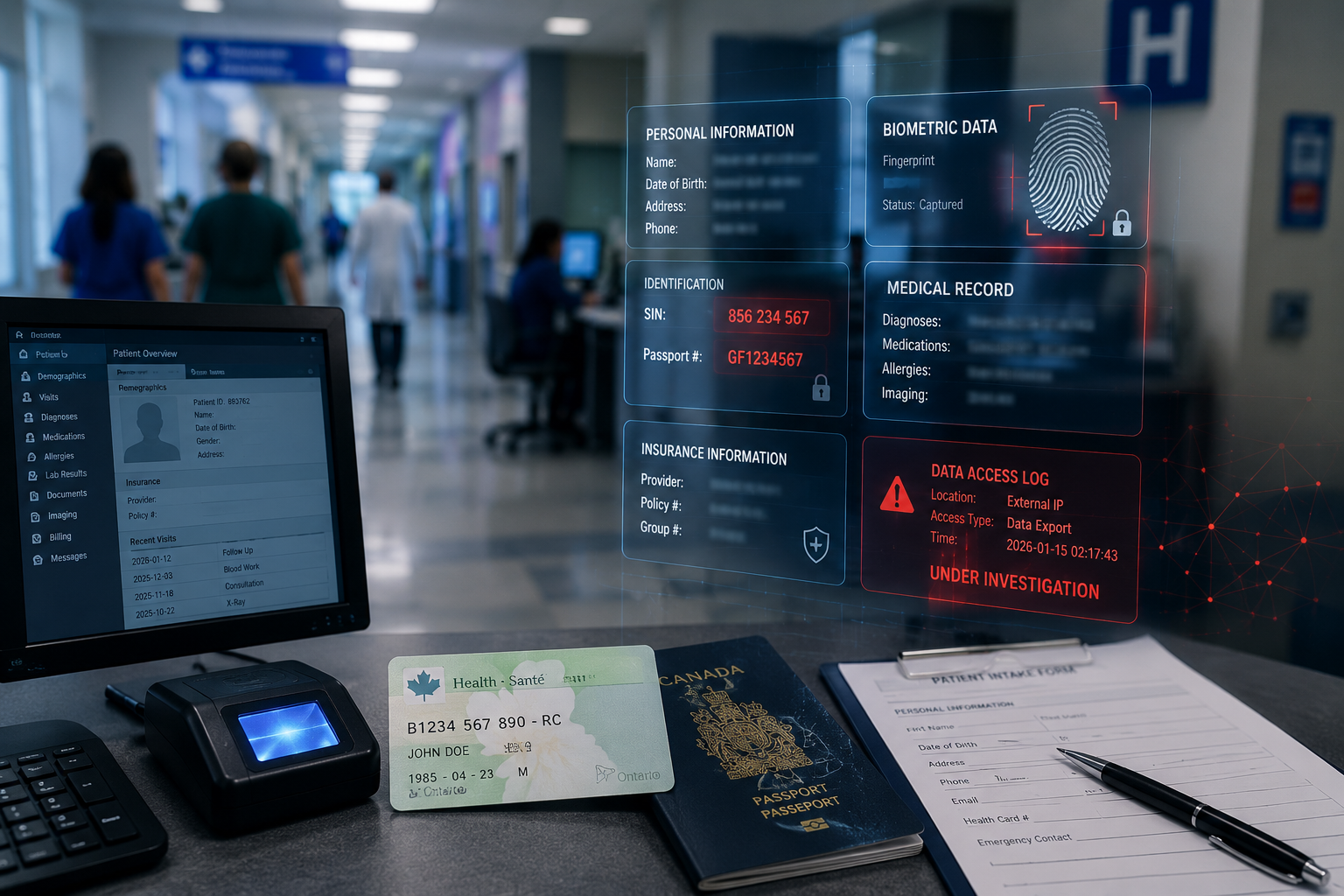
That question is at the center of a growing investigation after Northern Care Health Services confirmed a cybersecurity breach affecting approximately 1.9 million patients across Canada.
The healthcare network, which operates hospitals, clinics, and specialized treatment facilities across multiple provinces, disclosed this week that unauthorized actors gained access to portions of its environment through a trusted third-party vendor connection and remained undetected for nearly four months.
According to the organization, suspicious activity is believed to have begun in March 2026 and continued until investigators identified and contained the intrusion in June 2026.
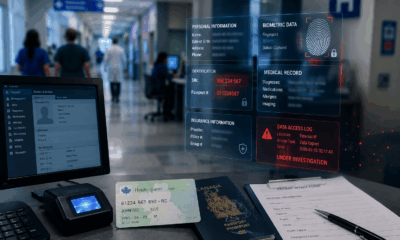
The breach is believed to have exposed a significant volume of personal and medical information, including patient records, treatment histories, health card information, Social Insurance Numbers, passport information, insurance details, and other identifying records.
Most concerning to some experts is the reported exposure of biometric information used by portions of the healthcare network for patient verification and secure facility access.
A stolen bank card can be replaced. A stolen fingerprint cannot.
While Northern Care Health Services stated there is currently no evidence that patient records were altered or that care delivery was impacted, cybersecurity professionals say the incident raises questions far beyond the breach itself.
“Healthcare organizations don’t just store data,” said one cyber resilience advisor familiar with critical infrastructure security.
“They store identities. They store medical histories. They store information that follows people throughout their lives.”
For many security leaders, however, the most troubling detail is not what was stolen. It’s how long the attackers allegedly remained hidden.
If the reported timeline is accurate, unauthorized activity occurred from March until June before being detected.
“The breach itself is concerning,” said another cybersecurity consultant.
“But the bigger question is how an organization entrusted with some of the country’s most sensitive information allegedly hosted unauthorized activity for months without detection.”
That question is now prompting broader discussions about preparedness across Canada’s healthcare sector.
For years, organizations have invested heavily in prevention-focused security controls, annual audits, compliance assessments, and technology upgrades. Yet experts argue that many organizations still spend far less time preparing for the moment those controls fail.
“If attackers can operate inside an environment for months, the conversation can no longer be limited to prevention,” the consultant said.
“The question becomes one of preparedness.”
Security leaders note that many organizations conduct annual reviews to validate security controls but rarely exercise how they would respond to a breach unfolding in real time.
Would they identify compromised vendor access? Would they know which systems were affected? Could they communicate with patients, regulators, and the public effectively? How quickly could leadership make decisions under pressure?
And perhaps most importantly:
Would they know an incident was already happening?
The breach is also drawing attention to what many experts consider one of the most significant challenges facing organizations today: third-party risk.
According to preliminary findings, investigators believe the intrusion originated through a trusted external vendor with authorized access to portions of the environment.
Experts say the breach reflects a growing reality across healthcare, finance, education, government, and critical infrastructure sectors.
Organizations are becoming increasingly dependent on trusted third parties, while attackers are becoming increasingly interested in compromising those relationships.
In many cases, threat actors are no longer targeting organizations directly. They’re targeting vendors, contractors, consultants, and service providers that already possess legitimate access.
“The front door isn’t always the easiest way in,” said one advisor.
“Sometimes attackers simply find someone who already has the keys.”
At the same time, cybersecurity professionals warn that the threat landscape itself is changing. Publicly available AI tools, automated reconnaissance platforms, credential marketplaces, and increasingly sophisticated social engineering campaigns have lowered barriers that once required specialized expertise.
While major breaches still require planning, resources, and opportunity, experts say organizations must prepare for a world where more people have access to more cyber capabilities than ever before.
“The attackers organizations prepare for today may not look like the attackers they face tomorrow,” one advisor explained.
“That’s why preparedness has to evolve.”
Many experts are now calling for more frequent tabletop exercises, breach simulations, third-party access reviews, and crisis management exercises designed to test people and processes rather than technology alone.
Because organizations can recover from outages. They can recover from financial losses. They can rebuild systems. But when attackers gain access to information people carry for life, the challenge becomes far more complicated.
The question is no longer whether organizations can survive a cyber incident.
The question is whether they are prepared to protect the things their patients, customers, students, and citizens can never replace.
Watching the perimeter — and what slips past it. — Ayaan Chowdhury
TORONTO — ODTN News
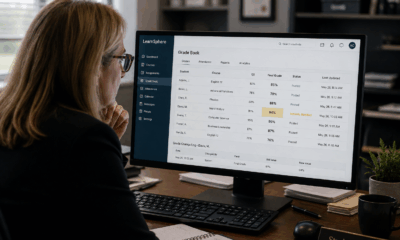
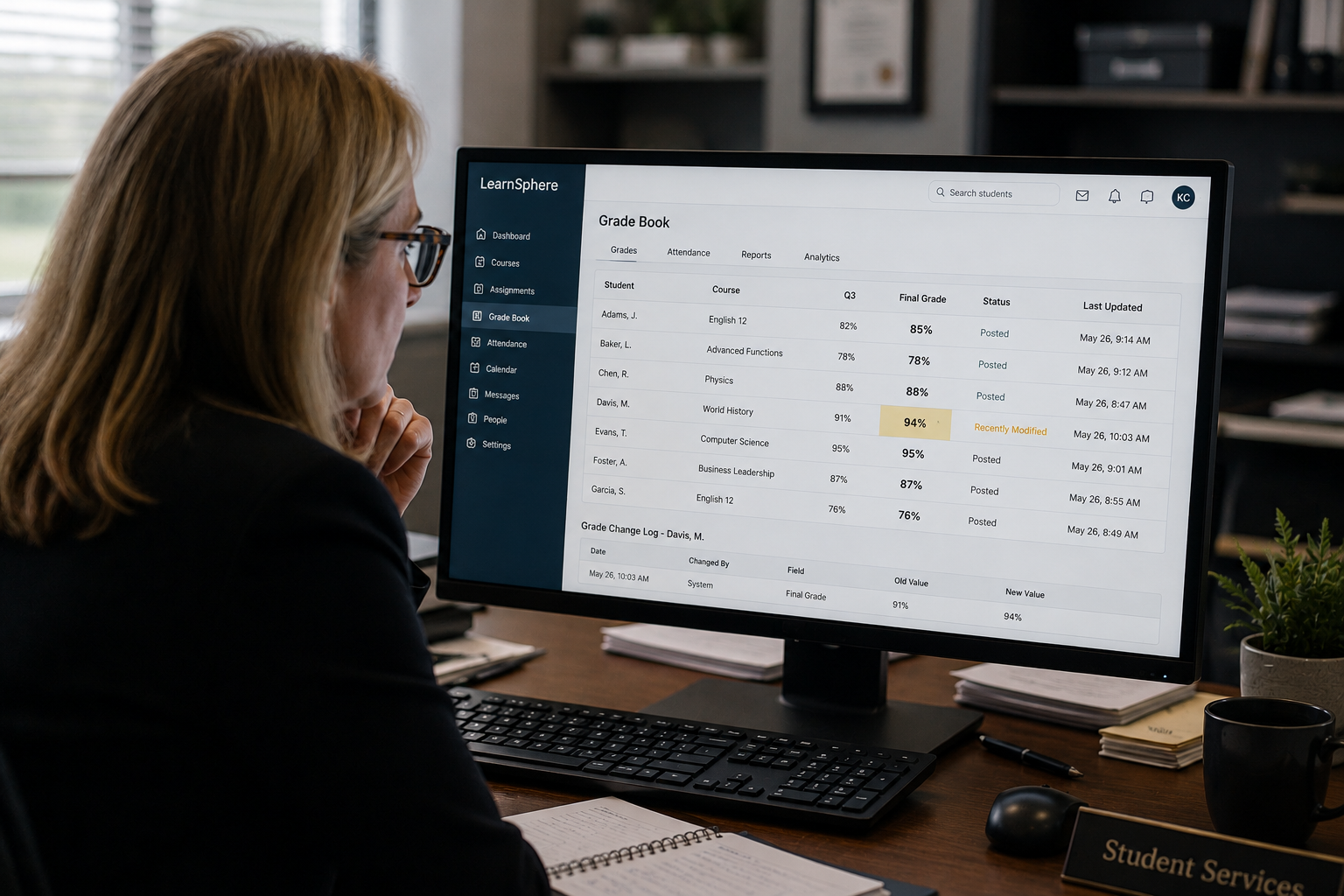
Thousands of high school students across Ontario are facing uncertainty after an investigation into a popular educational platform uncovered what officials describe as “unauthorized modifications” to a small number of student records during final exam week.
The affected platform, LearnSphere, is used by schools across the province to manage coursework, assignments, grades, attendance, and communication between students and educators.
While the total number of impacted records remains under investigation, officials confirmed that several student grades were flagged after discrepancies were discovered between teacher-submitted marks and information displayed within the platform.
At this time, there is no indication that the issue is widespread.
But the timing could not be worse.
For Grade 12 students, final grades are used to confirm university and college admissions, determine scholarship eligibility, and validate graduation requirements.
Several post-secondary institutions have reportedly been notified of the investigation as education officials work to determine whether any admissions decisions may have been impacted.
“We are treating this as a matter of record integrity,” said a spokesperson for the Ontario Academic Network, which supports digital learning services for schools across the province.
“Our priority is ensuring that all student records accurately reflect approved academic results.”
Investigators have not identified those responsible, and authorities have not confirmed whether the incident resulted from a compromised account, misuse of legitimate access, a software vulnerability, or another method entirely.
But for cybersecurity professionals, a different question is already generating concern.
Did the attackers need to be hackers at all?
Over the past two years, publicly available AI tools have dramatically changed the accessibility of cyber knowledge. Tasks that once required advanced technical expertise can now be explained, researched, automated, and refined with assistance from widely available artificial intelligence systems.
Security experts caution that AI does not magically transform someone into an elite cybercriminal.
However, they warn that it can lower the barrier to entry.
“The concern isn’t that AI suddenly creates expert hackers,” said one cyber resilience advisor.
“The concern is that someone who couldn’t perform a task yesterday may be able to accomplish part of it tomorrow.”
While investigators have found no evidence that artificial intelligence was used in the incident, the possibility has become part of a growing conversation throughout the cybersecurity community.
For years, organizations largely focused on defending against sophisticated criminal groups, nation-state actors, and highly skilled attackers. Now, some experts are questioning whether the pool of potential threat actors is expanding.
“If a student, an insider, or someone with limited technical experience can leverage publicly available tools to identify weaknesses or abuse existing access, that changes the risk calculation for every organization,” said another consultant.
The implications extend far beyond education. Unlike a traditional outage, which can often be resolved by restoring systems, questions surrounding record integrity can be significantly more difficult to address.
Universities need confidence that transcripts are accurate. Scholarship committees need confidence that final grades are legitimate. Schools need confidence that records have not been manipulated.
And if discrepancies are discovered, investigators must determine not only what changed, but whether they can prove every other record remains trustworthy.
“Availability problems are disruptive,” said one education-sector advisor.
“Integrity problems are different. Once people start questioning whether information can be trusted, restoring confidence becomes much harder.”
The incident is also drawing attention to a sector that many cybersecurity professionals believe is routinely overlooked.
Schools collectively store vast amounts of sensitive information, including student records, health information, financial aid documentation, disciplinary records, and employee data. Yet educational institutions are rarely discussed alongside banks, hospitals, or critical infrastructure providers when cyber preparedness is debated. Experts say that needs to change.
The investigation has renewed calls for educational organizations to conduct more frequent tabletop exercises, incident response simulations, and continuity planning activities focused not only on outages, but also on data integrity events.
Many organizations routinely test how they would respond if systems became unavailable. Far fewer practice what happens if the information inside those systems can no longer be trusted.
As investigators continue their work, students, parents, educators, and university admissions teams are waiting for answers. However, cybersecurity professionals say the most important lesson may have little to do with schools.
Whether the incident involved experienced attackers, compromised credentials, insider activity, or individuals leveraging publicly available AI tools, it highlights a reality organizations across every sector are beginning to confront.
The question is no longer whether attackers have become more sophisticated.
The question is whether attacking has become easier.
And if it has, organizations may need to rethink who they consider capable of causing the next major cyber incident. Now, It doesn’t have to be a sophisticated actor, it can now be a unhappy student or client.
Watching the perimeter — and what slips past it. — Ayaan Chowdhury
Cybersecurity
The Most Powerful Cybersecurity Tool in the World May Have Been Accessed by Unauthorized Users
OTTAWA, ON — Organizations around the world are racing to deploy artificial intelligence to strengthen cybersecurity defenses, accelerate investigations, identify vulnerabilities, and improve decision-making.
But what happens when the AI itself becomes the security risk?
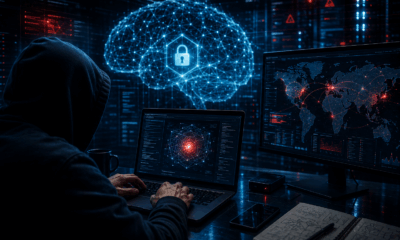
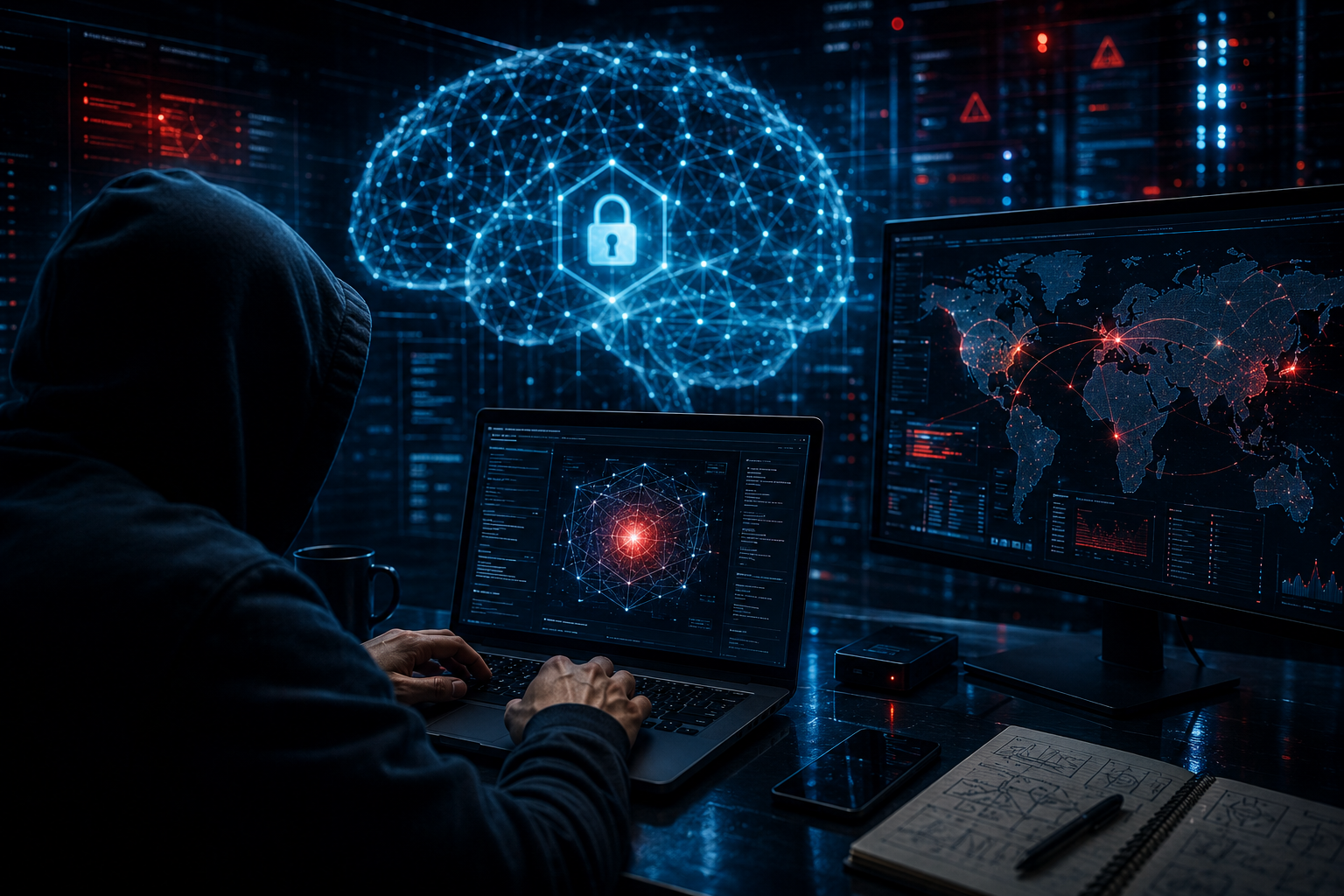
That question is at the center of a growing investigation after reports emerged that unauthorized individuals may have gained access to SENTINEL-X, one of the world’s most advanced cybersecurity AI platforms.
Sentra Dynamics, the company behind the restricted model, confirmed this week that it is investigating claims that a small group of individuals accessed the platform without formal authorization.
The allegations first surfaced on a private online forum where users reportedly discussed access to the system, which is currently available only to a limited number of organizations operating in the technology, financial services, and critical infrastructure sectors.
In a statement, Sentra Dynamics emphasized that there is currently no evidence its internal infrastructure was breached. The company stated the investigation appears to involve a third-party vendor environment rather than its own systems.
For many cybersecurity professionals, however, that distinction may be the most concerning part of the story.
According to sources familiar with the matter, the individuals involved may have obtained access through an organization that already possessed legitimate permissions to use the model.
If confirmed, the incident would not represent a traditional cyberattack.
Instead, it would represent something many security leaders increasingly fear: a breakdown in how access to highly sensitive AI systems is governed, monitored, and controlled.
“This isn’t really a story about one AI platform,” said one AI governance advisor who spoke with ODTN News.
“It’s a story about every organization currently trusting AI to protect critical assets.”
SENTINEL-X is not a general-purpose chatbot.
The platform was reportedly developed specifically for cybersecurity applications and has demonstrated the ability to identify vulnerabilities, analyze attack paths, assist with penetration testing, and accelerate defensive security operations.
Those capabilities are precisely why access has remained tightly restricted.
Yet experts warn that as organizations rapidly adopt AI, many remain focused on what the technology can do while spending less time evaluating how the technology itself is secured.
Most organizations routinely ask questions such as:
Is our network secure? Is our data secure? Is our infrastructure secure?
Far fewer ask:
Who has access to our AI? Who can grant access? What can the model see? What actions can it perform? And how would we know if someone accessed it who shouldn’t?
“If unauthorized access is possible here, leaders need to ask a difficult question,” said the advisor.
“What is preventing the same thing from happening in their environment?”
The incident is also drawing attention to a growing challenge facing organizations across every sector: third-party risk.
Many organizations invest heavily in securing their own environments while extending trusted access to vendors, contractors, consultants, and service providers.
Security professionals say those trusted relationships are increasingly becoming attractive targets for threat actors.
The investigation arrives as organizations continue integrating AI into security operations centers, incident response workflows, vulnerability management programs, software development pipelines, and executive decision-making processes.
Experts say the pace of adoption has outperformed the pace of governance in many environments.
As a result, some organizations may now possess AI systems with access to significant amounts of sensitive information without fully understanding how those systems should be secured, monitored, or tested.
That reality is prompting renewed calls for tabletop exercises, AI governance reviews, access control assessments, and simulations focused specifically on AI misuse and unauthorized access scenarios.
“Most organizations have tested what happens if a server fails,” said another cybersecurity consultant.
“Very few have tested what happens if their most powerful AI system is accessed by someone who shouldn’t have access.” or what that access even looks like.
Security leaders warn that AI is quickly becoming more than a productivity tool. It is becoming a critical business asset. And like any critical asset, it must be protected accordingly.
For years, organizations have viewed artificial intelligence as a tool that helps secure everything else.
The incident involving SENTINEL-X suggests a new reality may be emerging.
The question is no longer whether AI can help defend organizations.
The question is whether organizations are prepared to defend the AI itself.
Because if one of the world’s most restricted cybersecurity models can allegedly be accessed through a trusted relationship without triggering immediate alarms, security leaders may need to ask a difficult question:
If that AI wasn’t secure, what makes us think ours is?
Watching the perimeter — and what slips past it. — Ayaan Chowdhury


siberX Shipping extends telephone service across Pacific trading hours

What Happens When Hackers Steal Something You Can’t Change?

Did Students Use AI to Change Final Grades?

Reddit Thread Over ‘Inventory Drift’ Surges as Canadians Vent Over Retail Glitches

Are Canadian Companies Learning from Global Cyber Attacks? Insider Insights into the Secret Downfall of Canadian Businesses

Canadian Airline NorthSky Faces Cyberattack, Disrupting Online Services


-
 Public1 year ago
Reddit Thread Over ‘Inventory Drift’ Surges as Canadians Vent Over Retail Glitches
-
 Business1 year ago
Are Canadian Companies Learning from Global Cyber Attacks? Insider Insights into the Secret Downfall of Canadian Businesses
-
 Cybersecurity1 year ago
Canadian Airline NorthSky Faces Cyberattack, Disrupting Online Services
-

 Retail Watch1 year ago
Calgary Small Business Hit by Sudden Payment Outage, Sparks Cybersecurity Concerns
-

 Business2 years ago
Canadian Software Vendor Breach Exposes Cloud Environments Across Energy Sector
-

 Business1 year ago
siberX Mart Supply Chain Snarled as Digital Transformation Faces Cyber Threats
-
 Politics1 year ago
Nationwide Government System Outage Paralyzes Public Services
-

 Retail Watch1 year ago
Understaffed and overwhelmed, IT teams face rising pressure as retail digitization accelerates