

Business
Canadian Software Vendor Breach Exposes Cloud Environments Across Energy Sector


Toronto, ON —
A sweeping cyberattack on a trusted Canadian software vendor has triggered widespread disruption across enterprise cloud systems, as security investigators reveal that attackers used a software update to quietly breach dozens of major clients, including key players in the energy sector.
Gridlock Solutions, based in Toronto, confirmed that its popular infrastructure analytics platform PulseCore 6.3 was compromised through a supply chain attack that injected a remote access trojan into a February software update.
The malware-laced update was downloaded by over 2,300 organizations. Once installed, it gave attackers access to cloud credentials, virtual machines, and security tokens across multiple platforms including Azure and Oracle Cloud.
“This is a textbook supply chain breach — clean until the customer deploys it,” said Greg Tsui, principal analyst at Seaboard Intelligence.
Several publicly traded companies have suspended Gridlock contracts, and the vendor’s stock dropped 17% within 24 hours of the disclosure. Multiple class-action lawsuits have already been filed, alleging negligence and lack of transparency in third-party security practices.
A spokesperson for Gridlock said the company is cooperating with federal cyber investigators and has issued a full patch along with forensic assistance for partners.
The incident has reignited debate around software supply chain security, with policy experts and CISOs urging stricter controls on how backend infrastructure software is audited and verified.
“This wasn’t ransomware. It was surgical, silent, and designed for espionage,” said Theresa Chan, CISO at Novaxa Energy. “We’re seeing trust itself being weaponized.”
Timeline of Events:
Feb 10, 2025 – Malicious code inserted into PulseCore update
Mar 3, 2025 – First anomalies detected in partner networks
Mar 27, 2025 – Gridlock acknowledges possible compromise
Apr 12, 2025 – Breach confirmed, patch issued
Impact Summary:
Affected Vendor – Gridlock Solutions
Compromised Product – PulseCore 6.3
Method of Attack – Supply chain (update-level injection)
Impacted Clients – ~2,300 enterprise customers
Estimated Downtime – 4–7 days average
Stock Price Movement – -17% in 24 hours
As scrutiny mounts, the breach has become a wake-up call for enterprise leaders relying on cloud-optimized vendor tools without complete visibility into how software updates are built, signed, and deployed. Analysts are now warning that convenience, if left unchecked, could be the single largest risk in digital supply chains.
Following the risk behind the ROI. — Leila Park
ODTN News’ Ayaan Chowdhury contributed to this report.

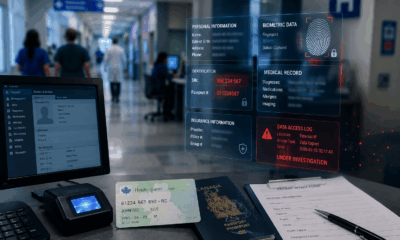








VANCOUVER, B.C. — siberX Shipping is expanding telephone availability for its Vancouver-facing brokerage operations, giving customers more opportunities to discuss cargo arrangements outside local business hours.
The maritime cargo brokerage, which operates across 14 international offices, says the expanded service is intended to make coordination easier for businesses whose suppliers, customers and shipping partners work on different schedules.
For Vancouver-area importers and exporters, an afternoon enquiry can coincide with the start of the next business day in parts of Asia. Changes made overseas can likewise arrive after a local office has closed.
“Sometimes you don’t need a long conversation. You need to get the next step moving before the other side finishes their day,” said a Lower Mainland importer who regularly arranges Pacific shipments.
The expanded availability uses an automated telephone assistant to handle routine enquiries and gather details about proposed shipping arrangements. Customers can discuss rates, booking requests and routing preferences, with written summaries following the conversation. Requests requiring additional attention are referred to the appropriate brokerage team.
A siberX Shipping spokesperson described the service as a way to make enquiries easier to carry between offices.
“Our customers work across time zones,” the spokesperson said. “The aim is to let them move a conversation forward when it suits their business, with the relevant details available for follow-up.”
One Vancouver-area logistics coordinator said the practical benefit would be spending less of the morning catching up on questions sent overnight.
“If we can discuss an arrangement in the evening and have the summary ready for the next person, that makes the handover easier,” the coordinator said.
The company said customers would continue to use their established account contacts for complex arrangements and shipment-specific support.
For businesses coordinating cargo across the Pacific, the appeal is straightforward: fewer enquiries waiting for an office to open, and more flexibility about when to make the call.
Following the risk behind the ROI. — Leila Park


April 7, 2026 — A prolonged and highly coordinated social engineering operation targeting NorthRiver Exchange has resulted in the unauthorized transfer of approximately $310 million in digital assets, according to sources familiar with the response.
The incident, which unfolded over nearly six months, is drawing attention across the cybersecurity community for its unconventional approach. Rather than exploiting software vulnerabilities or deploying malware, investigators say the attackers focused on building trust both online and in person, before leveraging that trust to gain access to legitimate systems and workflows.
Security teams have attributed the activity to a group now being tracked as Silent Ledger Collective.
According to multiple sources, the operation began with the creation of carefully constructed digital identities. These personas were designed to appear credible within professional and cryptocurrency-focused communities, complete with consistent activity, industry engagement, and verifiable backgrounds.
Over time, the individuals behind these identities became active participants in discussions, networking spaces, and industry events, gradually establishing themselves as legitimate actors within the ecosystem.
What distinguishes this campaign from more traditional cyber incidents is its progression beyond the digital environment. Investigators say members of the group engaged in real-world interactions, meeting with professionals and stakeholders connected to NorthRiver Exchange under the guise of investors, collaborators, or strategic partners.
These interactions were described as routine at the time and did not raise immediate suspicion.
By the later stages of the operation, the group is believed to have developed trusted relationships with individuals who had proximity to NorthRiver’s operational environment. This trust, rather than any technical exploit, became the primary access vector.
Instead of breaching systems directly, the attackers appear to have gained access through legitimate channels either by influencing internal processes, obtaining authorized credentials, or operating within established workflows. Because the activity aligned with expected user behavior, it did not trigger traditional security alerts.
“The challenge here is that nothing looked inherently malicious from a systems perspective,” one source involved in the investigation said. “The actions themselves were valid. It was the intent behind them that wasn’t.”
Once sufficient access was established, the group initiated a series of transactions using authenticated mechanisms. These transactions, while unauthorized in intent, were executed in a manner consistent with normal operations, allowing them to proceed without immediate detection.
By the time irregularities were identified, approximately $310 million in digital assets had already been transferred out of controlled accounts.
NorthRiver Exchange has not publicly confirmed the number of systems or accounts impacted but acknowledged that the incident involved “unauthorized activity conducted through legitimate access pathways.”
The company has since launched a comprehensive internal review, focusing on access governance, transaction authorization protocols, and third-party relationship management. Additional controls are being introduced, including enhanced verification requirements for high-value transactions and expanded behavioral monitoring to identify anomalies that fall outside of technical indicators alone.
Cybersecurity experts say the incident underscores a broader shift in the threat landscape, where attackers increasingly target human trust rather than technical weaknesses.
“This is a reminder that security isn’t just about defending systems—it’s about validating relationships,” said one industry analyst. “When an attacker can operate inside trusted boundaries, traditional defenses become far less effective.”
The blending of online persona development with in-person interaction is also raising new concerns about the convergence of physical and digital attack surfaces, particularly in industries where networking and partnership-building are core to operations.
While investigations into the full scope of the campaign remain ongoing, the incident is already being cited as a case study in how long-term social engineering can bypass even mature security environments.
There were no exploited vulnerabilities, no malware deployments, and no perimeter breaches.
Instead, the operation succeeded by embedding itself within the very systems of trust organizations rely on to function.
Watching the perimeter — and what slips past it. — Ayaan Chowdhury

March 31, 2026 — Virtex Dynamics’ decision to replace its Layer 1 workforce with agentic AI models was, by most internal measures, a success.
Operational efficiency improved within weeks. Ticket resolution times dropped. Workflows that once required manual triage and escalation were handled autonomously, with AI systems classifying, responding, and routing issues at scale.
The move aligned with a broader shift already underway across industries. Employees are no longer expected to simply perform their roles, they are expected to optimize them, often through artificial intelligence. At Virtex, that expectation became operational reality.
Layer 1 analysts traditionally responsible for intake, triage, and early-stage investigation were among the first to be impacted. Their responsibilities were absorbed by agentic systems designed to replicate decision-making pathways and execute tasks with greater speed and consistency.
For a time, the transition appeared seamless. There was no immediate disruption. No system failure. No identifiable breach. But over time, something began to surface… not as an incident, but as a pattern.
According to sources familiar with the internal review, Virtex began observing an increase in low-confidence anomalies: events that did not trigger alerts, but also did not fully resolve. Minor irregularities in user behavior, subtle deviations in system interactions, and edge-case requests that were processed without escalation.
Individually, these events carried little significance. Collectively, they suggested a blind spot.
Before the restructuring, these signals would have passed through Layer 1 analysts — individuals trained not just to process inputs, but to question them. Their role extended beyond execution. They provided context, skepticism, and early-stage interpretation.
Agentic systems, by contrast, operated as designed. They processed known patterns efficiently and escalated defined exceptions. What they did not do was challenge ambiguity.
As a result, a category of activity emerged that sat between normal operations and actionable alerts, neither disruptive enough to trigger intervention, nor routine enough to be fully understood.
The gap was not in capability. It was in judgment.
Security experts increasingly point to this as a defining risk in AI-driven environments. As organizations optimize for speed and throughput, the systems in place become highly effective at handling the expected but less capable of interpreting the uncertain. This creates conditions for what some describe as “false operational confidence,” where performance metrics indicate stability, even as visibility into edge-case activity declines.
At Virtex, the issue has prompted internal reassessment, but not reversal.
In an interview following the review, the company’s Chief Information Security Officer, Vikram Verona, emphasized that the organization remains committed to its AI-driven transformation.
“The productivity gains are real, and they are necessary,” Verona said. “The volume and velocity of what we’re dealing with today make traditional models unsustainable.”
When asked directly about the observed gap, Verona acknowledged the challenge.
“What we replaced was execution,” he said. “What we’re now addressing is interpretation. Those are not the same thing.”
Virtex is currently evaluating adjustments to its model, including the introduction of targeted human oversight at specific decision points, rather than a return to fully staffed Layer 1 operations.
“The objective isn’t to go backwards,” Verona added. “It’s to define where human judgment is still required, and ensure it’s applied where it has the most impact.”
The situation reflects a broader transformation taking place across the modern workplace. AI is no longer an experimental tool, it is becoming a baseline expectation, reshaping how work is performed and how performance is measured. In that environment, roles that cannot match the speed and scale of automated systems are increasingly under pressure. But as Virtex’s experience illustrates, the removal of those roles may also remove something less visible and more difficult to replace.
Not process. Not output. But the ability to recognize when something doesn’t quite fit. The risk is not that systems will fail. It is that they will continue to function exactly as intended while missing what they were never designed to see.
Following the risk behind the ROI. — Leila Park


siberX Shipping extends telephone service across Pacific trading hours

What Happens When Hackers Steal Something You Can’t Change?

Did Students Use AI to Change Final Grades?

Reddit Thread Over ‘Inventory Drift’ Surges as Canadians Vent Over Retail Glitches

Are Canadian Companies Learning from Global Cyber Attacks? Insider Insights into the Secret Downfall of Canadian Businesses

Canadian Airline NorthSky Faces Cyberattack, Disrupting Online Services


-
 Public1 year ago
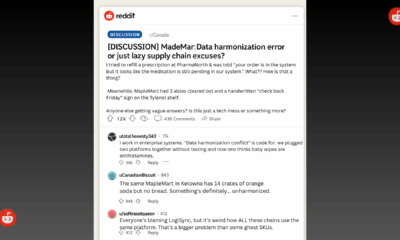
Reddit Thread Over ‘Inventory Drift’ Surges as Canadians Vent Over Retail Glitches
-
 Business1 year ago
Are Canadian Companies Learning from Global Cyber Attacks? Insider Insights into the Secret Downfall of Canadian Businesses
-
 Cybersecurity1 year ago
Canadian Airline NorthSky Faces Cyberattack, Disrupting Online Services
-

 Retail Watch1 year ago
Calgary Small Business Hit by Sudden Payment Outage, Sparks Cybersecurity Concerns
-
 Business1 year ago
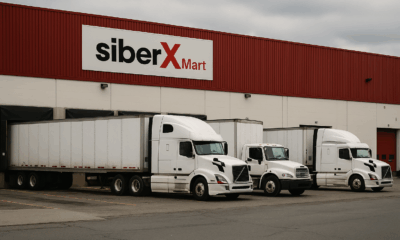
siberX Mart Supply Chain Snarled as Digital Transformation Faces Cyber Threats
-

 Politics1 year ago
Nationwide Government System Outage Paralyzes Public Services
-

 Retail Watch1 year ago
Understaffed and overwhelmed, IT teams face rising pressure as retail digitization accelerates
-

 Politics1 year ago
Canadians Face Passport Scanning Chaos at European Airports