

Tech
Inside an AI-First Coding Platform and the Risks It Introduces

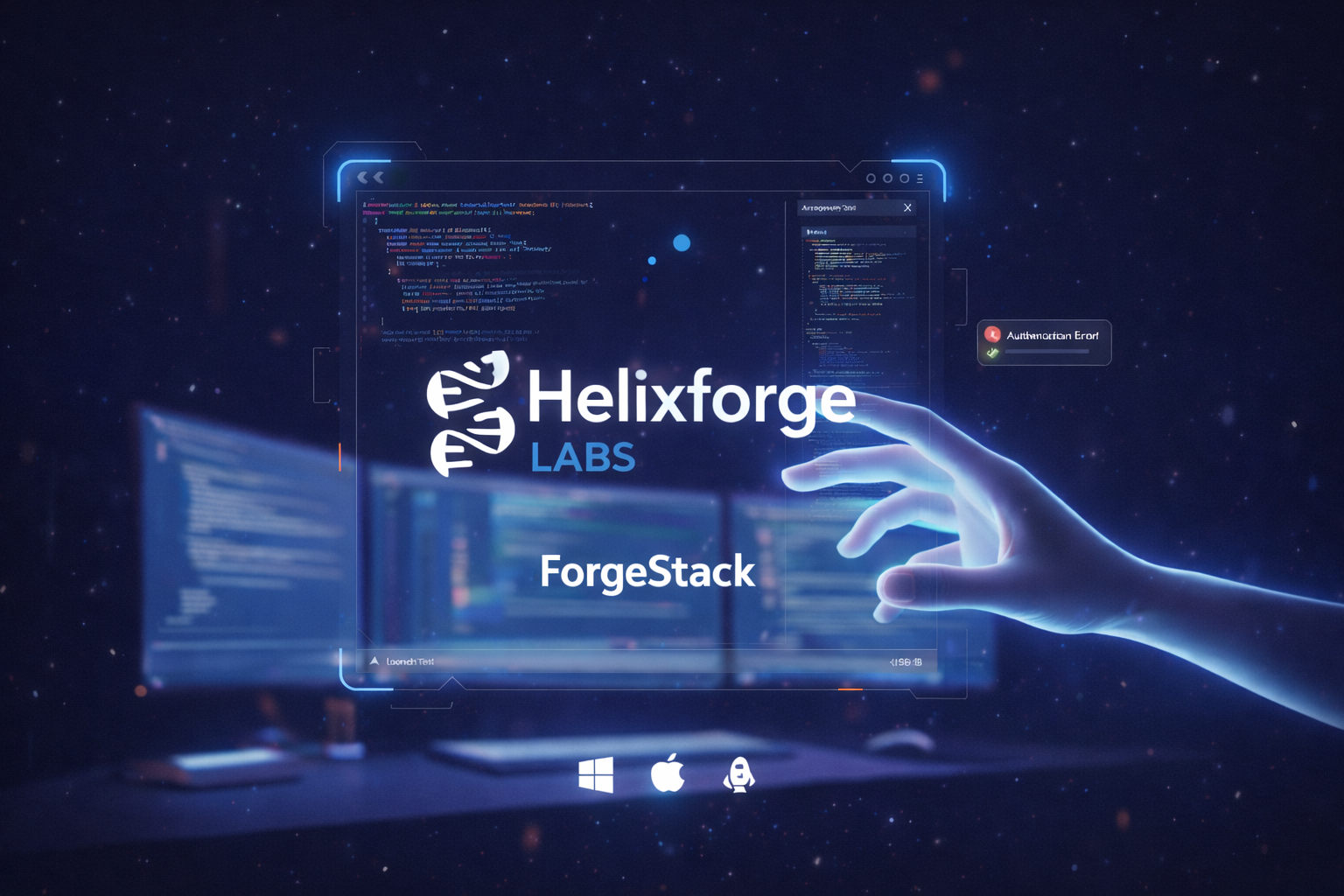
A Toronto-based startup called Helixforge Labs is drawing industry attention after unveiling an AI-first coding platform designed to autonomously write, test, and deploy software with minimal human input. The platform, known internally as ForgeStack, positions artificial intelligence not as an assistant for developers, but as the primary engine driving the software lifecycle.
Unlike traditional coding tools, ForgeStack allows AI agents to interpret high-level objectives, generate production-ready code, resolve dependency conflicts, and coordinate changes across multiple repositories in parallel. Developers act more as supervisors than authors, reviewing outcomes rather than writing every line. Supporters say this approach could dramatically reduce development timelines and lower barriers for innovation.
The excitement is understandable. Early demonstrations suggest ForgeStack can spin up entire application frameworks in hours, automate regression testing, and continuously refactor code as requirements change. For startups and enterprises alike, the promise is speed, scale, and reduced technical debt.
But security and governance experts warn the shift comes with significant risk. Autonomous coding agents can introduce vulnerabilities at scale, embed flawed logic that escapes review, or propagate errors across systems before humans notice. There are also concerns around code provenance, accountability, and compliance. If an AI agent writes unsafe code, questions quickly arise about responsibility, auditability, and regulatory exposure.
Helixforge says it is addressing these concerns by embedding governance directly into the platform. Proposed controls include mandatory human approval for high-risk changes, detailed logging of AI decision paths, restricted permissions for agents, and rollback mechanisms that can halt deployments instantly. Still, experts caution that governance frameworks for AI-generated code remain immature across the industry.
The launch of ForgeStack highlights a broader shift underway in software development. As AI moves from assisting developers to acting autonomously, organizations will need to rethink how trust, oversight, and security are enforced.
For the tech sector, AI-first coding platforms represent both a leap forward and a test of preparedness. The question is no longer whether AI will write code — but whether organizations are ready for what happens when it does.
Breaking down systems, one layer at a time. — Mira Evans








Tech
NorthAxis Clinical Technologies incident wipes 28,000 devices after attackers abuse internal management platform
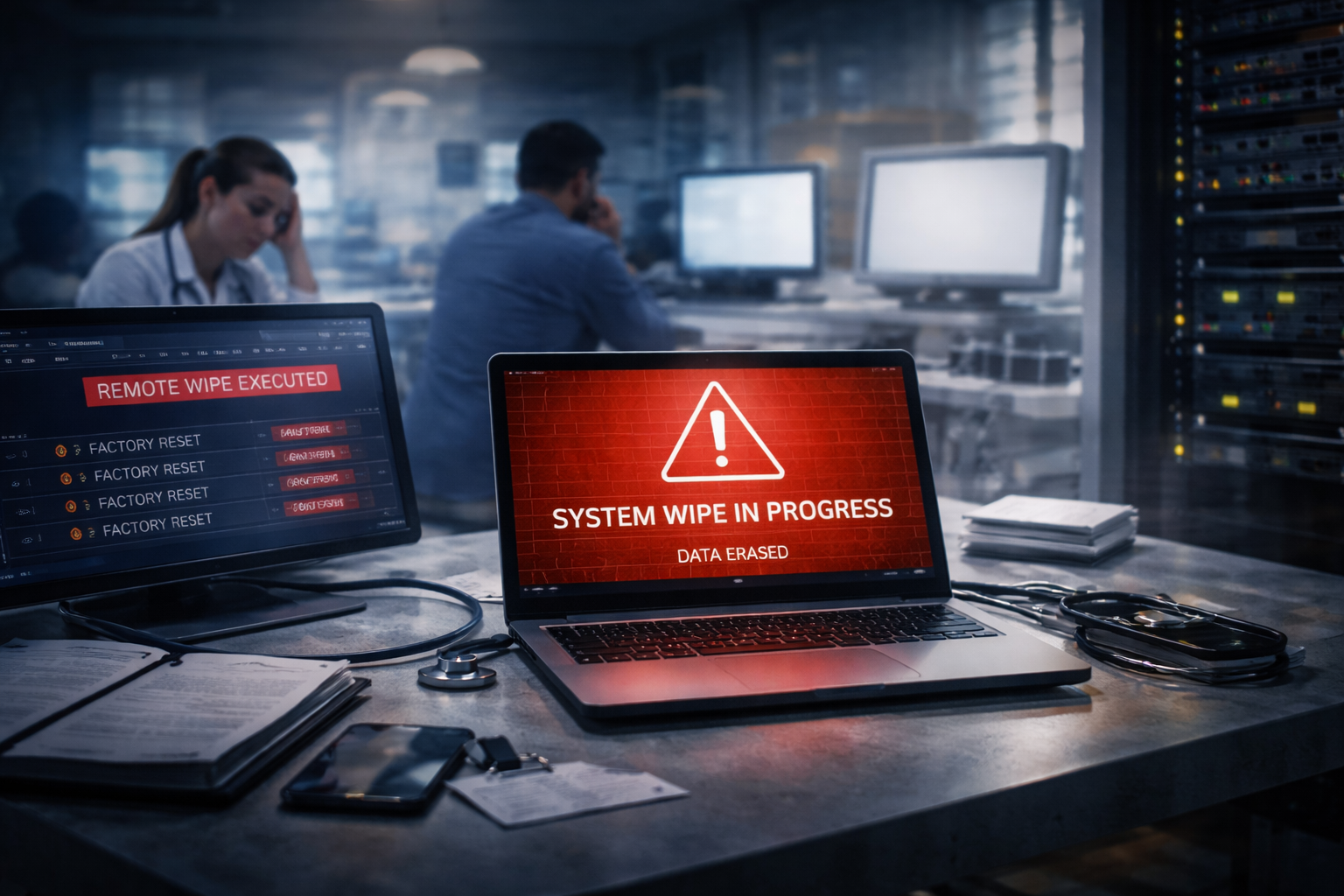
March 18, 2026 — NorthAxis Clinical Technologies says an incident involving unauthorized access to its internal systems led to the remote wipe of approximately 28,000 corporate devices, with attackers leveraging the company’s own management platform to execute the action.
The company, which develops and supports connected medical and clinical systems, confirmed that the disruption impacted internal corporate endpoints used across operations, support, and administrative teams.
According to sources familiar with the response, the attackers gained access to an enterprise endpoint management system used to deploy updates and enforce device policies across the organization. Rather than deploying malware, the threat actor issued legitimate administrative commands through the platform, triggering a mass reset of devices.
The commands were authenticated and executed within normal system workflows, allowing the activity to proceed without being immediately flagged as malicious.
The wipe affected devices across multiple departments, including customer support and field operations, with impacted systems reset to factory settings and local data removed. Employees were locked out of corporate environments as recovery efforts began.
NorthAxis Clinical Technologies has not publicly attributed the incident, but sources indicate the activity is consistent with tactics used by politically charged hacktivist groups, where disruption is prioritized over data theft.
There is currently no evidence that malware was deployed in the environment. Instead, the incident appears to have relied entirely on abuse of trusted administrative tools and existing system privileges.
The company stated that clinical systems and patient-facing technologies were not directly impacted, though internal operations supporting those environments experienced disruption.
Recovery efforts are underway, with teams working to restore affected devices and review access controls around centralized management systems. It remains unclear how access to the platform was initially obtained.
The incident highlights a growing trend in cyber operations, where attackers increasingly rely on legitimate tools and authorized access to carry out large-scale disruption, particularly in environments where centralized systems control large fleets of devices.
Breaking down systems, one layer at a time. — Mira Evans

Toronto, ON —
July 30, 2025 — As digital transformation races ahead across sectors, a new report from the Toronto-based Institute for Strategic Systems Oversight (ISSO) is raising a red flag: Canada’s public and private institutions are “building blind” when it comes to their technological dependencies.
In a 34-page analysis released Tuesday, ISSO outlines how invisible infrastructure risks — from unauthorized cloud apps and AI-enabled tools to untracked third-party connectors — are quietly expanding Canada’s national attack surface.
“We’re seeing a digital lattice form — thousands of microconnections stitched together by automation, convenience, and speed,” said Dr. Selene Mahajan, Executive Director of ISSO. “But few organizations have the visibility or governance structure to understand what they’ve actually built.”
Shadow IT, Quiet AI, and the New Risk Fabric
The ISSO report, titled “Beyond the Stack: Mapping Canada’s Hidden Digital Risk,” details how institutions increasingly rely on decentralized tools and automated integrations. These include unauthorized SaaS platforms, AI-driven optimization plugins, and middleware services embedded deep within supply chains — many of which never undergo formal risk review.
“We’ve entered an era of plug-first, verify-later,” said Dr. Mahajan. “That’s a governance failure — not just a tech one.”
Among the report’s key findings:
- 41% of organizations surveyed couldn’t identify all software-as-a-service (SaaS) platforms connected to their networks.
- Over 60% had deployed GenAI tools without baseline compliance policies or audit trails.
- In one anonymized case study, an enterprise’s finance API was silently re-routed through a deprecated U.S.-based data broker during a vendor update.
A Call for National Mapping
ISSO is now calling for a federal-led digital dependency mapping initiative, urging coordination between Treasury Board, Public Safety Canada, and private-sector actors. The goal: create a dynamic “digital cartography” of shared infrastructure, to spot risk concentration points before they collapse.
“This isn’t just about cybersecurity anymore,” said Dr. Mahajan. “It’s about digital continuity — the ability for services to function even when the tools underneath them shift or disappear.”
The report also calls for:
- National guidelines for AI plug-in governance
- Regulatory incentives for private-sector risk transparency
- An “Interconnect Index” to track platform overdependence in public infrastructure
Industry Response: Cautious but Curious
Tech leaders responded with interest but caution. Some private-sector CIOs expressed skepticism over federal involvement.
“Mapping is only helpful if it leads to action,” said one bank executive off-record. “We’ve known the risks for years. What we lack is political will — and procurement flexibility.”
As Canada’s digital infrastructure grows ever more automated and interwoven, ISSO’s report is a timely reminder: complexity without clarity is not innovation — it’s exposure.
Breaking down systems, one layer at a time. — Mira Evans
ODTN News’ Ayaan Chowdhury contributed to this report.
Ottawa, ON —
A flawed software update from cybersecurity vendor SentraCore has triggered a cascading IT meltdown across multiple Canadian sectors, leading to mass system outages in airports, hospitals, emergency services, and financial institutions. While no cyberattack is confirmed, the scale and simultaneity of the failure spark nationwide panic and highlight the precarious balance underpinning digital infrastructure.
The issue originates on the morning of July 19, 2025, when SentraCore’s SentinelGuard update — deployed on millions of Windows-based devices — causes widespread crashes. Machines fail to boot. Blue screens appear across command consoles. By midday, mission-critical networks across Canada begin to falter.
“This is one of the most significant non-malicious IT failures in recent memory,” says Dr. Naresh Patel, professor of cybersecurity architecture at Algonquin Tech. “It looks and feels like a coordinated cyberattack. That’s how brittle our systems have become.”
Airports, Hospitals, and 911 Lines Disrupted
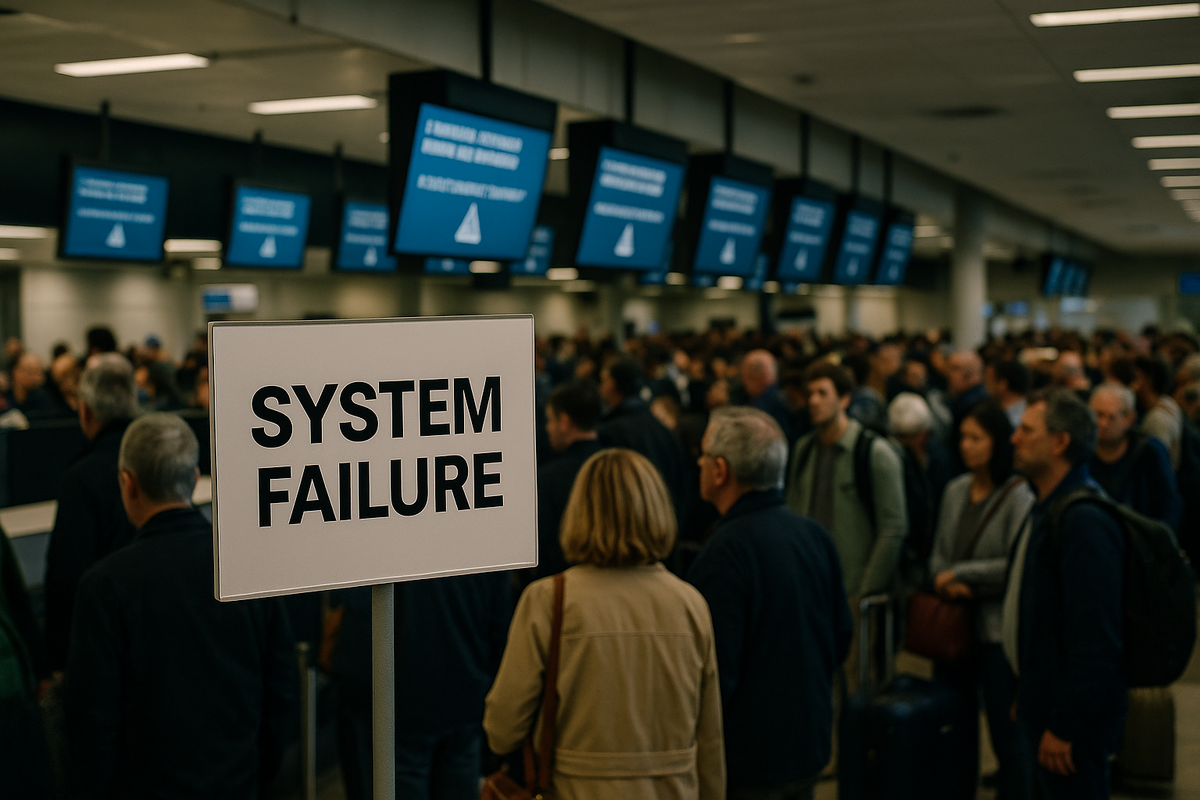
Major airport systems — including check-in, flight coordination, and security screening — go offline at hubs in Toronto, Vancouver, and Montreal. PorterSky cancels over 130 flights. Travelers wait in long, static queues. Agents pull out clipboards.
In healthcare, frontline institutions like Saint Lucia General and CapitalCare Ottawa revert to paper-based systems after their electronic records become inaccessible. Patient delays and diagnostic slowdowns follow.
The most alarming reports come from Alberta, where 911 dispatch systems in Edmonton briefly drop offline, forcing emergency responders to reroute calls manually. Payment systems and border kiosks experience intermittent service across the country.
SentraCore Responds — But the Fallout Grows
SentraCore confirms the issue by mid-morning and deploys a rollback patch by the afternoon. Yet, recovery proves complex: each device requires manual intervention. National infrastructure slows to a crawl.
In a joint statement with OSWare, Canada’s national enterprise OS provider, SentraCore assures the public there is no evidence of foul play and that the incident is not cybercriminal in origin.
Still, the fear of a state-level cyber event spreads quickly — fueled by the sheer breadth of simultaneous outages.
“When the airport, the hospital, and the border all go dark in an hour, the human mind doesn’t think ‘software update,’” says Geneviève Moreau, a former national security analyst. “It thinks: attack.”
Digital Dominoes and Infrastructure Risk
Analysts estimate billions in lost productivity, with indirect costs mounting as recovery lags in sectors with limited offline backup systems. Experts warn this should be a wake-up call — not just about hackers, but about dependency.
“Modern IT environments are like Jenga towers,” says Moreau. “One misstep, and the entire thing starts to wobble.”
A federal review is already underway. Parliament’s Standing Committee on Technology and Security is expected to question both SentraCore and OSWare executives on patch validation, rollout procedures, and contingency planning.
What’s Next?
Tech leaders are calling for immediate reforms:
Segmented rollout requirements for updates affecting critical systems
Mandatory resilience protocols for hospitals and emergency networks
Real-time public disclosure laws for national infrastructure disruptions
In the meantime, operations resume — slowly — and technicians nationwide continue booting, patching, and restarting Canada’s digital backbone, one terminal at a time.
Breaking down systems, one layer at a time. — Mira Evans


NorthAxis Clinical Technologies incident wipes 28,000 devices after attackers abuse internal management platform

Cargo Risk Algorithms Exploited to Bypass Port Inspections

Delivery Drivers Targeted in New “Support Call” Scam Exploiting Food Delivery Platforms

Reddit Thread Over ‘Inventory Drift’ Surges as Canadians Vent Over Retail Glitches

Are Canadian Companies Learning from Global Cyber Attacks? Insider Insights into the Secret Downfall of Canadian Businesses

Calgary Small Business Hit by Sudden Payment Outage, Sparks Cybersecurity Concerns


-
 Public9 months ago
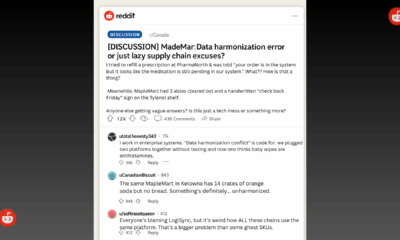
Reddit Thread Over ‘Inventory Drift’ Surges as Canadians Vent Over Retail Glitches
-
 Business8 months ago
Are Canadian Companies Learning from Global Cyber Attacks? Insider Insights into the Secret Downfall of Canadian Businesses
-
 Retail Watch8 months ago
Calgary Small Business Hit by Sudden Payment Outage, Sparks Cybersecurity Concerns
-

 Cybersecurity9 months ago
Canadian Airline NorthSky Faces Cyberattack, Disrupting Online Services
-

 Business11 months ago
Canadian Software Vendor Breach Exposes Cloud Environments Across Energy Sector
-

 Retail Watch8 months ago
Understaffed and overwhelmed, IT teams face rising pressure as retail digitization accelerates
-

 Politics7 months ago
Nationwide Government System Outage Paralyzes Public Services
-

 Business8 months ago
Insurance Without a Safety Net? Canadian Firms Face Premium Hikes Amid Cyber Liability Crisis