

Tech
Canadian Startup Unveils Wearable AI Assistant for Real-Time Transcription and Summaries

April 22, 2026 — A Canadian technology startup is stepping into the rapidly evolving world of artificial intelligence with the launch of a wearable device designed to quietly capture, process, and summarize conversations in real time, a move that signals a broader shift toward what industry experts are calling “ambient intelligence.”
The company, EchoPoint Solutions, unveiled its flagship product this week: a small, clip-on device known simply as EchoPoint. Designed to attach to clothing and pair seamlessly with a smartphone, the device uses a combination of on-device processing and cloud-based AI models to convert spoken conversations into structured, searchable text. It can also identify key discussion points, extract action items, and provide real-time translation during multilingual interactions.
Founder Maya Desai described the product as part of a larger evolution in how humans interact with technology — one where screens and manual inputs begin to fade into the background. “We’re moving toward systems that don’t require you to stop what you’re doing to engage with them,” Desai said during the product announcement. “EchoPoint is built to listen, understand, and assist without interrupting the flow of work.”
The concept aligns with a growing trend in the tech industry toward ambient computing, where devices operate passively in the background, responding to context rather than direct commands. Analysts say this category — which includes smart assistants, contextual AI tools, and now wearable transcription devices — is gaining traction among professionals looking to streamline workflows and reduce cognitive load during meetings and day-to-day collaboration.
Early interest appears to be coming from sectors where documentation and accuracy are critical. EchoPoint Solutions confirmed that several professional services firms, including organizations in legal, consulting, and finance, are currently piloting the device. While the company declined to name specific clients, industry observers suggest the ability to automatically capture and summarize conversations could significantly reduce time spent on note-taking, follow-ups, and compliance documentation.
But as with many AI-driven tools that collect and process human interaction, the rollout is raising important questions around privacy, consent, and data governance.
Privacy experts warn that always-on or easily activated recording devices particularly in workplace environments could blur the boundaries of informed consent. “Even with visible indicators, there’s a real concern about whether everyone in a conversation fully understands when and how they’re being recorded,” said one data protection analyst familiar with emerging AI policies. “This becomes even more complex in sensitive settings like legal consultations or internal strategy discussions.”
EchoPoint Solutions says it has built safeguards into the device to address these concerns. According to the company, all audio data is encrypted, and recording must be actively enabled by the user rather than operating continuously in the background. The device also features visual indicators designed to signal when audio is being captured or processed, a feature intended to provide transparency to others nearby.
Still, experts note that technical safeguards alone may not be enough. Organizations adopting such tools may need to revisit internal policies, particularly around acceptable use, data retention, and employee consent. In regulated industries, the introduction of real-time transcription technology could also intersect with compliance requirements, adding another layer of complexity.
The timing of EchoPoint’s debut reflects a broader acceleration in AI adoption across professional environments. From automated note-taking software to AI-powered meeting assistants embedded in video conferencing platforms, companies are increasingly integrating machine learning into everyday workflows. What sets EchoPoint apart, however, is its form factor moving these capabilities off the screen and into a physical, wearable device.
Pre-orders for EchoPoint are expected to open next month, though pricing and full availability details have not yet been disclosed.
As wearable AI continues to mature, analysts say the technology could redefine not just how meetings are documented, but how information is captured, shared, and acted upon in real time. At the same time, its success may ultimately depend on how effectively companies can balance convenience with trust — ensuring that innovation does not outpace the policies needed to govern it.
Breaking down systems, one layer at a time. — Mira Evans







Tech
NorthAxis Clinical Technologies incident wipes 28,000 devices after attackers abuse internal management platform
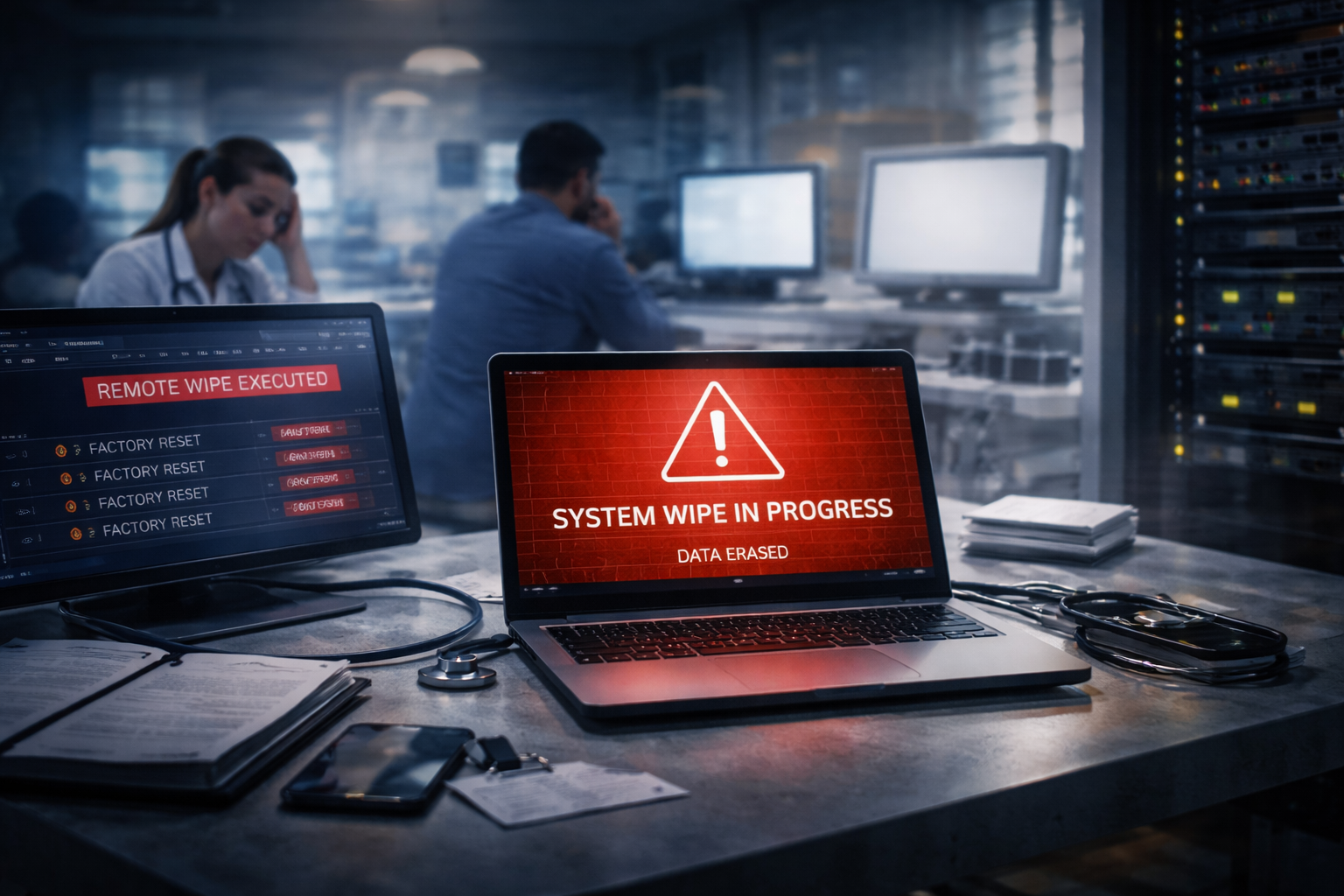
March 18, 2026 — NorthAxis Clinical Technologies says an incident involving unauthorized access to its internal systems led to the remote wipe of approximately 28,000 corporate devices, with attackers leveraging the company’s own management platform to execute the action.
The company, which develops and supports connected medical and clinical systems, confirmed that the disruption impacted internal corporate endpoints used across operations, support, and administrative teams.
According to sources familiar with the response, the attackers gained access to an enterprise endpoint management system used to deploy updates and enforce device policies across the organization. Rather than deploying malware, the threat actor issued legitimate administrative commands through the platform, triggering a mass reset of devices.
The commands were authenticated and executed within normal system workflows, allowing the activity to proceed without being immediately flagged as malicious.
The wipe affected devices across multiple departments, including customer support and field operations, with impacted systems reset to factory settings and local data removed. Employees were locked out of corporate environments as recovery efforts began.
NorthAxis Clinical Technologies has not publicly attributed the incident, but sources indicate the activity is consistent with tactics used by politically charged hacktivist groups, where disruption is prioritized over data theft.
There is currently no evidence that malware was deployed in the environment. Instead, the incident appears to have relied entirely on abuse of trusted administrative tools and existing system privileges.
The company stated that clinical systems and patient-facing technologies were not directly impacted, though internal operations supporting those environments experienced disruption.
Recovery efforts are underway, with teams working to restore affected devices and review access controls around centralized management systems. It remains unclear how access to the platform was initially obtained.
The incident highlights a growing trend in cyber operations, where attackers increasingly rely on legitimate tools and authorized access to carry out large-scale disruption, particularly in environments where centralized systems control large fleets of devices.
Breaking down systems, one layer at a time. — Mira Evans
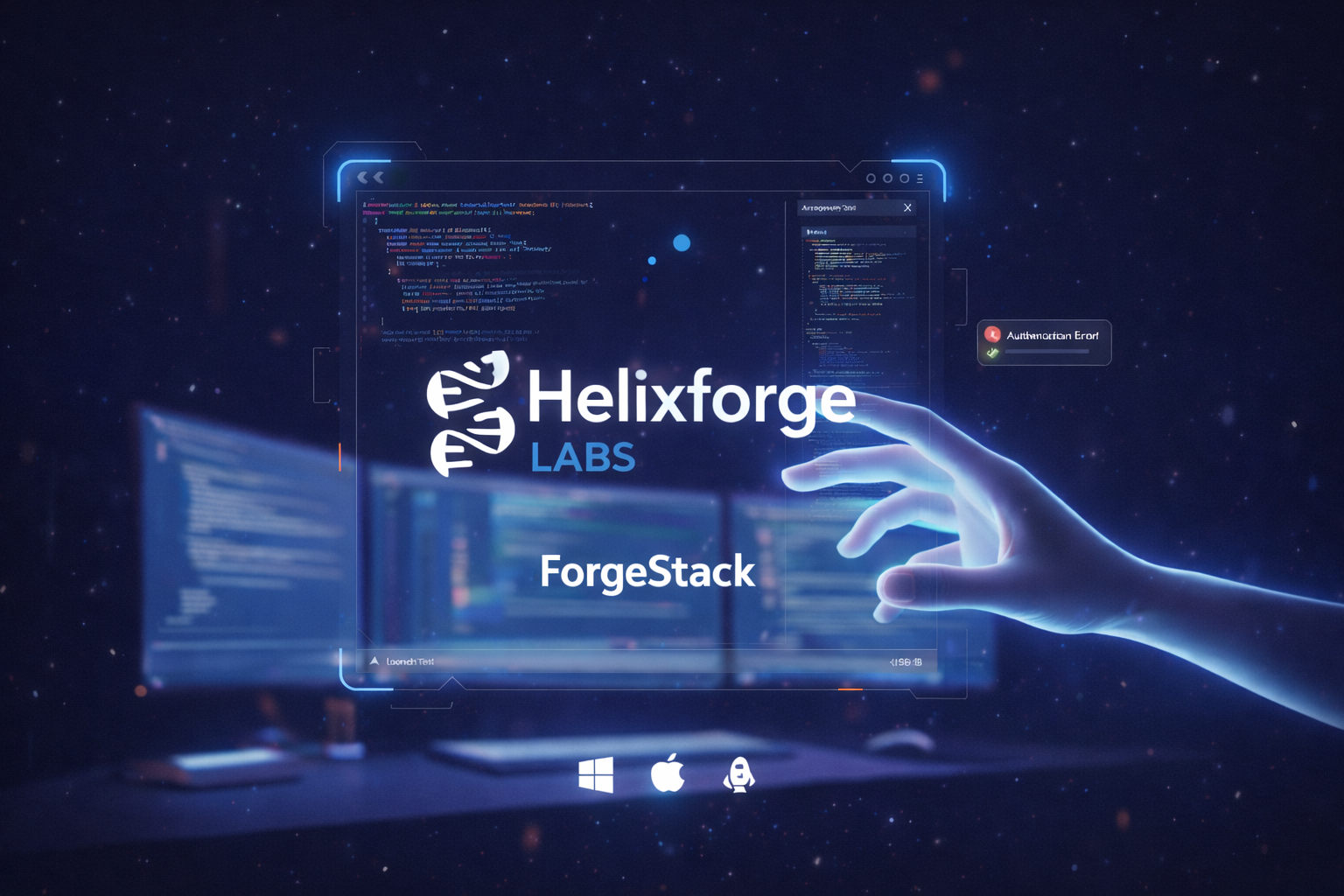
A Toronto-based startup called Helixforge Labs is drawing industry attention after unveiling an AI-first coding platform designed to autonomously write, test, and deploy software with minimal human input. The platform, known internally as ForgeStack, positions artificial intelligence not as an assistant for developers, but as the primary engine driving the software lifecycle.
Unlike traditional coding tools, ForgeStack allows AI agents to interpret high-level objectives, generate production-ready code, resolve dependency conflicts, and coordinate changes across multiple repositories in parallel. Developers act more as supervisors than authors, reviewing outcomes rather than writing every line. Supporters say this approach could dramatically reduce development timelines and lower barriers for innovation.
The excitement is understandable. Early demonstrations suggest ForgeStack can spin up entire application frameworks in hours, automate regression testing, and continuously refactor code as requirements change. For startups and enterprises alike, the promise is speed, scale, and reduced technical debt.
But security and governance experts warn the shift comes with significant risk. Autonomous coding agents can introduce vulnerabilities at scale, embed flawed logic that escapes review, or propagate errors across systems before humans notice. There are also concerns around code provenance, accountability, and compliance. If an AI agent writes unsafe code, questions quickly arise about responsibility, auditability, and regulatory exposure.
Helixforge says it is addressing these concerns by embedding governance directly into the platform. Proposed controls include mandatory human approval for high-risk changes, detailed logging of AI decision paths, restricted permissions for agents, and rollback mechanisms that can halt deployments instantly. Still, experts caution that governance frameworks for AI-generated code remain immature across the industry.
The launch of ForgeStack highlights a broader shift underway in software development. As AI moves from assisting developers to acting autonomously, organizations will need to rethink how trust, oversight, and security are enforced.
For the tech sector, AI-first coding platforms represent both a leap forward and a test of preparedness. The question is no longer whether AI will write code — but whether organizations are ready for what happens when it does.
Breaking down systems, one layer at a time. — Mira Evans
Toronto, ON —
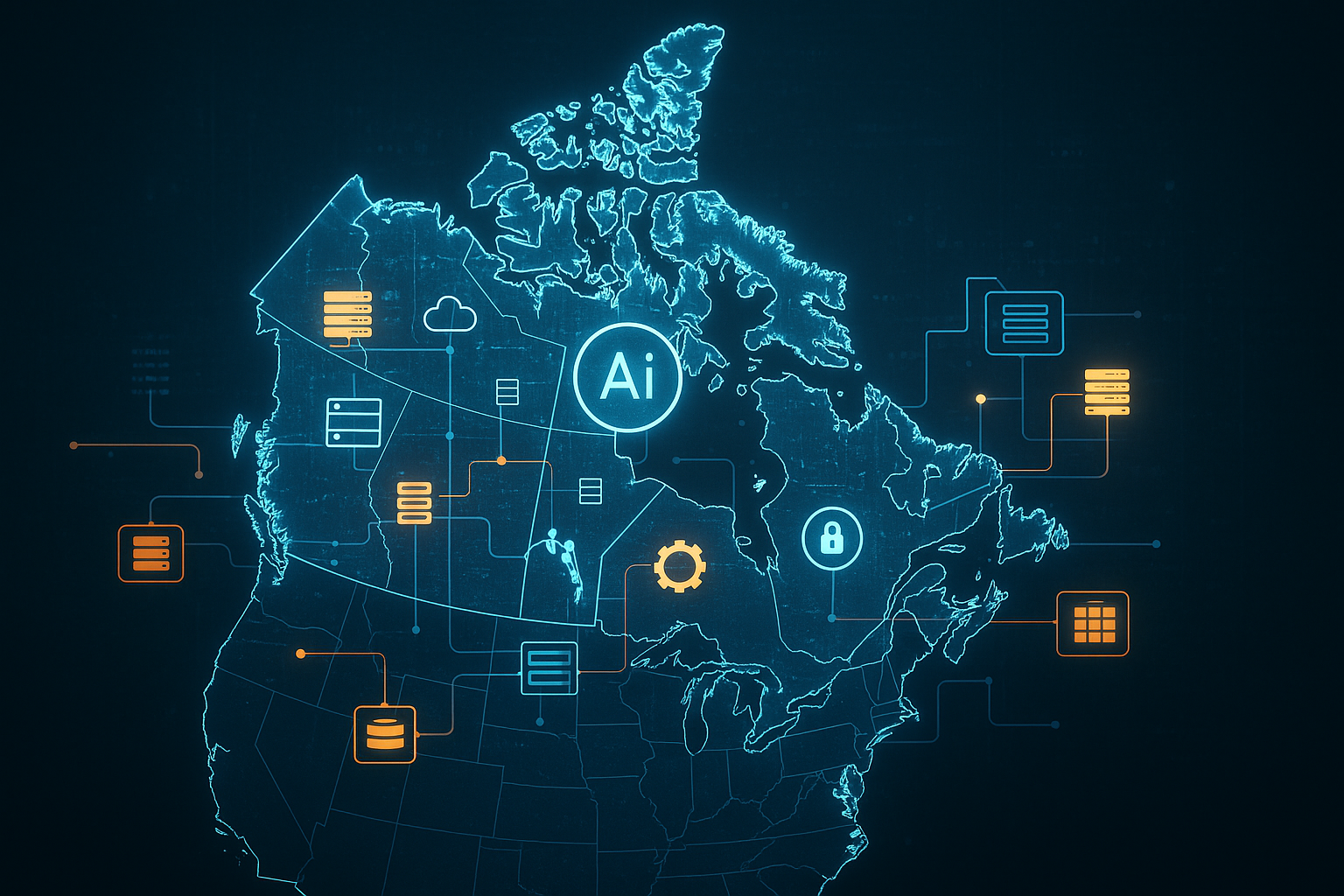
July 30, 2025 — As digital transformation races ahead across sectors, a new report from the Toronto-based Institute for Strategic Systems Oversight (ISSO) is raising a red flag: Canada’s public and private institutions are “building blind” when it comes to their technological dependencies.
In a 34-page analysis released Tuesday, ISSO outlines how invisible infrastructure risks — from unauthorized cloud apps and AI-enabled tools to untracked third-party connectors — are quietly expanding Canada’s national attack surface.
“We’re seeing a digital lattice form — thousands of microconnections stitched together by automation, convenience, and speed,” said Dr. Selene Mahajan, Executive Director of ISSO. “But few organizations have the visibility or governance structure to understand what they’ve actually built.”
Shadow IT, Quiet AI, and the New Risk Fabric
The ISSO report, titled “Beyond the Stack: Mapping Canada’s Hidden Digital Risk,” details how institutions increasingly rely on decentralized tools and automated integrations. These include unauthorized SaaS platforms, AI-driven optimization plugins, and middleware services embedded deep within supply chains — many of which never undergo formal risk review.
“We’ve entered an era of plug-first, verify-later,” said Dr. Mahajan. “That’s a governance failure — not just a tech one.”
Among the report’s key findings:
- 41% of organizations surveyed couldn’t identify all software-as-a-service (SaaS) platforms connected to their networks.
- Over 60% had deployed GenAI tools without baseline compliance policies or audit trails.
- In one anonymized case study, an enterprise’s finance API was silently re-routed through a deprecated U.S.-based data broker during a vendor update.
A Call for National Mapping
ISSO is now calling for a federal-led digital dependency mapping initiative, urging coordination between Treasury Board, Public Safety Canada, and private-sector actors. The goal: create a dynamic “digital cartography” of shared infrastructure, to spot risk concentration points before they collapse.
“This isn’t just about cybersecurity anymore,” said Dr. Mahajan. “It’s about digital continuity — the ability for services to function even when the tools underneath them shift or disappear.”
The report also calls for:
- National guidelines for AI plug-in governance
- Regulatory incentives for private-sector risk transparency
- An “Interconnect Index” to track platform overdependence in public infrastructure
Industry Response: Cautious but Curious
Tech leaders responded with interest but caution. Some private-sector CIOs expressed skepticism over federal involvement.
“Mapping is only helpful if it leads to action,” said one bank executive off-record. “We’ve known the risks for years. What we lack is political will — and procurement flexibility.”
As Canada’s digital infrastructure grows ever more automated and interwoven, ISSO’s report is a timely reminder: complexity without clarity is not innovation — it’s exposure.
Breaking down systems, one layer at a time. — Mira Evans
ODTN News’ Ayaan Chowdhury contributed to this report.


siberX Shipping extends telephone service across Pacific trading hours

What Happens When Hackers Steal Something You Can’t Change?

Did Students Use AI to Change Final Grades?

Reddit Thread Over ‘Inventory Drift’ Surges as Canadians Vent Over Retail Glitches

Are Canadian Companies Learning from Global Cyber Attacks? Insider Insights into the Secret Downfall of Canadian Businesses

Canadian Airline NorthSky Faces Cyberattack, Disrupting Online Services


-
 Public1 year ago
Reddit Thread Over ‘Inventory Drift’ Surges as Canadians Vent Over Retail Glitches
-
 Business1 year ago
Are Canadian Companies Learning from Global Cyber Attacks? Insider Insights into the Secret Downfall of Canadian Businesses
-
 Cybersecurity1 year ago
Canadian Airline NorthSky Faces Cyberattack, Disrupting Online Services
-

 Retail Watch1 year ago
Calgary Small Business Hit by Sudden Payment Outage, Sparks Cybersecurity Concerns
-

 Business2 years ago
Canadian Software Vendor Breach Exposes Cloud Environments Across Energy Sector
-

 Business1 year ago
siberX Mart Supply Chain Snarled as Digital Transformation Faces Cyber Threats
-

 Politics1 year ago
Nationwide Government System Outage Paralyzes Public Services
-

 Retail Watch1 year ago
Understaffed and overwhelmed, IT teams face rising pressure as retail digitization accelerates