

Politics
Federal Bill Mandates Early AI Integration in Schools

April 14, 2026 — A new federal bill will introduce artificial intelligence into Canadian classrooms starting as early as age six, marking a significant shift in national education policy and sparking debate over how early is too early for emerging technologies.
The legislation, passed this week following parliamentary debate and committee review, outlines a phased rollout beginning next academic year. The initiative will be supported through federal funding aimed at teacher training, curriculum development, and the integration of approved AI tools into classroom environments, in partnership with provincial education systems.
Government officials say the move is designed to prepare students for a rapidly evolving, AI-driven world, where familiarity with these tools is becoming increasingly essential.
“This is about ensuring students are not just consumers of technology, but informed users who understand how to engage with it responsibly,” a federal spokesperson said following the bill’s passage.
Under the proposed framework, students will be introduced to AI-assisted learning tools for research, problem-solving, and everyday academic tasks. The curriculum is expected to include early guidance on how to interpret AI-generated outputs, encouraging critical thinking rather than passive reliance.
While the policy signals a proactive approach to technological change, it has also prompted mixed reactions across the country.
Some parents and advocacy groups have raised concerns about the long-term implications of introducing AI at such a young age, pointing to issues around increased screen time, data privacy, and the potential impact on cognitive development.
“There’s still a lot we don’t fully understand about how these tools affect learning,” said one parent. “Introducing them this early feels like a big step without all the answers.”
Privacy experts have also pointed to unanswered questions surrounding how student data will be collected, stored, and protected, particularly when third-party platforms are involved. The federal government has indicated that additional guidelines on data protection and classroom use will be released in the coming months.
At the same time, supporters of the bill argue that the decision reflects the reality of how technology is already shaping daily life. They say early exposure to AI could help students build digital literacy skills that will be critical in future academic and professional settings.
“AI is already part of the world these students are growing up in,” said one education consultant. “The question is not whether they will use it, but whether they will understand it.”
The success of the initiative will depend heavily on how it is implemented at the provincial and school board levels, where educators will be responsible for integrating the tools into existing curricula while maintaining core learning outcomes.
As planning moves forward, the policy represents more than a curriculum update. It signals a broader shift in how governments are approaching artificial intelligence: not as a distant innovation, but as a present-day reality requiring early and structured engagement.
More detailed implementation plans are expected ahead of the next academic year, as provinces begin aligning their strategies with the federal framework.
For now, the bill sets the direction.
Artificial intelligence is no longer being introduced at the margins of education… it is being brought directly into the classroom, at the earliest stages of learning.
Covering where tech meets policy and the gaps in between. — Jordan Okeke
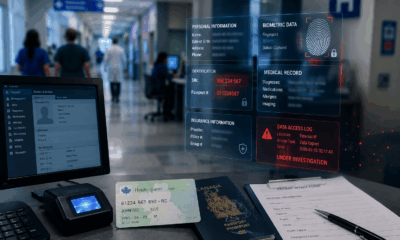









Canada’s digital infrastructure is no longer just an economic asset. It is becoming a geopolitical pressure point.
As tariffs expand on advanced semiconductor components and networking hardware, and as armed conflicts reshape alliances abroad, the country’s reliance on globally sourced technology is drawing new scrutiny inside federal agencies and corporate boardrooms.
What was once a supply-chain conversation is now a security conversation.
Much of Canada’s critical infrastructure, from financial systems and telecommunications networks to healthcare platforms and cloud environments is built on hardware manufactured in politically sensitive regions and software assembled through internationally distributed supply chains. When sanctions shift or diplomatic tensions rise, those dependencies do not disappear. They tighten.
Security officials have repeatedly warned that geopolitical instability rarely stays confined to traditional battlefields. Economic retaliation now moves through cyber channels: scanning infrastructure, exploiting supply chain weaknesses, probing public services. Periods of diplomatic strain are frequently accompanied by spikes in digital reconnaissance and targeted intrusion attempts.
At the same time, modernization efforts across government and enterprise are increasing reliance on specialized AI computing hardware, much of which is concentrated among a small number of global manufacturers. Lead times are lengthening. Costs are rising. Vendor relationships are being reevaluated through a strategic lens rather than a purely commercial one.
For cybersecurity executives, the operating environment has shifted in subtle but profound ways. Risk assessments that once focused on ransomware, insider threats, and compliance exposure must now account for trade volatility, sanctions regimes, and the potential weaponization of supply chains.
The concern is not just interruption. It is leverage.
When digital infrastructure is intertwined with global politics, every procurement decision carries strategic weight. Every firmware update passes through a geopolitical filter. Every dependency becomes a potential fault line.
Canada has begun exploring diversification strategies and allied partnerships to reduce exposure. But structural realignment takes time, and adversarial cyber activity does not pause while governments negotiate trade frameworks.
For many security leaders, the conclusion is stark: digital resilience can no longer be separated from foreign policy.
In today’s climate, cybersecurity is no longer operating parallel to geopolitics.
It is operating inside it.
Covering where tech meets policy and the gaps in between. — Jordan Okeke
ODTN News’ Ayaan Chowdhury contributed to this report.

September 26, 2025 — After days of disruption fueled by cyber incidents and disinformation campaigns, federal officials confirmed today that critical systems have been stabilized. While the immediate crisis appears to be under control, experts warn that the public trust gap exposed during the turmoil may prove harder to repair.
From Disruption to Stability
Technical teams reported that the low-level beaconing attempts detected earlier this week — signs of adversaries probing for re-entry — have been mitigated. “We’ve deployed layered defenses across all networks and worked directly with partners to contain the threat,” said a senior cybersecurity official. “At this stage, systems are operational and secure.”
The government also announced new joint coordination cells between the Canadian Centre for Cyber Security (CCCS) and critical infrastructure operators, designed to ensure faster detection and response to future threats.
Disinformation Still Lingers
Even as systems came back online, the viral deepfake of a minister blaming refugees continued to circulate, creating confusion and amplifying tensions. Analysts note that while the technical recovery was swift, the information environment remains volatile.
“Once trust is shaken, even accurate updates are met with skepticism,” said a policy researcher at a Toronto think tank. “Citizens are asking themselves: if systems can be manipulated, what else should we question?”
Public Reaction
At airports, where Canadians had faced biometric and passport scanning delays, operations returned to normal. Yet travelers expressed mixed feelings. “I’m glad the kiosks work again,” said one passenger in Montreal. “But no one explained what really happened. That silence is why people stop believing.”
Looking Forward
Officials emphasized that rebuilding trust will require transparency and communication, not just technical fixes. Proposals under consideration include public briefings on cyber resilience, stronger counter-disinformation campaigns, and expanding digital literacy programs.
For now, Canadians can expect their systems to function reliably — but the aftershocks of doubt may shape debates on cybersecurity, governance, and accountability for months to come.
Covering where tech meets policy and the gaps in between. — Jordan Okeke
ODTN News’ Ayaan Chowdhury contributed to this report.

September 24, 2025 — Canadian travelers attempting to return home today are caught in sudden chaos across multiple European airports as automated passport scanners fail to process Canadian documents.
At Rome Fiumicino Airport, long lines quickly built up this morning after machines repeatedly rejected Canadian passports with a flashing red error. Passengers described scenes of confusion as staff scrambled to divert travelers to slower, manual processing.
“It was a nightmare,” said one Canadian en route to Toronto. “The kiosk rejected me three times before staff waved me into another line. Dozens of us were stuck with no clear guidance.”
Reports of the same issue surfaced in Milan and Naples, where returning Canadians posted frustrated updates on social media about being unable to clear security. One traveler wrote: “Lines are at a standstill. Canadian passports just won’t scan. People are missing flights.”
Authorities Responding
While no official explanation has been provided, airport sources suggested the problem may stem from a temporary biometric synchronization error affecting Canadian documents in European systems. The Canadian Border Services Agency (CBSA) confirmed it is monitoring the situation but did not issue immediate travel guidance.
Impact on Travelers
As of this afternoon, passengers continued to face delays of up to several hours. Airline staff reported families missing connections as the backlog grew. “We’re moving people as fast as we can, but when one country’s passports won’t scan, the whole system slows down,” one gate agent said.
Outlook
The disruption remains, but ODTN News will continue monitoring for updates. Travelers returning to Canada are advised to prepare for longer processing times and consider arriving at airports earlier than usual until systems are confirmed stable.
Covering where tech meets policy and the gaps in between. — Jordan Okeke


What Happens When Hackers Steal Something You Can’t Change?

Did Students Use AI to Change Final Grades?

The Most Powerful Cybersecurity Tool in the World May Have Been Accessed by Unauthorized Users

Reddit Thread Over ‘Inventory Drift’ Surges as Canadians Vent Over Retail Glitches

Are Canadian Companies Learning from Global Cyber Attacks? Insider Insights into the Secret Downfall of Canadian Businesses

Canadian Airline NorthSky Faces Cyberattack, Disrupting Online Services

-
 Public1 year ago
Reddit Thread Over ‘Inventory Drift’ Surges as Canadians Vent Over Retail Glitches
-
 Business1 year ago
Are Canadian Companies Learning from Global Cyber Attacks? Insider Insights into the Secret Downfall of Canadian Businesses
-
 Cybersecurity1 year ago
Canadian Airline NorthSky Faces Cyberattack, Disrupting Online Services
-

 Retail Watch1 year ago
Calgary Small Business Hit by Sudden Payment Outage, Sparks Cybersecurity Concerns
-

 Business1 year ago
Canadian Software Vendor Breach Exposes Cloud Environments Across Energy Sector
-

 Business1 year ago
siberX Mart Supply Chain Snarled as Digital Transformation Faces Cyber Threats
-

 Politics1 year ago
Nationwide Government System Outage Paralyzes Public Services
-

 Retail Watch1 year ago
Understaffed and overwhelmed, IT teams face rising pressure as retail digitization accelerates