

Public
The Hidden Risks of Having a Social Media Presence

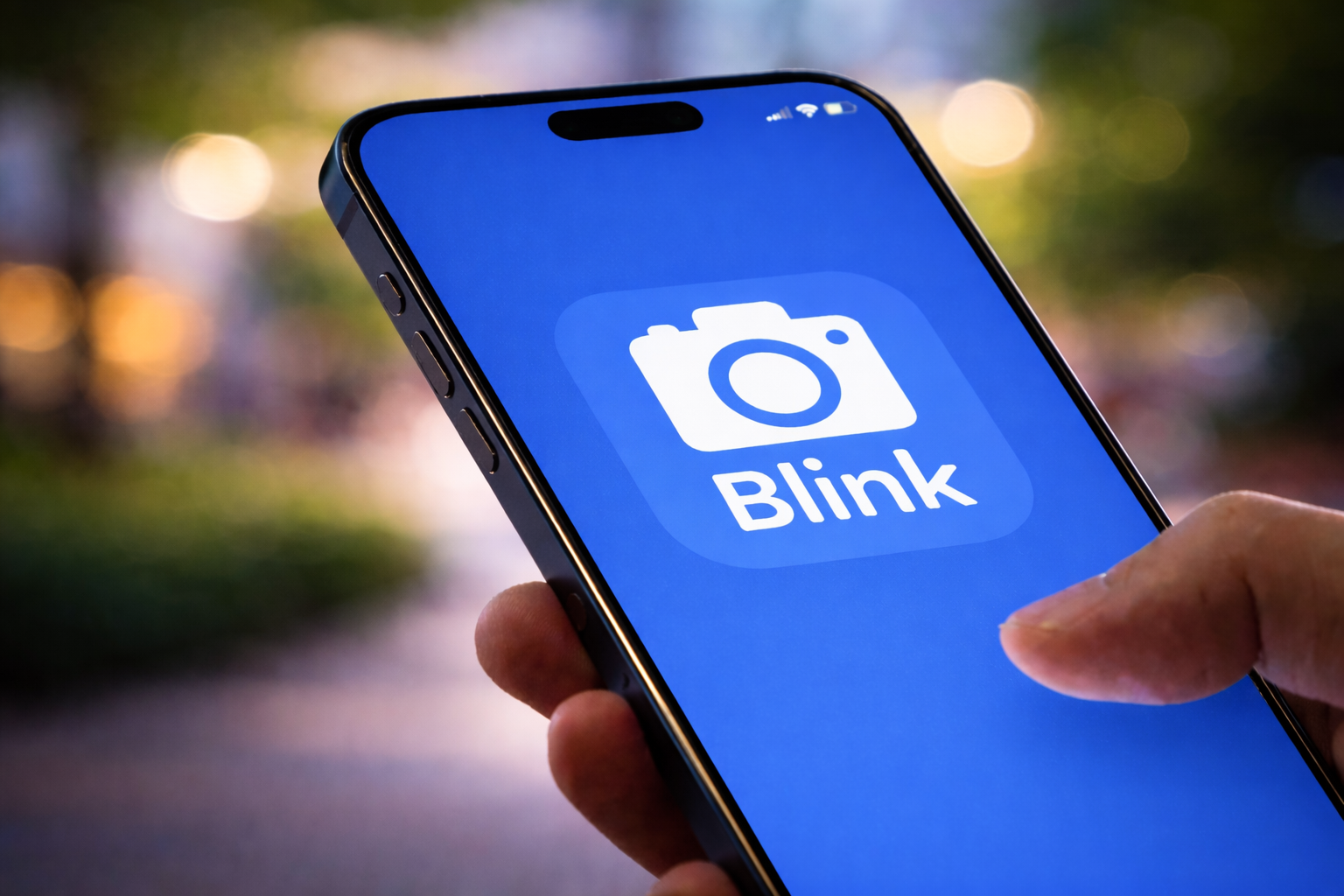
Over the weekend, a dataset allegedly linked to approximately 8.4 million users of the popular photo-sharing app Blink began circulating in private online forums. While Blink has stated there is no evidence of a breach of its internal systems, cybersecurity observers say the information being shared. Including usernames, associated email addresses, linked phone numbers, follower counts and public profile details appears detailed enough to create real-world consequences. No passwords have been confirmed in the material. Even so, within hours of the reports surfacing, users across North America and Europe began describing suspicious password reset emails, unexpected SMS security alerts and phishing messages designed to mimic official Blink communications.
The episode may ultimately prove to be the result of automated scraping or the aggregation of publicly visible information rather than a direct intrusion. But for millions of users, that distinction offers little comfort. The incident underscores a broader reality about life online: maintaining a social media presence carries risks that extend far beyond posting photos or sharing updates with friends.
In 2026, social platforms function as more than entertainment tools. They are storefronts, professional portfolios, customer acquisition channels and, for many, primary sources of income. They also serve as digital identity hubs, linking together email addresses, phone numbers, business contacts and personal networks. When fragments of that information circulate outside their intended context, the consequences can escalate quickly.
One of the most significant risks is identity aggregation. A username on its own may seem harmless. An email address, by itself, may not appear sensitive. A phone number attached to a public profile might feel routine. But when these elements are combined, they form a verified identity footprint. Cybercriminals increasingly rely on compiling small pieces of publicly accessible or previously exposed data to build detailed personal profiles. What was once scattered information becomes a structured target list.
That aggregation fuels more convincing phishing campaigns. Security professionals warn that fraudulent messages are far more effective when they reference accurate usernames or partial phone numbers. A message that appears personalized creates urgency and credibility, increasing the likelihood that a recipient will click a malicious link or provide login credentials. Even without passwords included in a dataset, attackers can exploit trust to obtain them.
Phone numbers linked to social accounts introduce another layer of risk. SIM-swap attacks in which a fraudster convinces a mobile carrier to transfer a victim’s number to a new device can allow attackers to intercept verification codes and reset account credentials across multiple services. Once control of a primary email or social account is gained, recovery can become complicated and time-consuming.
For small business owners and creators, the implications extend beyond personal inconvenience. A compromised or impersonated account can disrupt sales, damage brand credibility and erode customer trust. Fraudsters who replicate profile names and messaging styles may target followers directly, using the credibility of an established account to facilitate scams. In such cases, the reputational impact can linger long after technical access is restored.
There is also a psychological dimension. Even when an incident does not involve confirmed internal compromise, headlines about circulating data can trigger widespread anxiety. Users may begin to question every notification or login alert. Trust in digital communication weakens. The sense of exposure, whether or not it results in direct harm can be unsettling.
Many exposures today do not stem from traditional “hacks,” but from scraping, where automated systems collect publicly visible information at scale. The misconception that public equals safe continues to persist. In reality, publicly displayed information can still be harvested, indexed and redistributed in ways that amplify risk. Once data enters underground marketplaces, it is often copied, resold and repackaged repeatedly.
Authorities have not announced any formal investigation into the Blink reports, and the platform continues to reassure users that its infrastructure remains secure. Still, cybersecurity professionals emphasize that digital visibility inevitably expands one’s attack surface. The more interconnected a person’s online identity becomes, the more valuable it can appear to bad actors.
Maintaining a social media presence is now inseparable from modern professional and personal life. But with that presence comes responsibility. Experts recommend enabling app-based multi-factor authentication, using unique passwords across platforms, minimizing publicly visible contact information and approaching unexpected security alerts with caution.
The Blink episode serves as a reminder that exposure does not always require intrusion. Sometimes it requires only accumulation, fragments of information gathered over time and assembled into something far more powerful than any single post.
In an era where identity is increasingly digital, awareness may be the most important safeguard of all.
Reporting where the public speaks loudest — online and unfiltered. — Jamie Mora










GUELPH, Ont. — November 4, 2026 — The ice was booked, the kids were ready, and the confirmation email looked exactly right. When families in a fictional Guelph neighbourhood arrived for their weekend rink time, their names were not on the list at all. The booking had not been lost. The page they had booked through was never the city’s page.
The problem was not in the city’s own recreation system. It was in the link most families found first: a post shared in parents’ groups and forwarded by email, promising a simple way to reserve public skate and shinny slots. The page it led to carried the rink’s name, its schedule, and a familiar-looking booking calendar. It asked for a name, a phone number, an email address, and a payment card to hold the ice time. None of that information ever reached the city.
The ice time had not been double-booked. It had never been booked through the real system at all.
According to the fictional community association at the centre of the story, the pattern emerged only when several families compared notes at the rink door. They had all booked through the same forwarded link, but none of them appeared on the real reservation list, and none of them had received a confirmation from the city’s own address. One parent had even called the number on the fake page to ask about skate rentals, and been reassured by a polite voice that her slot was confirmed.
“We tell families to book early and show up ready to skate, and that is exactly what they did,” said Priya Sandhu, the fictional association’s recreation coordinator. “Nobody expects to have to inspect a booking page the way you would inspect a front door. But someone built a copy of our rink booking, put it where parents share links, and collected their details as they walked in.”
Copycat booking pages are a quiet, growing target for payment fraud.
Public-service and cybersecurity advisors say community bookings are attractive precisely because they are seasonal, trusted, and shared in a hurry. A rink slot does not need to be breached in the dramatic sense — an attacker only needs to copy its name and schedule onto a convincing page, and wait for a forwarded link to do the rest. Parents, meanwhile, trust a link shared by another parent far more readily than one from a stranger, especially when the page looks official and the ice time is limited.
“The page did exactly what it was designed to do. It took a booking,” said one payments-fraud advisor familiar with copycat booking cases. “The attacker did not need to break into the city’s systems. They only needed to stand between families and the real booking page, and let honest planning do the rest.”
In this fictional case, the damage was not a single dramatic theft. Individual families handed over names, phone numbers, email addresses, and, in some cases, payment-card details entered to hold a slot. The association estimates dozens of families booked through the fake page before it was reported, and several later received suspicious calls and messages using details only the fake form had collected. For the families, the loss was compounded by the moment of discovery — arriving at the rink, skates in hand, to find they had never been booked at all.
The fictional association says it has since changed how it shares booking links. Real rink links now come only from the city’s own website and the association’s own mailing list, never from a forwarded social post alone, and the association checks shared links weekly, the way it checks its rink schedule. Families who used the fake page are being asked to change any password they reused, watch for calls that quote their phone number, and check statements for small charges in the days after booking.
The fix, experts say, is deliberately unglamorous: get the link from the source, not the share.
That advice applies well beyond one rink. Across Canada, families book pools, arenas, classes, and camps through links passed along in group chats and parents’ pages, and most check them only when something goes wrong. The defence is not a cleverer booking platform. It is a habit of checking where the link came from before handing it personal details.
For families, the checklist is short: book through the city’s own website or the number printed on its official notice, be suspicious of any booking page that asks for a full payment card to hold a free or low-cost public slot, and check that a confirmation comes from the city’s own domain. For community groups, it is equally simple: publish one official link, say clearly where it will come from, and give families a simple way to report a copy.
The fictional association says affected families have been offered help rebooking for real rink time, and the copycat page has been reported for removal.
The families showed up ready to skate. The ice time they booked was never the city’s. And the difference — one link, checked before the details were entered — was all it took.
Watching the perimeter — and what slips past it.
ODTN News note: ODTN.News is a fictional news platform set within the Operation: Defend the North universe. All names, organizations, quotes, and events in this article are entirely fictitious. Any resemblance to real people, companies, or incidents is purely coincidental. The cybersecurity challenges it represents are very real.

PRINCE GEORGE, B.C. — November 1, 2026 — The Wi-Fi login page looked exactly right. It carried the library’s colours, it asked for a library card number and PIN, and it connected visitors to the internet in seconds. For regulars at Sprucewood Public Library, the fictional Prince George library at the centre of the story, there was no reason to doubt it — until staff realised the page was not theirs at all.
The network had appeared beside the library’s real Wi-Fi, with a name only one word different. Patrons who joined it were taken to a copy of the library’s sign-in screen, typed in their credentials, and were passed through to the internet as normal. Nothing failed. Nothing looked broken. The theft happened in the moment that looked most ordinary.
The login page had not been hacked. It had been imitated.
According to the fictional library’s account, the fake network was discovered only when a staff member noticed two nearly identical network names on her own phone and asked a colleague which one was real. By then, the library estimates, dozens of patrons had signed in through the copy over several days. Some had also reused the same PIN elsewhere, which is where a library login stopped being a library problem.
“We offer free Wi-Fi because people need it — for job applications, for homework, for staying in touch,” said Clara Beaumont, Sprucewood’s fictional library director. “Nobody should have to be a security expert to sit down with a laptop in a public library. But someone set a trap in the one place people expect to be safe, and it looked exactly like us.”
Public Wi-Fi is a quiet, growing target for credential theft.
Cybersecurity advisors say fake hotspots — sometimes called evil twins — are attractive precisely because they require no break-in. An attacker only needs a small device, a network name close enough to the real one, and a login page copied from the genuine sign-in screen. Visitors do the rest themselves, willingly handing over credentials to a page they believe they have used before.
“The page did exactly what it was designed to do. It asked, politely, for a login,” said one cybersecurity advisor familiar with public Wi-Fi cases. “People are trained to sign in to Wi-Fi. The attacker did not need to defeat any security — they only needed to be the first network a phone offered, with a name that looked familiar enough not to question.”
In this fictional case, the damage was not a single dramatic breach. Patrons’ library accounts were accessed, holds were changed, and a handful of people who reused their library PIN as a password elsewhere found other accounts probed as well. The library says no financial information was stored in its system, but the incident still forced it to reset credentials, warn patrons, and explain to regulars why a page they trusted had not been its own.
Sprucewood says it has since changed how its Wi-Fi works. The real network name is now posted at every entrance and on every table, staff can confirm it on request, and the sign-in page no longer asks for a full library card number and PIN on public Wi-Fi — a simpler guest pass is issued at the desk instead. The library has also added a warning to its login screen: if a sign-in page appears before you have chosen the network name posted in the building, stop and ask staff.
The fix, experts say, is deliberately unglamorous: check the network name before you check the login box.
That advice applies well beyond one library. Across Canada, libraries, community centres, cafés, and transit hubs offer free Wi-Fi that visitors join without a second thought, and most of those networks are easy to imitate with a similar name. The defence is not better Wi-Fi. It is proof of which network is real.
For public spaces, the checklist is short: post the exact network name where people can see it, never ask for sensitive credentials on a public Wi-Fi login, and give staff a simple script for the question “is this your Wi-Fi?” For visitors, it is equally simple: join only the network name posted in the building, never reuse a PIN or password from another account on a Wi-Fi login, and if a login page appears unprompted, close it and ask staff before typing anything.
Sprucewood says patron credentials caught in the fake sign-in have been reset, and the library is working with its internet provider to monitor for lookalike networks near the building.
The page looked like the library’s. The network name almost was. And the difference — one word, checked against a sign on the wall — was all it took.
Watching the perimeter — and what slips past it.
ODTN News note: ODTN.News is a fictional news platform set within the Operation: Defend the North universe. All names, organizations, quotes, and events in this article are entirely fictitious. Any resemblance to real people, companies, or incidents is purely coincidental. The cybersecurity challenges it represents are very real.
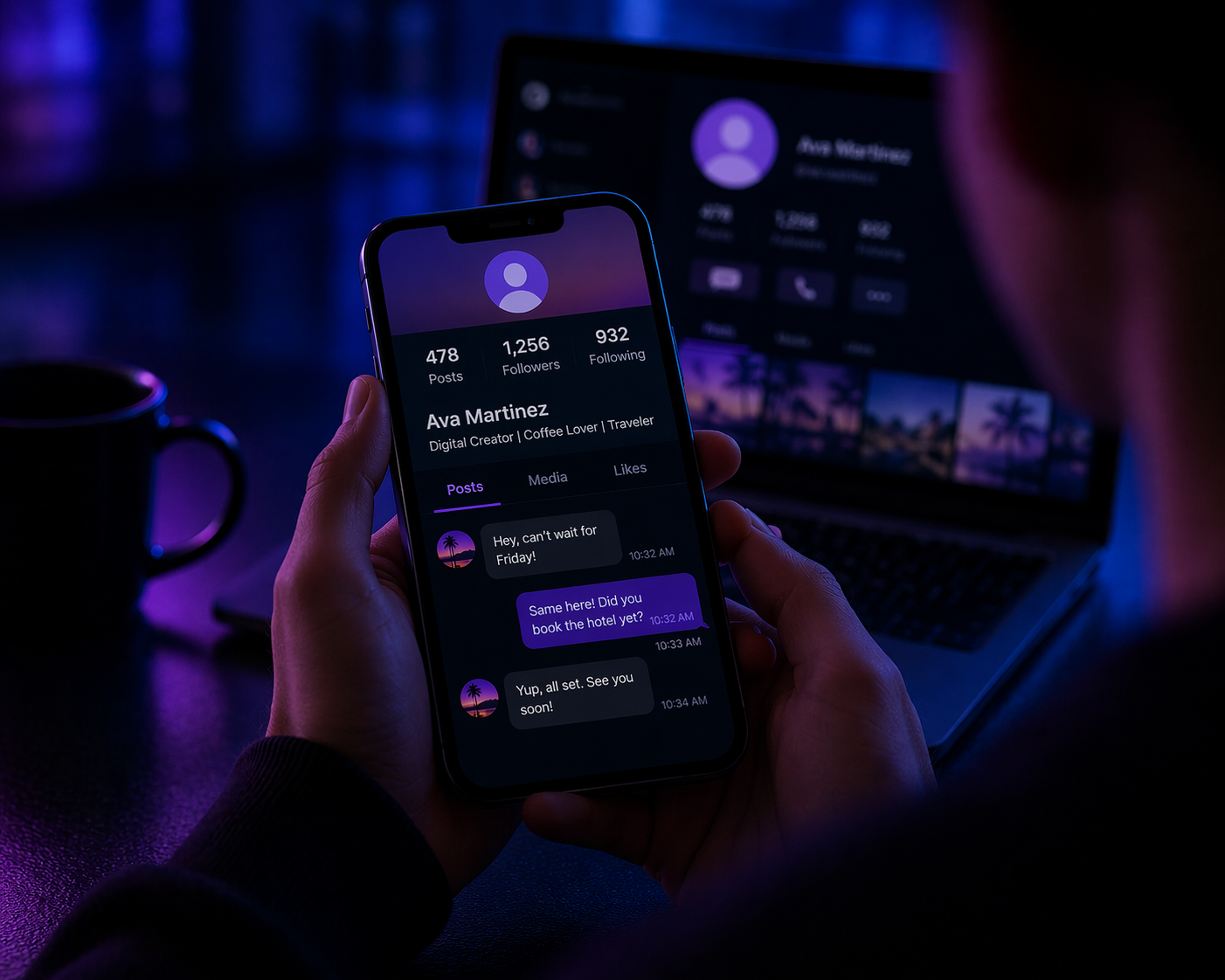
April 16, 2026 — A technical malfunction on the social platform Veya briefly exposed user accounts earlier today, with some individuals reporting that they were able to view messages and profile information that did not belong to them. The issue occurred during what the company described as a routine system update and appears to have affected a portion of active users before being quickly identified and contained.
In a statement issued shortly after the incident, Veya confirmed that the problem has now been resolved and emphasized that there is no evidence of a cyberattack or unauthorized external access. Instead, the company attributed the exposure to an internal system error, though it has not disclosed how many users were impacted or the full extent of the data that may have been visible.
Despite the short duration of the incident, the nature of the exposure has raised concern among cybersecurity and privacy experts. Users reported seeing fragments of private conversations and profile details associated with other accounts, pointing to a temporary breakdown in the platform’s ability to properly isolate user data — a core function of any multi-user system.
While Veya has not released detailed technical findings, early indications suggest the issue may have stemmed from how user sessions were handled during the update process. Platforms like Veya rely on session tokens to verify identity and ensure that users only access their own data. If those tokens are mismanaged — whether through improper reassignment, delayed refresh cycles, or synchronization issues during deployment — users can momentarily be granted access to information tied to another account. In parallel, caching mechanisms designed to improve performance can also introduce risk if stored data is incorrectly served to the wrong user during periods of system change.
Incidents of this nature, while not malicious, underscore the complexity of maintaining strict data boundaries at scale, particularly during live updates where systems are actively being modified. Even brief lapses can result in unintended exposure, and experts note that the impact of such events is not necessarily limited by their duration. Information that is visible, even for seconds, can be captured, recorded, or retained.
Veya is advising users to review their recent account activity and take standard security precautions, including logging out of active sessions and updating passwords. While there is no indication of ongoing risk, the incident highlights the importance of vigilance at both the user and platform level.
As platforms continue to evolve and deploy updates at increasing speed, events like this serve as a reminder that not all data exposures stem from external threats. In some cases, the risk lies within the systems themselves — in how they manage identity, access, and the invisible boundaries that keep user data separate.
For users, the expectation remains unchanged: that their information is secure and accessible only to them. For platforms, maintaining that expectation is becoming an increasingly complex challenge.
Reporting where the public speaks loudest — online and unfiltered. — Jamie Mora


Fake Flu Clinic Harvested Health Card Numbers

Winnipeg’s Black Friday Bargains Lead to Drained Accounts

Guelph Parents Pay for Ice Time Already Sold

Reddit Thread Over ‘Inventory Drift’ Surges as Canadians Vent Over Retail Glitches

Are Canadian Companies Learning from Global Cyber Attacks? Insider Insights into the Secret Downfall of Canadian Businesses

Canadian Airline NorthSky Faces Cyberattack, Disrupting Online Services
-

 Business3 weeks ago
siberX Shipping extends telephone service across Pacific trading hours
-
 Cybersecurity1 week ago
Tourists Scanned. Strangers Collected.
-

 Business1 week ago
Winter Cargo Vanishes on Paper Trail
-
 Cybersecurity1 week ago
Nova Scotia Town Goes Dark Overnight
-

 Cybersecurity1 week ago
Winnipeg Distributor Loses Payment to Impostor Email
-

 Cybersecurity1 week ago
Regina Pharmacy Shut Out of Its Own Prescriptions
-

 Business1 week ago
A Single Truck Left Shelves Bare
-

 Tech7 days ago
Cold Storage Warms While Dashboard Glows Green