

Tech
The Charger That Charged More Than the Car: How a Copycat EV App Harvested Drivers’ Payment Details in Kingston


KINGSTON, Ont. — November 3, 2026 — The charger worked, the car charged, and the app looked exactly right. When drivers at a fictional Kingston charging station opened their statements days later, they found charges they had never made — for sessions they had never started, at stations they had never visited. The charger had not overcharged them. The app they had used to start it was never the charger’s app at all.
The problem was not in the charging station itself. It was in the app drivers found first: a copy of the fictional charging network’s app, listed in app stores under a nearly identical name, with the same colours, the same logo shape, and the same start-charging button. Drivers who searched for the network’s name, tapped the first convincing result, and signed in handed over their payment card, their email address, and their car’s location history before the first kilowatt ever flowed.
The session had not been overbilled. It had never been booked through the real app.
According to the fictional network’s account, the pattern emerged only when several drivers compared statements. They had all charged at different stations around Kingston, but the extra charges shared a pattern — small, regular amounts, taken days after the real charging session, from a payment profile none of them remembered creating. Staff traced the complaints back to a single step the drivers had in common: they had all downloaded the app in a hurry, standing beside the charger, rather than from the network’s own website or a link printed on the station.
“We tell drivers to plug in and go, and that is exactly what they did,” said Ellen Voss, the fictional charging network’s operations lead. “Nobody expects to have to inspect an app the way you would inspect a card reader. But someone built a copy of our front door, put it at the top of the search results, and collected the keys as drivers walked in.”
Copycat apps are a quiet, growing target for payment fraud.
Technology and payments advisors say charging apps are attractive precisely because they are used in a hurry, outdoors, and under pressure to get moving. A driver low on charge is not in a mood to check a developer name letter by letter, and a copycat app does not need to break into anything — it only needs to look familiar enough to be trusted with a card, and then to pass the driver through to a real charging session so nothing feels wrong.
“The app did exactly what it was designed to do. It started a charge,” said one payments-fraud advisor familiar with copycat app cases. “The attacker did not need to hack the charger or the car. They only needed to stand between the driver and the payment page, and let an honest top-up do the rest.”
In this fictional case, the damage was not a single dramatic theft. Individual cards were charged in amounts small enough to slip past a quick glance at a statement, and the network estimates several thousand dollars was taken in total before the copycat app was removed. For drivers, the loss was compounded by the extra exposure — card details, email addresses, and the location history of their cars, all handed to a stranger in the moment they were simply trying to get home.
The fictional network says it has since changed how drivers find its app. The real app’s name and developer are now printed on every charging station, with a QR code that links only to the network’s own site, and staff check app-store listings weekly for lookalikes, the way they check the stations themselves. Drivers who used the copycat app are being asked to remove it, change any password they reused, and check statements for small charges in the days after a charging session.
The fix, experts say, is deliberately unglamorous: get the app from the source, not the search result.
That advice applies well beyond one charging network. Across Canada, drivers, diners, travellers, and shoppers all download apps in the moment they need them — for parking, for food, for transit, for charging — and most app-store searches return a convincing copy alongside the real thing. The defence is not a cleverer app store. It is a habit of checking where the app came from before handing it a card.
For drivers, the checklist is short: download a charging app before you need it, from the network’s own website or the link printed on the station, check the developer name exactly, and be suspicious of an app that asks for a full card and location history before it has ever charged your car. For app publishers, it is equally simple: print the exact app name and developer on the hardware itself, monitor app stores for lookalikes, and give customers a simple way to report a copy.
The fictional network says affected drivers are being refunded where a statement confirms an unauthorised charge, and the copycat listings have been reported for removal.
The car charged as normal. The app that started it was never the network’s. And the difference — one developer name, checked before the card was entered — was all it took.
Watching the perimeter — and what slips past it.
ODTN News note: ODTN.News is a fictional news platform set within the Operation: Defend the North universe. All names, organizations, quotes, and events in this article are entirely fictitious. Any resemblance to real people, companies, or incidents is purely coincidental. The cybersecurity challenges it represents are very real.








Tech
The Update That Cried Cold: How a Faulty Firmware Patch Nearly Cost a Charlottetown Clinic Its Vaccines
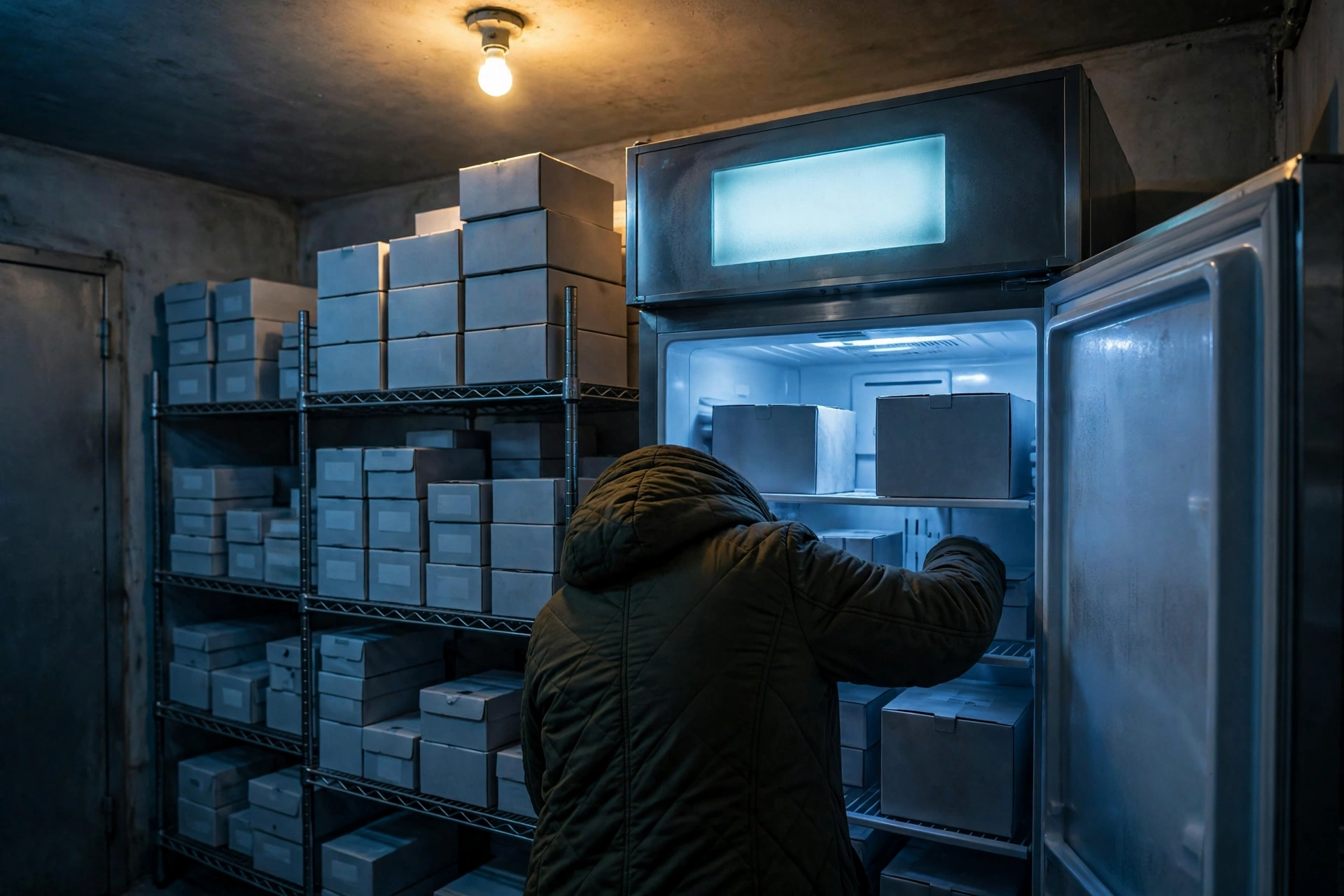
CHARLOTTETOWN, P.E.I. — October 31, 2026 — The alert arrived just after midnight: a vaccine refrigerator at Harbourview Community Clinic, the fictional Charlottetown clinic at the centre of the story, had supposedly warmed past safe storage temperature. By the clinic’s own rules, that meant one thing — the stock inside had to be quarantined, and possibly discarded, before the morning’s appointments began.
There was only one problem. The fridge was still cold.
The temperature had not risen. The sensor had started lying.
According to the fictional clinic’s account, a staff member who arrived early checked the unit by hand before anyone touched the stock. A separate thermometer read normal. The fridge hummed as usual, its door seal was tight, and nothing inside felt warm. Yet the clinic’s monitoring dashboard insisted, in red, that the temperature had climbed all night.
“We were minutes away from throwing out a fridge full of vaccines because a screen told us to,” said Iris Bellamy, Harbourview’s fictional clinic lead. “The fridge was fine. The number was not. That is a strange thing to learn at five in the morning, with patients due at nine.”
A routine firmware update had quietly changed how the sensors reported.
The clinic says the false readings began the night its cold-storage monitoring system received an automatic firmware update from its fictional vendor, NorthTemp Systems. The update, meant to improve battery reporting on the wireless sensors, also altered how the sensors converted their readings — so temperatures that were actually within range were displayed as out of range, and the alerting system did exactly what it was designed to do. It sounded the alarm, loudly, on bad data.
“The system did not fail to alert. It alerted on a fiction,” said one technology advisor familiar with connected-device cases. “When a sensor, a dashboard, and an alert all agree with each other, people stop checking. That is precisely when a bad update is most dangerous — every layer of the system confirms the same wrong number.”
In this fictional case, the warning signs were easy to miss. The dashboard showed a smooth, plausible warming curve, not a sudden spike. The alert arrived through the normal channel, at a normal hour for an overnight fault. And the update itself had installed without any visible change — no new screen, no warning, no request for approval. Nothing looked broken, except the number at the centre of it all.
Harbourview says it has since changed how it handles updates to connected equipment. Firmware updates are now staged on a single test sensor first, automatic updates are switched off for cold-storage devices, and no stock is quarantined on a dashboard reading alone — a second, independent thermometer check is now required before any disposal decision. The clinic also keeps a paper temperature log alongside the digital one, so a digital fault has something to be checked against.
The fix, experts say, is deliberately unglamorous: trust, but verify — with a second thermometer.
That advice applies well beyond one clinic. Across Canada, small clinics, pharmacies, food businesses, and laboratories rely on connected sensors to watch fridges, freezers, and cold rooms, and most of those sensors update themselves in the background. A single bad update can turn a monitoring system from a safety net into a source of false alarms — or, worse, false reassurance, if the error runs the other way and a real warming event is reported as normal.
For organizations, the checklist is short: stage firmware updates on one device before rolling them out, keep automatic updates off critical monitoring equipment, require an independent check before acting on an alert that would destroy stock or halt services, and keep a simple manual log that does not depend on the same system it is meant to check. For vendors, it is equally simple: flag any update that changes how a reading is calculated, and make rollbacks easy.
Harbourview says no stock was ultimately discarded. The vaccines were checked, cleared, and used as scheduled, and the clinic is still reviewing its monitoring contract with the fictional vendor.
The fridge was cold all along. The update said otherwise. And the difference — one hand-held thermometer, used before anyone acted on a screen — was all it took.
Watching the perimeter — and what slips past it.
ODTN News note: ODTN.News is a fictional news platform set within the Operation: Defend the North universe. All names, organizations, quotes, and events in this article are entirely fictitious. Any resemblance to real people, companies, or incidents is purely coincidental. The cybersecurity challenges it represents are very real.

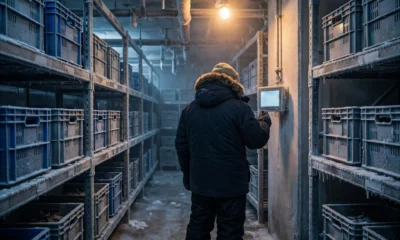
ST. JOHN’S, N.L. — October 30, 2026 — On the dashboard, everything was fine. Every cold room at Harbourline Cold Storage showed a steady temperature, every sensor glowed green, and the overnight log recorded nothing out of the ordinary. It was the kind of quiet night a warehouse manager likes to see — and, it turned out, the kind of quiet night someone had manufactured.
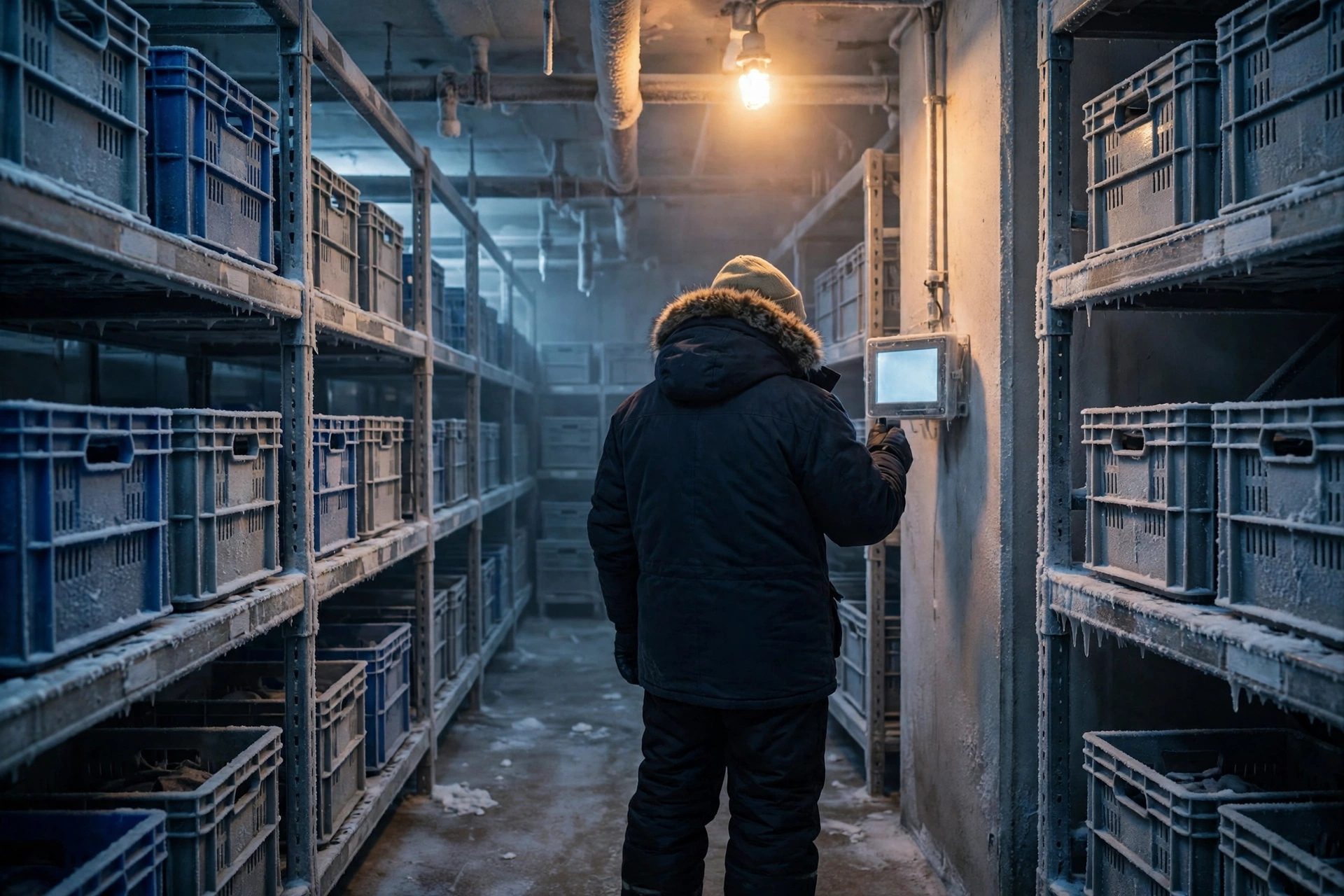
Harbourline, the fictional St. John’s cold-storage company at the centre of the story, says staff arrived one morning to find a cold room noticeably warmer than it should have been, despite a monitoring dashboard that had reported normal temperatures all night. Boxes near the door were sweating. A thermometer on the wall told a different story than the screen in the office.
The sensors had not failed. The dashboard had been spoofed.
According to the fictional company’s account, an attacker had gained access to the building’s monitoring system and fed it a loop of old, normal readings — a recording of a good night, played back while the real cold room drifted out of range. The refrigeration unit itself had developed a fault in the evening; the dashboard, showing yesterday’s calm, gave no one any reason to check.
“We trusted the screen because the screen had never lied to us before,” said Dana Whitfield, Harbourline’s fictional operations manager. “The first sign something was wrong wasn’t an alert. It was walking into the room and feeling the air. By then we had lost hours.”
Spoofed monitoring is a quiet, growing corner of operational-technology fraud.
Unlike a ransomware attack that announces itself, this tactic works by keeping everything looking normal. Cybersecurity advisors familiar with industrial monitoring systems say attackers who reach a dashboard — often through a reused password, an unpatched remote-access tool, or a vendor account that was never closed — can freeze, replay, or edit the readings that staff rely on. The equipment keeps failing in the real world while the screen keeps reporting the past.
“The dashboard is not the cold room. It is a picture of the cold room, and pictures can be faked,” said one operational-technology security advisor familiar with sensor-spoofing cases. “If no one ever checks the picture against the room itself, the fake can run for hours.”
In this fictional case, the stakes were perishable. Harbourline stores seafood and prepared foods for fictional regional distributors, and a cold room that drifts out of range for hours can mean spoiled stock, scrapped shipments, and a costly cleanup — even when nothing was stolen and no ransom note ever arrived.
Harbourline says it has since changed its monitoring process. Temperature readings now come from two independent systems that cross-check each other, remote access to the dashboard requires multi-factor authentication, and staff make a physical walk-through of every cold room on each shift — screen or no screen. A reading that never changes, the company now treats as a warning sign in itself.
The fix, experts say, is deliberately unglamorous: trust, but verify — in person.
That advice applies well beyond cold storage. Across Canada, small and mid-sized operators rely on dashboards for everything from warehouse temperatures to water levels to building systems, and a single screen is often treated as the truth rather than as one claim to check.
For operators, the checklist is short: require multi-factor authentication on any remote monitoring access, close vendor and former-staff accounts promptly, set alerts for readings that stay suspiciously flat as well as for readings that spike, and keep a physical check in the routine — a thermometer, a walk-through, a second sensor that no one dashboard controls. For vendors, it is equally simple: ship monitoring tools with strong authentication on by default, and never leave a shared or default login in place after installation.
Harbourline says it is still assessing how much stock was affected. No estimate of the loss has been released.
The dashboard itself looked perfect. The cold room was not. And the difference — a recording of a good night, played over a bad one — was all it took.
Watching the perimeter — and what slips past it.
ODTN News note: ODTN.News is a fictional news platform set within the Operation: Defend the North universe. All names, organizations, quotes, and events in this article are entirely fictitious. Any resemblance to real people, companies, or incidents is purely coincidental. The cybersecurity challenges it represents are very real.

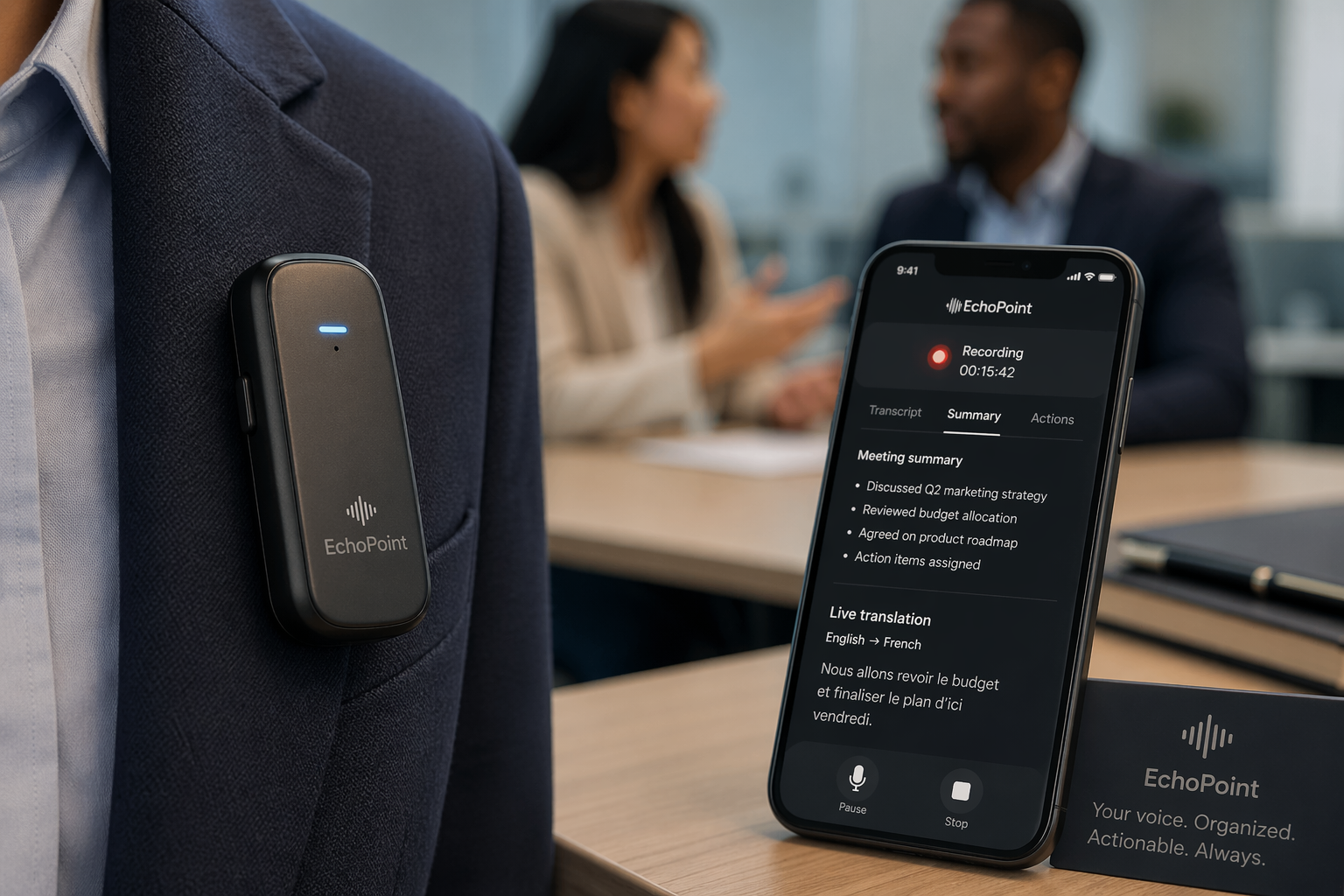
April 22, 2026 — A Canadian technology startup is stepping into the rapidly evolving world of artificial intelligence with the launch of a wearable device designed to quietly capture, process, and summarize conversations in real time, a move that signals a broader shift toward what industry experts are calling “ambient intelligence.”
The company, EchoPoint Solutions, unveiled its flagship product this week: a small, clip-on device known simply as EchoPoint. Designed to attach to clothing and pair seamlessly with a smartphone, the device uses a combination of on-device processing and cloud-based AI models to convert spoken conversations into structured, searchable text. It can also identify key discussion points, extract action items, and provide real-time translation during multilingual interactions.
Founder Maya Desai described the product as part of a larger evolution in how humans interact with technology — one where screens and manual inputs begin to fade into the background. “We’re moving toward systems that don’t require you to stop what you’re doing to engage with them,” Desai said during the product announcement. “EchoPoint is built to listen, understand, and assist without interrupting the flow of work.”
The concept aligns with a growing trend in the tech industry toward ambient computing, where devices operate passively in the background, responding to context rather than direct commands. Analysts say this category — which includes smart assistants, contextual AI tools, and now wearable transcription devices — is gaining traction among professionals looking to streamline workflows and reduce cognitive load during meetings and day-to-day collaboration.
Early interest appears to be coming from sectors where documentation and accuracy are critical. EchoPoint Solutions confirmed that several professional services firms, including organizations in legal, consulting, and finance, are currently piloting the device. While the company declined to name specific clients, industry observers suggest the ability to automatically capture and summarize conversations could significantly reduce time spent on note-taking, follow-ups, and compliance documentation.
But as with many AI-driven tools that collect and process human interaction, the rollout is raising important questions around privacy, consent, and data governance.
Privacy experts warn that always-on or easily activated recording devices particularly in workplace environments could blur the boundaries of informed consent. “Even with visible indicators, there’s a real concern about whether everyone in a conversation fully understands when and how they’re being recorded,” said one data protection analyst familiar with emerging AI policies. “This becomes even more complex in sensitive settings like legal consultations or internal strategy discussions.”
EchoPoint Solutions says it has built safeguards into the device to address these concerns. According to the company, all audio data is encrypted, and recording must be actively enabled by the user rather than operating continuously in the background. The device also features visual indicators designed to signal when audio is being captured or processed, a feature intended to provide transparency to others nearby.
Still, experts note that technical safeguards alone may not be enough. Organizations adopting such tools may need to revisit internal policies, particularly around acceptable use, data retention, and employee consent. In regulated industries, the introduction of real-time transcription technology could also intersect with compliance requirements, adding another layer of complexity.
The timing of EchoPoint’s debut reflects a broader acceleration in AI adoption across professional environments. From automated note-taking software to AI-powered meeting assistants embedded in video conferencing platforms, companies are increasingly integrating machine learning into everyday workflows. What sets EchoPoint apart, however, is its form factor moving these capabilities off the screen and into a physical, wearable device.
Pre-orders for EchoPoint are expected to open next month, though pricing and full availability details have not yet been disclosed.
As wearable AI continues to mature, analysts say the technology could redefine not just how meetings are documented, but how information is captured, shared, and acted upon in real time. At the same time, its success may ultimately depend on how effectively companies can balance convenience with trust — ensuring that innovation does not outpace the policies needed to govern it.
Breaking down systems, one layer at a time. — Mira Evans


The Charger That Charged More Than the Car: How a Copycat EV App Harvested Drivers’ Payment Details in Kingston

The Room That Was Booked Twice: How a Hijacked Listing Diverted a Canmore Inn’s Guests — and Their Deposits

The Job Posting That Wasn’t Hiring Anyone: How a Fake Recruitment Site Harvested IDs From Job Seekers in Lethbridge

Reddit Thread Over ‘Inventory Drift’ Surges as Canadians Vent Over Retail Glitches

Are Canadian Companies Learning from Global Cyber Attacks? Insider Insights into the Secret Downfall of Canadian Businesses

Canadian Airline NorthSky Faces Cyberattack, Disrupting Online Services


-

 Business3 weeks ago
siberX Shipping extends telephone service across Pacific trading hours
-

 Cybersecurity5 days ago
The Changed Bank Details: How One Spoofed Email Diverted a Winnipeg Distributor’s Payment
-
 Cybersecurity5 days ago
The Wrong QR Code: How a Sticker on a Halifax Harbour Kiosk Redirected Tourists — and Their Payments
-

 Business5 days ago
The Phantom Load: How a Fake Freight Posting Diverted a Truckload of Winter Supplies in Northern Ontario
-
 Cybersecurity7 days ago
The Quiet Lockout: How a Forged Vendor Update Froze a Small Nova Scotia Town’s Services
-

 Business7 days ago
The Ketchup Bottleneck: One Delayed Shipment, Empty Shelves
-
 Cybersecurity5 days ago
The Midnight Patch: How a Fake Software Update Locked a Regina Pharmacy’s Prescription System
-
 Tech4 days ago
The Warm Room: How a Spoofed Sensor Dashboard Hid a Failing Cold Store in St. John’s