
Supply Chain
The Phantom Load: How a Fake Freight Posting Diverted a Truckload of Winter Supplies in Northern Ontario

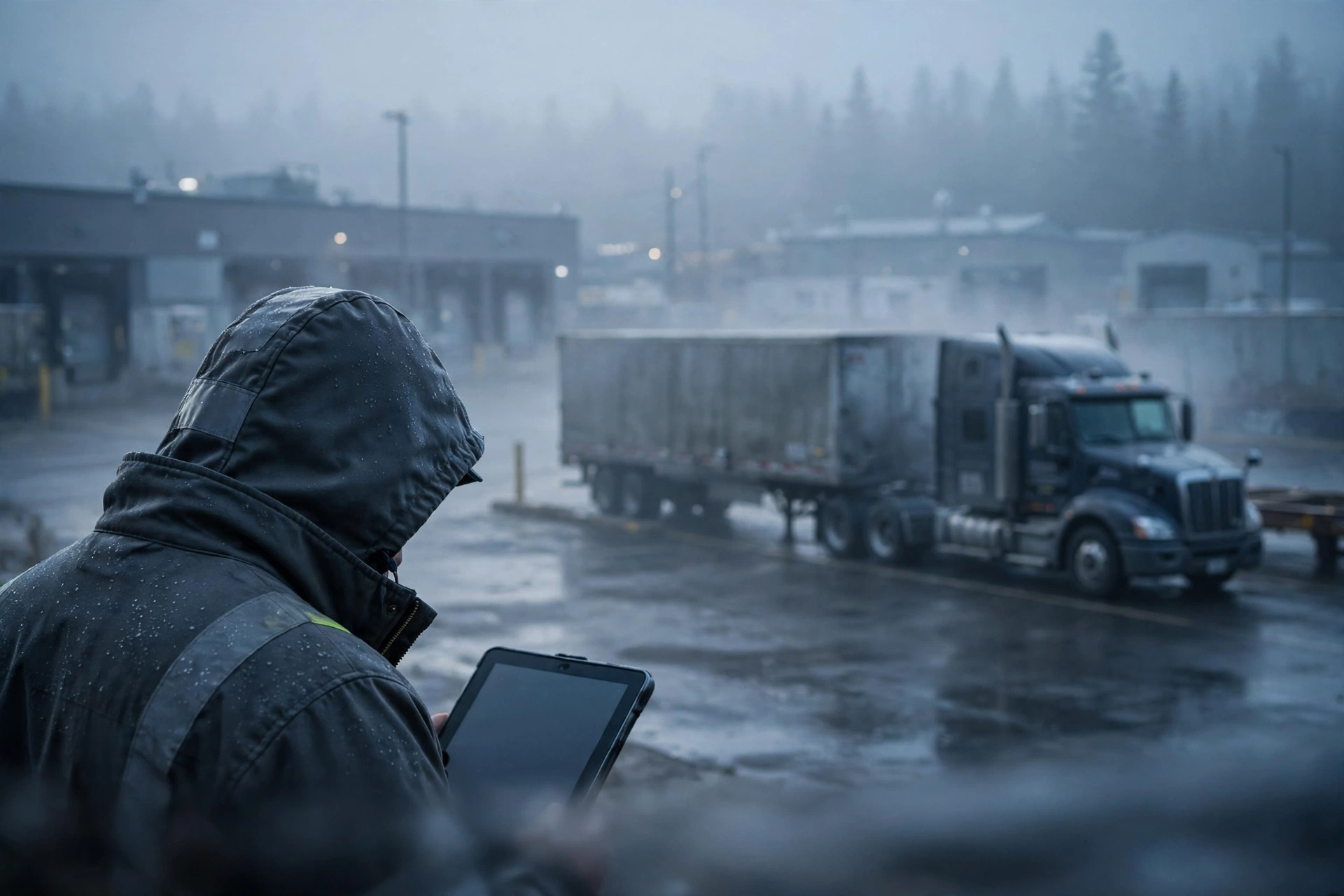
**THUNDER BAY, Ont. — October 29, 2026 —** The load looked legitimate. It had a pickup address, a delivery window, a reference number, and a contact name that matched a company the driver had hauled for before. It appeared on a freight board the dispatcher checked every morning, and it paid a fair rate for a run north in late October.
There was only one problem: the company that supposedly posted it had never heard of the load.
Northpine Freight, the fictional Thunder Bay trucking company at the centre of the story, says one of its drivers was dispatched to a warehouse on the edge of town to collect a trailer of winter supplies — road salt, de-icing fluid, and cold-weather gear bound for a fictional northern depot. When the driver arrived, the warehouse staff had no such trailer ready, no such order on file, and no record of the contact name on the posting.
**The load did not exist. The diversion was the point.**
By the time the dispatcher traced the posting back, the trail had already forked. A second driver — working for a different carrier, answering what appeared to be the same load from a different board — had reportedly collected a trailer from a nearby yard and headed north with goods that were never meant to move that day. Northpine says it is still unclear whether the two postings were copies of each other, or whether one was built to legitimize the other.
“We run a small board check every morning, and this one passed it,” said Marla Jensen, the company’s fictional dispatch manager. “The rate was normal, the lane was normal, the paperwork looked normal. It was only when our driver got to an empty dock that we realized the load itself was the scam.”
**Fake freight postings are a quiet, growing corner of supply-chain fraud.**
Unlike a hacked system or a stolen truck, this tactic needs no break-in. Fraud prevention advisors say attackers copy the look of a real posting — a plausible shipper, a real-sounding lane, a rate just fair enough not to raise questions — and use it to redirect a driver, a trailer, or a payment to a place they control.
“The driver is not the target. The driver’s trust is,” said one supply-chain fraud advisor familiar with load-board scams. “If the posting looks right and the dispatcher is under pressure to keep trucks moving, the truck moves first and the questions come later.”
In this fictional case, the pressure was seasonal. Late October is the last comfortable window to move winter supplies north before ice and snow narrow the roads, and dispatchers are juggling tight windows, driver hours, and customers who cannot afford a missed delivery.
Northpine Freight says it has since changed its dispatch process. New postings from unfamiliar accounts now require a callback to a number already on file — never a number printed in the posting itself — plus a confirmation from the shipper before a driver is sent to a pickup. Drivers have also been told to stop and call dispatch if a pickup address, contact, or trailer number does not match the paperwork exactly.
**The fix, experts say, is deliberately unglamorous: verify the load before the wheels turn.**
That advice applies well beyond trucking. Across Canada, small and mid-sized carriers remain prime targets precisely because their dispatch processes are lean: one person often books, verifies, and dispatches a load, and a familiar-looking posting is treated as a trusted partner, not a suspect.
For carriers, the checklist is short: confirm new shippers by phone using a number already on file, require a second check on any posting that arrives with urgency attached, and treat a pickup that does not match the paperwork as a stop-and-verify moment, not a delay to work around. For shippers, it is equally simple: tell carriers, in advance, which boards you actually post on — and that you will never change a pickup by message alone.
Northpine Freight says it is working with the yard operators and its industry contacts to trace the diverted trailer. No estimate of recovery has been released.
The posting itself looked real. The load did not. And the difference — a few copied details, and one unchecked dispatch — was all it took.
*Watching the perimeter — and what slips past it.*
**ODTN News note:** ODTN.News is a fictional news platform set within the Operation: Defend the North universe. All names, organizations, quotes, and events in this article are entirely fictitious. Any resemblance to real people, companies, or incidents is purely coincidental. The cybersecurity challenges it represents are very real.








The Midnight Patch: How a Fake Software Update Locked a Regina Pharmacy’s Prescription System

The Phantom Load: How a Fake Freight Posting Diverted a Truckload of Winter Supplies in Northern Ontario

The Wrong QR Code: How a Sticker on a Halifax Harbour Kiosk Redirected Tourists — and Their Payments

Reddit Thread Over ‘Inventory Drift’ Surges as Canadians Vent Over Retail Glitches

Are Canadian Companies Learning from Global Cyber Attacks? Insider Insights into the Secret Downfall of Canadian Businesses

Canadian Airline NorthSky Faces Cyberattack, Disrupting Online Services


-
 Public1 year ago
Reddit Thread Over ‘Inventory Drift’ Surges as Canadians Vent Over Retail Glitches
-
 Business1 year ago
Are Canadian Companies Learning from Global Cyber Attacks? Insider Insights into the Secret Downfall of Canadian Businesses
-
 Cybersecurity1 year ago
Canadian Airline NorthSky Faces Cyberattack, Disrupting Online Services
-

 Retail Watch1 year ago
Calgary Small Business Hit by Sudden Payment Outage, Sparks Cybersecurity Concerns
-

 Business2 years ago
Canadian Software Vendor Breach Exposes Cloud Environments Across Energy Sector
-
 Business1 year ago
siberX Mart Supply Chain Snarled as Digital Transformation Faces Cyber Threats
-
 Politics1 year ago
Nationwide Government System Outage Paralyzes Public Services
-

 Retail Watch1 year ago
Understaffed and overwhelmed, IT teams face rising pressure as retail digitization accelerates