

Business
Lobster Shipments Spoiled After Monitors Went Dark


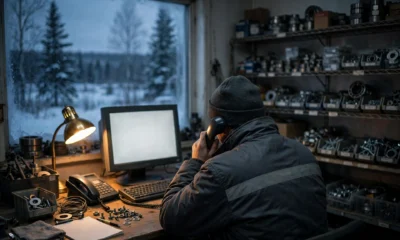
HARBOURLIGHT, N.S. — November 28, 2026 — Eleven hours. That is how long $380,000 worth of lobster and scallops sat warming in the dark before anyone at Harbourlight Seafoods knew the temperature monitors had stopped talking. The dashboard in the office still showed the cold rooms at minus two degrees. The rooms themselves had reached fourteen.
Harbourlight Seafoods is a family-run exporter in the fictional Nova Scotia town of Harbourlight, population about 4,000, where the working waterfront is the whole economy. The company buys from some sixty local boats, packs the catch in its cold rooms, and ships it to restaurants in Toronto and Montreal and to buyers overseas. This is its busiest stretch of the year — holiday orders, paid for in advance, packed and loaded on a tight schedule.
The cold rooms stopped cooling on Friday night. The alarms never sounded, because the system that was supposed to raise them had been switched off first.
Ellen MacRae, who runs the company with her brother, found out on Saturday morning when a driver opened the first cold room and felt warm air. “The ice was gone,” she said. “The crates were sweating. I looked at the monitor on the wall and it was black, and I looked at the screen in the office and it said everything was fine. It said minus two, and I was standing in a room that felt like a spring day. That was the moment I knew we had lost it.”
Forty-one tonnes of lobster and scallops had to be thrown out. The holiday orders behind them — close to $380,000 in sales — are gone with the catch. Restaurants in Toronto and Montreal that were counting on Harbourlight deliveries this week have been told to find another supplier, and buyers overseas have cancelled outright. MacRae says the company will still pay the boats for the catch it bought, even though it cannot sell a pound of it.
A ransom note was found on the office computer on Saturday morning. It said the company’s systems had been locked and offered the key back for payment in cryptocurrency. MacRae says the company did not pay. Its outside IT contractor restored the office systems from backups over the weekend, but the cold rooms run on a separate monitoring system, and that system was already dark by the time anyone looked at it.
The attackers did not break the refrigeration. They broke the watching — and a cold room nobody is watching warms up just the same.
Dr. Ingrid Halvorsen, a fictional researcher who studies attacks on small and mid-sized businesses at a Canadian university, said the pattern is becoming familiar. “The cooling equipment was fine,” she said. “The monitoring system was the target. Attackers get into the office network — often through a remote-access login with a weak password — find the system that watches the fridges or the freezers, and turn the alerts off before they do anything else. Then they lock the office computers and leave the ransom note. The business discovers the second problem first and the first problem too late.”
Halvorsen said the damage is rarely about the ransom at all. “Nobody in this story lost money to a ransom payment. They lost it to eleven quiet hours. A monitoring system that only reports to a screen in the office is a system that fails on a Friday night, when the office is empty. If the alarm does not reach a phone in someone’s pocket, it is not really an alarm.”
MacRae says the boats are still fishing, and the company will take the next catch — this time with someone checking the rooms by hand every few hours, around the clock, until the monitoring system is rebuilt. “We trusted the screen,” she said. “We will not do that again. A person walks into that room now, puts a hand on a crate, and writes the temperature down on paper. It is slow and it is old-fashioned, and it would have saved us everything.”
Lessons Learnt
For leaders — four questions to ask your team this week, before a quiet Friday night costs you a season.
- Ask where your alarms actually go. If a temperature, security, or system alert only shows up on a screen in an empty office, it is not an alarm. Make sure the important ones reach a phone, day and night.
- Ask what your operational systems share with your office network. If the system that watches your fridges, freezers, or factory floor sits on the same network as email and web browsing, one weak login can reach it. Ask your IT team to separate them.
- Ask when your backups were last tested. A backup you have never restored is a hope, not a plan. Test it before you need it, and make sure it covers the systems that watch your business — not just the office computers.
- Decide now who acts when the screens go dark. Write down who checks the rooms, who calls the customers, and who decides whether to pay — before it happens, not in the middle of it.
ODTN News note: ODTN.News is a fictional news platform set within the Operation: Defend the North universe. All names, organizations, quotes, and events in this article are entirely fictitious. Any resemblance to real people, companies, or incidents is purely coincidental. The cybersecurity challenges it represents are very real.











HAWTHORN FALLS, Ont. — November 25, 2026 — For 41 years, the presses at Northbridge Fabrication have run six days a week. On Tuesday, they stopped.
The family-run metal-parts maker in Hawthorn Falls, a fictional Ontario town of about 12,000 people, had ordered $172,000 worth of press tooling steel from Lakeview Steel Supply, a fictional supplier it has bought from for nineteen years. The order was the first step in a new contract to make brackets for an auto-parts maker, work that was supposed to keep the plant’s 62 employees busy through the spring. The steel was due to arrive this week. It never left the yard — because the $86,000 deposit Northbridge paid for it went to someone else entirely.
The money went out on Monday morning, after an email arrived in the plant office with what looked like routine news: Lakeview Steel Supply had updated its banking details, and future payments should go to a new account. The message carried the supplier’s logo, the name of the sales rep Northbridge deals with, and a link to a payment portal that looked like the one the plant had used before. The accounts clerk followed the instructions and wired the 50 percent deposit.
The email came from an address one letter different from the real supplier’s. The portal was a copy. The account belonged to a fraudster.
Northbridge only learned the truth on Wednesday, when the real Lakeview Steel Supply called to ask why the deposit had not arrived. The plant’s owner, Ruth Calloway, pulled up the email and read the sender’s address character by character. One letter was wrong. The phone number in the signature was wrong too — by a single digit.
“We have bought steel from the same people for nineteen years,” Calloway said. “Nobody at this plant would have questioned that email. It had the right names, the right order number, the right amounts. It even mentioned the delivery date we had already agreed. The only thing wrong with it was the bank account, and that was the one thing that mattered.”
The plant has reported the fraud to police and to its bank. The bank says the receiving account was emptied within hours of the wire arriving, and the chances of recovering the money are slim. Northbridge’s insurer has asked for the full email trail and the plant’s payment procedures before it will say whether the loss is covered. In the meantime, the press line built for the new contract sits idle, eighteen workers have been sent home on reduced hours, and the auto-parts customer has been told its first delivery will be late.
“This is the kind of fraud that does not look like fraud,” said Elena Vasquez, a fictional commercial fraud investigator who advises small manufacturers. “Nobody broke into the factory’s computers. Nobody stole a password. Someone simply watched the business long enough to learn who buys what from whom, and then sent a convincing email at exactly the moment a large payment was due. The clerk did nothing careless. She followed a procedure that had worked for years — and the procedure had no step that would have caught this.”
Vasquez said the pattern is now one of the most common ways small Canadian businesses lose money: a supplier’s email is copied, a payment instruction is changed, and a legitimate payment is diverted before anyone notices. The amounts are often large enough to hurt and small enough to pass through a single approval. “A big company has a finance team and a call-back rule,” she said. “A sixty-person plant has one person who pays the bills, and that person trusts the email because the email has always been right before.”
Calloway says the plant has changed its rules since the loss. No supplier’s banking details can change on the strength of an email alone — every change now has to be confirmed by phone, on a number the plant already has on file, and any payment over $10,000 needs a second signature. She says she is telling the story because she does not want another small business to learn the same lesson the same way.
“We did not lose that money because someone was careless,” she said. “We lost it because our process trusted an email. If one phone call would have saved us $86,000, then the phone call is the process now.”
Northbridge Fabrication did not get hacked. It got an email that looked like business as usual — and $86,000 of a small Ontario factory’s money went to a stranger.
Lessons Learnt
- Never change payment details on the strength of an email alone. If a supplier says their bank account has changed, call them on a phone number you already have on file — not a number from the email — and confirm it before you send a cent.
- Put a second pair of eyes on big payments. Any wire over a set amount should need two approvals, and the second person should check the account details independently, not just sign off on the same screen.
- Slow down the payments that are due right now. Fraudsters send fake payment instructions at the exact moment a real payment is expected, when everyone is in a hurry. A same-day payment can wait an hour for a verification call.
- Write the rule down and tell everyone. A payment-change procedure only works if the person who pays the bills knows it and is allowed to use it. Make the call-back rule a written policy, and make it clear that nobody gets in trouble for delaying a payment to check it.
Watching the perimeter — and what slips past it.
ODTN News note: ODTN.News is a fictional news platform set within the Operation: Defend the North universe. All names, organizations, quotes, and events in this article are entirely fictitious. Any resemblance to real people, companies, or incidents is purely coincidental. The cybersecurity challenges it represents are very real.

BIRCHWOOD, Ont. — November 22, 2026 — Seventy-three small businesses in Birchwood paid for insurance that did not exist. Between them they handed over about $412,000 in premiums — and not one of them was ever covered.
The first to find out was Marta Ellison, 48, who runs a café on Birchwood’s main street. A burst pipe in October flooded her kitchen, warped the floorboards, and forced her to close for nine days. She filed a claim the same week, expecting the liability policy she had bought in the spring to cover the repairs. The insurer’s reply was short: it had no record of her, no policy in her name, and no broker by the name on her certificate.
“I had the certificate framed behind the counter,” Ellison said. “It had the policy number, the coverage amounts, the insurer’s logo, everything. I paid $3,800 for it. The woman on the phone said the policy number didn’t exist. She said the certificate was a piece of paper with a made-up number on it.”
Birchwood is a fictional Ontario town of about 14,000 people, and most of its small businesses buy their insurance through brokers — someone local, or someone they find online, who arranges the policy and sends the certificate. This spring, a broker calling itself Northgate Shield Brokers began advertising commercial liability coverage to Birchwood businesses at prices well below what local brokers quoted. Its website looked polished and professional. It listed an office address, a phone number, and a registration number. It took applications online, issued certificates within a day, and accepted payment by e-transfer.
The office address was a mailbox rental. The phone number rang a mobile. The registration number belonged to a different firm, in a different province, that had never heard of Northgate Shield.
Ellison is not the only one. ODTN News has heard from a bike shop, a daycare, a landscaping company, and a bakery — all of them bought policies from Northgate Shield, all of them paid by e-transfer, and all of them received certificates that looked real. The bike shop owner, Devon Achebe, 41, paid $4,600 for a policy covering his stock and his workshop. When a customer slipped on his shop floor in September and threatened to sue, he called the insurer named on his certificate and was told the same thing Ellison heard: no policy, no record, no such broker.
“They sent me a certificate with a gold seal on it,” Achebe said. “It looked more official than the real one I had before. I never thought to check whether the company behind it was real. Why would I? They had a website, they had reviews, they answered the phone.”
The Financial Services Regulatory Authority of Ontario says Northgate Shield Brokers is not licensed in the province, and that the registration number on its website belongs to a firm in Manitoba that has no connection to it. The website is now offline, the phone number is disconnected, and the e-transfer payments — sent to an address in the broker’s name — have not been recovered. Police say they are investigating, though no one has been charged.
The businesses were not careless. They were sold a professional-looking lie, at a price that made sense, by a broker that answered the phone.
Dr. Lena Moreau, a fictional researcher who studies how small firms buy services online, said the scam worked because it copied every signal a real broker gives off — and because the businesses had no cheap way to check any of them.
“A café owner is not going to phone a regulator before buying insurance,” Moreau said. “She is going to look at the website, look at the price, and look at the certificate. The website was convincing, the price was attractive, and the certificate was a forgery that only an insurer could spot. The check that would have caught this — a two-minute call to the insurer on a number from the insurer’s own website — is the one check nobody does, because nobody thinks a certificate of insurance could be fake.”
Across Canada, small businesses increasingly buy insurance, licences, and permits online, because a website is faster than an appointment and cheaper than a broker’s office. The convenience is real. So is the trade: the certificate on the wall now carries the weight of a promise, and when the company behind it does not exist, the first person to find out is the one standing in a flooded kitchen, holding a policy number that was never real.
Lessons Learnt
- Check the broker with the regulator before you pay. In Ontario, the Financial Services Regulatory Authority lists every licensed broker. A two-minute search tells you whether the firm is real — do it before the first payment, not after a claim.
- Call the insurer on a number from their own website. Do not trust the phone number on the certificate. Look up the insurer yourself, call them, and ask them to confirm the policy number and your name. If they have no record, you have no coverage.
- Never pay a premium by e-transfer to a personal address. A real insurer or broker takes payment through traceable channels. An e-transfer to a name you cannot verify is money you will not get back.
- Treat a price far below the market as a warning, not a bargain. If one broker quotes half what every other broker quotes, ask why — in writing — before you sign. A deal that good usually means something is missing, and what is missing is the coverage itself.
Watching the perimeter — and what slips past it.
ODTN News note: ODTN.News is a fictional news platform set within the Operation: Defend the North universe. All names, organizations, quotes, and events in this article are entirely fictitious. Any resemblance to real people, companies, or incidents is purely coincidental. The cybersecurity challenges it represents are very real.

ALDERBROOK, Ont. — November 19, 2026 — Between Friday evening and Monday morning, 214 people called Mendez Family Bakery in Alderbrook. Not one of them spoke to anyone at the bakery.
Carla Mendez, 48, owns the bakery, and she found out the way most of her neighbours did — from a customer standing at her counter on Monday morning, asking where the wedding cake was.
“I called three times on Saturday to order a cake for my daughter’s wedding,” the customer told her. “A man answered, he was very polite, he took the order, and he asked me to send a $200 deposit by e-transfer. I sent it. He even gave me a pickup time.”
Mendez had never spoken to the man. She had never taken the order. The $200 went to an account she has never seen, and the cake was never baked.
Alderbrook is a fictional Ontario town of about 14,000 people, and twelve of its small businesses — the bakery, a garage, a pharmacy, a florist, a dental clinic, and seven others — all get their phone service from the same fictional company, NorthCall. Instead of a phone line into each shop, NorthCall runs the numbers through its own system online, and the calls travel over the internet to the phone on the counter. Sometime on Friday evening, the calls stopped arriving at the shops. They went somewhere else instead.
The phones were not broken. They were still answering — just not to the people who owned them.
Gordon Hale, 61, runs Hale’s Auto Repair on the edge of town. His customers spent the weekend calling to book winter tire changes, the busiest job of the year. The person who answered told them the garage was booked solid until December, and that they could hold a spot with a $150 deposit, paid by card over the phone.
“The first I heard of it was Monday, when a man came in with his car and asked why I had charged him $150 for a booking I had never made,” Hale said. “I told him I had not charged him anything. He showed me the charge on his phone. It was my garage’s name on the call, my number, and a stranger’s voice taking his money. I have been in this town thirty years. People trust my number. That is the whole business, right there — they call, I answer. This weekend, somebody else answered.”
NorthCall says the calls were rerouted by changing the forwarding rules on its customer portal — the same screen a business owner uses to send calls to a mobile after hours. The change was made with the login of a phone installer who had set up NorthCall systems in Alderbrook two years ago. The installer’s account could change the forwarding on every number he had ever installed, and it was never closed when his work in the town ended. It was protected by a password alone — no second check, no approval step, nothing beyond the login.
“We trusted that account because it belonged to someone who had done good work for us,” said Peter Novak, NorthCall’s operations manager. “We never asked what it could still reach after he stopped working for us. Somebody else asked, and they found out. We have closed the account, restored every number, and we are reviewing every login that can change a customer’s call routing.”
A phone number used to be a wire into a shop. Now it is a setting on somebody else’s website — and whoever can change the setting can answer the phone.
For the twelve businesses, the weekend was the busiest of the month, and it is gone. The bakery lost a weekend of cake and catering orders it will never get back. The garage lost bookings it cannot reschedule before the snow. The pharmacy spent Monday calling patients to explain that the person who took their prescription refill over the phone was not the pharmacy. NorthCall says it does not yet know how many callers paid deposits to the strangers who answered, or how much money was taken in total. The police are involved.
“It was not a break-in. Nobody smashed a window, nobody took a till,” said Anne Kowalski, chair of the Alderbrook Business Association. “They just answered our phones for us, for three days, and took the money our customers were trying to give to us. A shop’s phone number is the front door. If someone else is standing in it, you are closed — and you do not even know it.”
“People think of a phone call as a direct line to the shop they dialled,” said Dr. Rachel Kim, a fictional researcher who studies how small businesses rely on cloud services. “But a cloud phone number is not a wire. It is a rule in a company’s system, and the rule says where the call goes. If that rule can be changed from anywhere, by anyone with the right login, then the number on your shop window belongs to whoever changed the rule last. Your customers will never know the difference. The voice sounds polite. The order sounds normal. The only thing that has changed is where the money goes.”
In this fictional case, NorthCall says every number is back with its owner, and that no forwarding rule can now be changed without a second approval from the business itself. The twelve businesses say they will keep taking orders by phone — but Mendez says she will call her own number from her mobile every morning before she opens, just to hear who answers.
The shops were open all weekend. Their phones were answered all weekend. The only thing missing was the shops themselves.
Across Canada, small businesses have moved their phones, their bookings, and their payments onto systems run by other companies, because a cloud phone is cheaper than a phone line and easier than a switchboard. The convenience is real. So is the trade: the number on the window now lives in a portal the shop does not run, and the person who answers it is whoever the portal says should answer. When that changes without the shop knowing, the customers keep calling — and the shop never hears a thing.
Lessons Learnt
- Know who can change where your calls go — and ask for a list. Call your phone provider and ask which accounts can change your number’s routing. If a former installer, a reseller, or an old employee can still reach it, have that access closed. A number you cannot control is not your number.
- Call your own business number from your mobile once a month. It takes a minute. If a stranger answers, or the greeting sounds wrong, you find out the same day — not on Monday, after a weekend of lost orders.
- Put your payment instructions in writing, where customers can check them. List on your website, your receipts, and your door how you do — and do not — take deposits. When a caller asks for money in a way that contradicts what is written down, your customers have a reason to stop and call back.
- Keep a second way for customers to reach you. Put a mobile number or an email address on your door and your website, separate from your main line. If your main number is ever rerouted or goes dead, your customers still have a door that opens.
Watching the perimeter — and what slips past it.
ODTN News note: ODTN.News is a fictional news platform set within the Operation: Defend the North universe. All names, organizations, quotes, and events in this article are entirely fictitious. Any resemblance to real people, companies, or incidents is purely coincidental. The cybersecurity challenges it represents are very real.


Lobster Shipments Spoiled After Monitors Went Dark

Christmas Donations Flowed to a Cloned Charity

Gift Cards Bought at the Till Were Already Empty

Reddit Thread Over ‘Inventory Drift’ Surges as Canadians Vent Over Retail Glitches

Are Canadian Companies Learning from Global Cyber Attacks? Insider Insights into the Secret Downfall of Canadian Businesses

Canadian Airline NorthSky Faces Cyberattack, Disrupting Online Services


-

 Tech3 weeks ago
Smart Doorbells Streamed Porches to Strangers
-

 Tech4 weeks ago
Kingston Drivers Charge Cars, Drain Accounts
-
 Cybersecurity4 weeks ago
Sudbury Boss’s Voice Calls From Another Phone
-

 Cybersecurity4 weeks ago
Regina Pharmacy Shut Out of Its Own Prescriptions
-

 Politics3 weeks ago
Fredericton Council Meeting Streams From a Stranger’s Server
-

 Business4 weeks ago
Canmore Travellers Book a Room That Isn’t There
-

 Tech4 weeks ago
Charlottetown Vaccines Hang on a Glitch
-

 Public3 weeks ago
Guelph Parents Pay for Ice Time Already Sold