

Public
False All-Clear Sent Drivers Into the Blizzard

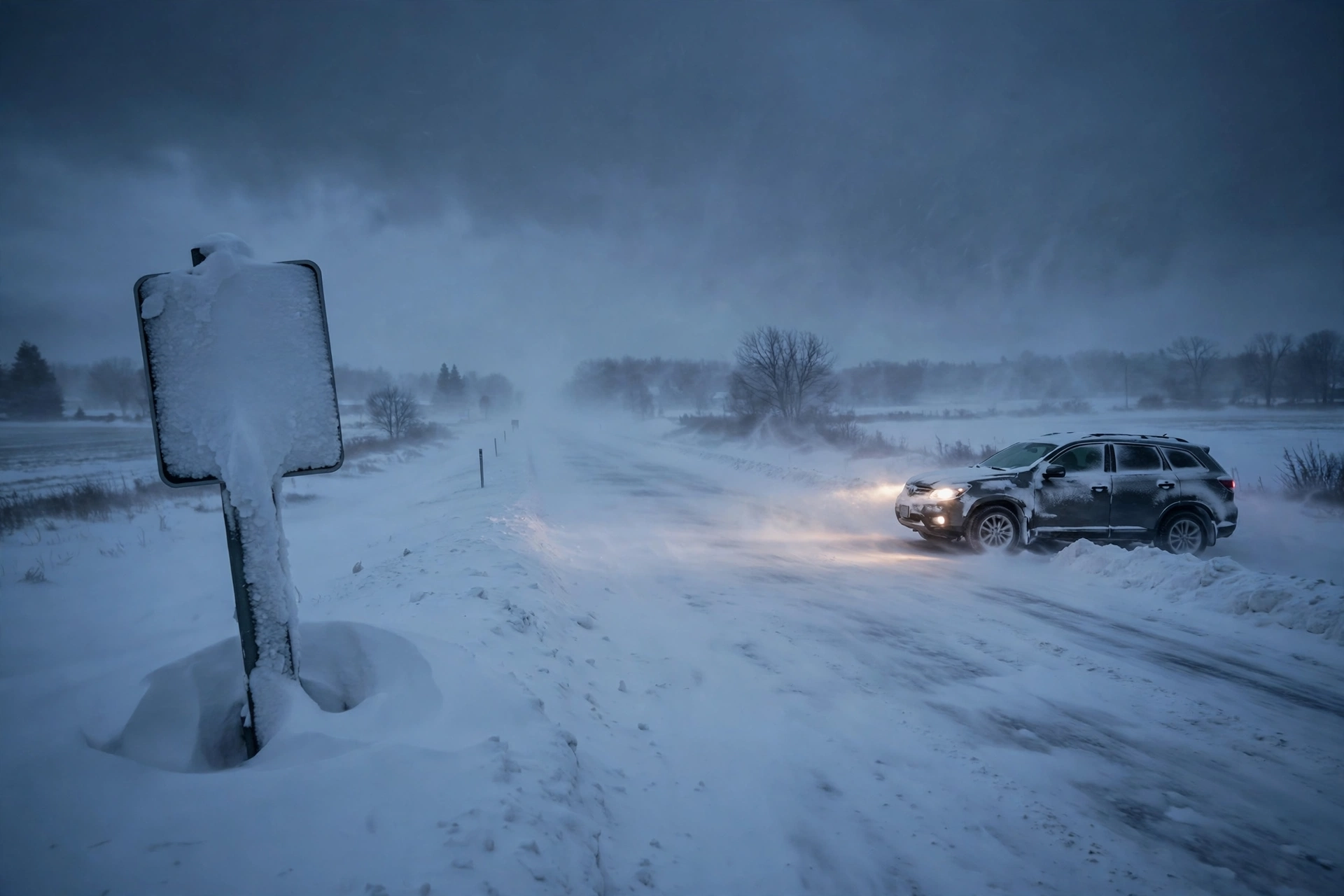
BRIARFIELD, Ont. — November 12, 2026 — The message was nine words long, and it was wrong. “Blizzard warning lifted. Highways open. Travel safe.” It arrived on the phones of thousands of residents in Briarfield County on Tuesday evening, sent through the county’s own emergency alert system, at the exact hour the storm outside was getting worse.
By 6:40 p.m., the highway out of Briarfield had already filled with cars. Commuters who had waited out the afternoon at work headed home. Parents drove to pick up children from evening practices. Trucks rolled out of the depot at the edge of town. Within the hour, more than sixty vehicles were stuck in the snow along a ten-kilometre stretch of County Road 7, and the county’s tow trucks could not reach them — the road they needed to use was the same road the alert had just declared open.
A single false message sent hundreds of drivers into a blizzard — because it arrived through the one channel they were told to trust.
The alert was never issued by the county. Someone had logged into the alert platform through the account of the fictional vendor that runs it, Harbourline Alert Services, and sent the all-clear from inside the system itself. To every phone that received it, the message looked identical to every genuine alert the county had ever sent — same sender name, same format, same tone. There was nothing to spot, because nothing about the message itself was fake. Only the person who pressed send was.
“I got the alert, I looked out the window, and the snow was still coming down sideways,” said Marla Jensen, a fictional Briarfield resident who drove out to collect her son from hockey practice and spent four hours in her car before a snowplow reached her. “But the county had told us, over and over, that the alert system is the official word. If the alert says the roads are open, you believe the alert. I thought my eyes were wrong and the system was right. It was the other way around.”
The fictional vendor says the attacker got in with a password that had been reused from an older breach, on an administrator account that had no second login check. The account belonged to a former contractor whose access was never switched off after the contract ended. The fake alert was live for forty-one minutes before the county’s emergency coordinator noticed the message had not come from her office and ordered it cancelled — by then, the cars were already on the road.
The county did not lose control of its roads. It lost control of the account that speaks for them.
Emergency alerts work because people act on them without stopping to verify. That is the whole point of the system, and it is also what makes it a target. A warning system does not need to be hacked at the level of the network or the phones. It only needs one login, on one vendor account, used at the moment when people are deciding whether to stay put or get moving.
“An alert is the most trusted message a government ever sends,” said Dr. Elena Marsh, a fictional emergency-communications researcher who studies public warning systems. “People are trained to obey it instantly — do not stop, do not check, just act. So when the system itself is the thing that has been compromised, there is no human step left to catch it. The defence has to happen before the message goes out: who can send one, how they prove it is really them, and how fast someone notices when it is not.”
In this fictional case, the county says no one was seriously hurt, though two drivers were treated for cold exposure and a dozen vehicles were left overnight on the highway. The alert system has been shut down while the vendor rebuilds its access controls, and the county says it will not send alerts through a single login again. Every alert will now need two people to approve it, and every alert will be checked against the weather service’s own feed before it goes out.
The defence is not a sharper eye for fake alerts. It is never trusting one message alone when the stakes are a storm.
That advice applies well beyond one county road. Across Canada, towns, school boards, and transit systems all send urgent messages through vendor platforms, and residents are trained to act on them immediately. The defence is not a cleverer filter. It is a habit of checking a second source before making a decision you cannot undo, and of treating any sudden all-clear during a storm as a claim to verify, not an order to follow.
Lessons Learnt
- Check a second source before you drive. If an alert says the roads are open, confirm it with the radio, the weather service, or the county’s own website. One message is a claim, not a fact.
- Look out the window. If what you can see does not match what the alert says, trust what you can see. A storm does not end because a phone says so.
- Keep a storm kit in the car. A blanket, water, a charged phone, and a flashlight turn a long wait in the snow from a danger into an inconvenience.
- If you run a warning system, lock the account that sends the alerts. Turn on a second login check, switch off accounts the moment someone leaves, and make every alert need two people to approve it.
The fictional county says the alert system will stay offline until the new checks are in place, and the next storm warning will come through the radio first.
The roads were never open. The alert was never theirs. And the difference — one second source, checked before the keys were in the ignition — was all it took.
Watching the perimeter — and what slips past it.
ODTN News note: ODTN.News is a fictional news platform set within the Operation: Defend the North universe. All names, organizations, quotes, and events in this article are entirely fictitious. Any resemblance to real people, companies, or incidents is purely coincidental. The cybersecurity challenges it represents are very real.









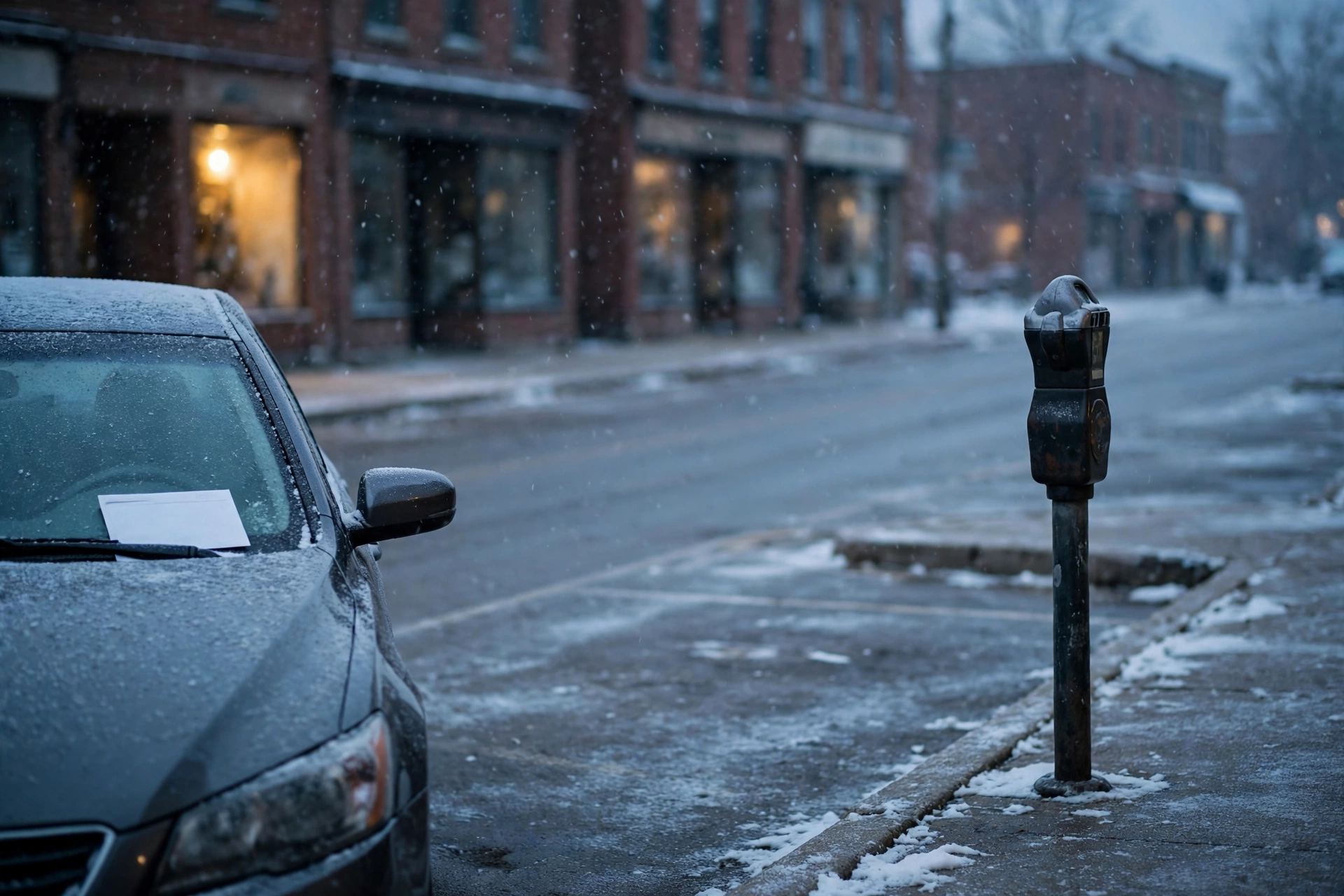
STONEBRIDGE, Ont. — November 7, 2026 — Eight hundred and sixty dollars in parking fines. Not one cent of it reached the town.
That is the total one fictional Stonebridge driver paid over three weeks, through a website that wore the town’s name, the town’s colours, and the town’s crest — and that the town had never built. The site, stonebridge-pay.ca, sat one hyphen away from the town’s real payments page. It accepted cards, issued receipts, and thanked drivers for paying promptly. The money went somewhere else entirely, and the real fines stayed unpaid.
The tickets themselves were the delivery mechanism. Plain white envelopes, printed to look like the town’s parking notices, were left under windshield wipers along the main street and in the lot behind the library. Each one carried a fine amount, a plate number, and a QR code “for fast payment.” Drivers scanned the code in the moment — standing in the cold, keys in hand, keen to get the fine settled before it grew — and the code took them straight to the copycat.
Nobody hacked the town’s payment system. The town’s parking records were never touched. The copycat simply stood next to the real thing, in the same colours, and collected the fines the town was owed — while the town, unaware, kept adding late fees to accounts its own residents believed were settled.
The town never sent the tickets. The tickets came to the drivers.
According to the fictional residents who spoke to ODTN News, the first sign of trouble was a second notice. Samira Haddad, a fictional Stonebridge resident, paid two fines through the site in October and thought the matter closed — until a letter arrived saying both fines were now overdue, with late fees attached. She called the town office, receipt numbers in hand. The town had no record of either payment.
“I paid it the same day I got the ticket,” said Haddad. “The site had the town’s crest, the right colours, the right fine amounts. It gave me a receipt with a number on it. I did everything you are supposed to do when you get a ticket — pay it quickly and keep the receipt. Then the town told me I still owed the money, plus late fees, because I had paid the wrong website.”
A parking ticket is a deadline with a QR code on it — and deadlines make people scan first and check later.
Municipal-payments advisors say parking fines are attractive precisely because they come with urgency built in. A fine grows if it is not paid, so drivers act fast, on the street, from a phone, without the pause they would take over a larger bill at home. A ticket also asks for exactly the information a thief wants: a plate number, a name, and a card. And a windshield is a trusted place — a ticket left on a car feels official in a way an email never does.
“A tax bill arrives in the mail and you read it at the kitchen table,” said Irene Kwan, a fictional municipal-payments advisor who works with small towns on their payment systems. “A parking ticket arrives on your windshield and you deal with it where you stand. That is the whole trick. The site did not need to break into anything. It just needed to be the first place a driver in a hurry landed — and to look enough like the town that nobody stopped to ask whose site it was.”
In this fictional case, the copycat stayed live for nineteen days before the town had the domain taken down. The town clerk, Martin Doyle, told residents the town never places QR codes on parking tickets, that fines are paid only through the town’s own website or in person at town hall, and that anyone who paid through the copycat should contact their bank and the town office. The town has not said how many drivers paid through the site, or how much money was collected.
The fictional residents say they have since changed how they handle tickets. Fines are now paid by typing the town’s address into a browser by hand, or in person at town hall — never through a code printed on the ticket itself. Several households have asked their banks to reverse the charges, and the town office has taken to answering the same question dozens of times a day: no, the ticket on your windshield is not necessarily from the town.
The defence is not a cleverer ticket. It is a habit of never paying a fine from a code on a windshield.
That advice applies well beyond one town’s parking fines. Across Canada, towns and cities send residents bills, tickets, and notices that all carry a link or a code and a deadline — and a copycat needs only one hyphen, or one sticker on a windshield, to stand beside the real thing. The defence is not a better website. It is a habit of reaching the payment page yourself, and of treating any code on a piece of paper left on your car as untrusted until the town confirms it.
For drivers, the checklist is short: never pay a fine by scanning a code on the ticket — type the town’s address yourself or pay in person; check that the site address matches the one on the town’s own letters, not the one on the ticket; and if you paid through a site you now doubt, call your bank and the town office the same day. For towns, it is equally simple: never put a QR code on a parking ticket, publish the real payment address everywhere, and take copycat domains down the same day they appear.
The fictional residents say the copycat site has been taken down, and the town’s real payment page is unchanged.
The fines were never paid. The money was never the town’s. And the difference — one address, typed by hand instead of scanned from a windshield — was all it took.
Watching the perimeter — and what slips past it.
ODTN News note: ODTN.News is a fictional news platform set within the Operation: Defend the North universe. All names, organizations, quotes, and events in this article are entirely fictitious. Any resemblance to real people, companies, or incidents is purely coincidental. The cybersecurity challenges it represents are very real.

GUELPH, Ont. — November 4, 2026 — The ice was booked, the kids were ready, and the confirmation email looked exactly right. When families in a fictional Guelph neighbourhood arrived for their weekend rink time, their names were not on the list at all. The booking had not been lost. The page they had booked through was never the city’s page.
The problem was not in the city’s own recreation system. It was in the link most families found first: a post shared in parents’ groups and forwarded by email, promising a simple way to reserve public skate and shinny slots. The page it led to carried the rink’s name, its schedule, and a familiar-looking booking calendar. It asked for a name, a phone number, an email address, and a payment card to hold the ice time. None of that information ever reached the city.
The ice time had not been double-booked. It had never been booked through the real system at all.
According to the fictional community association at the centre of the story, the pattern emerged only when several families compared notes at the rink door. They had all booked through the same forwarded link, but none of them appeared on the real reservation list, and none of them had received a confirmation from the city’s own address. One parent had even called the number on the fake page to ask about skate rentals, and been reassured by a polite voice that her slot was confirmed.
“We tell families to book early and show up ready to skate, and that is exactly what they did,” said Priya Sandhu, the fictional association’s recreation coordinator. “Nobody expects to have to inspect a booking page the way you would inspect a front door. But someone built a copy of our rink booking, put it where parents share links, and collected their details as they walked in.”
Copycat booking pages are a quiet, growing target for payment fraud.
Public-service and cybersecurity advisors say community bookings are attractive precisely because they are seasonal, trusted, and shared in a hurry. A rink slot does not need to be breached in the dramatic sense — an attacker only needs to copy its name and schedule onto a convincing page, and wait for a forwarded link to do the rest. Parents, meanwhile, trust a link shared by another parent far more readily than one from a stranger, especially when the page looks official and the ice time is limited.
“The page did exactly what it was designed to do. It took a booking,” said one payments-fraud advisor familiar with copycat booking cases. “The attacker did not need to break into the city’s systems. They only needed to stand between families and the real booking page, and let honest planning do the rest.”
In this fictional case, the damage was not a single dramatic theft. Individual families handed over names, phone numbers, email addresses, and, in some cases, payment-card details entered to hold a slot. The association estimates dozens of families booked through the fake page before it was reported, and several later received suspicious calls and messages using details only the fake form had collected. For the families, the loss was compounded by the moment of discovery — arriving at the rink, skates in hand, to find they had never been booked at all.
The fictional association says it has since changed how it shares booking links. Real rink links now come only from the city’s own website and the association’s own mailing list, never from a forwarded social post alone, and the association checks shared links weekly, the way it checks its rink schedule. Families who used the fake page are being asked to change any password they reused, watch for calls that quote their phone number, and check statements for small charges in the days after booking.
The fix, experts say, is deliberately unglamorous: get the link from the source, not the share.
That advice applies well beyond one rink. Across Canada, families book pools, arenas, classes, and camps through links passed along in group chats and parents’ pages, and most check them only when something goes wrong. The defence is not a cleverer booking platform. It is a habit of checking where the link came from before handing it personal details.
For families, the checklist is short: book through the city’s own website or the number printed on its official notice, be suspicious of any booking page that asks for a full payment card to hold a free or low-cost public slot, and check that a confirmation comes from the city’s own domain. For community groups, it is equally simple: publish one official link, say clearly where it will come from, and give families a simple way to report a copy.
The fictional association says affected families have been offered help rebooking for real rink time, and the copycat page has been reported for removal.
The families showed up ready to skate. The ice time they booked was never the city’s. And the difference — one link, checked before the details were entered — was all it took.
Watching the perimeter — and what slips past it.
ODTN News note: ODTN.News is a fictional news platform set within the Operation: Defend the North universe. All names, organizations, quotes, and events in this article are entirely fictitious. Any resemblance to real people, companies, or incidents is purely coincidental. The cybersecurity challenges it represents are very real.

PRINCE GEORGE, B.C. — November 1, 2026 — The Wi-Fi login page looked exactly right. It carried the library’s colours, it asked for a library card number and PIN, and it connected visitors to the internet in seconds. For regulars at Sprucewood Public Library, the fictional Prince George library at the centre of the story, there was no reason to doubt it — until staff realised the page was not theirs at all.
The network had appeared beside the library’s real Wi-Fi, with a name only one word different. Patrons who joined it were taken to a copy of the library’s sign-in screen, typed in their credentials, and were passed through to the internet as normal. Nothing failed. Nothing looked broken. The theft happened in the moment that looked most ordinary.
The login page had not been hacked. It had been imitated.
According to the fictional library’s account, the fake network was discovered only when a staff member noticed two nearly identical network names on her own phone and asked a colleague which one was real. By then, the library estimates, dozens of patrons had signed in through the copy over several days. Some had also reused the same PIN elsewhere, which is where a library login stopped being a library problem.
“We offer free Wi-Fi because people need it — for job applications, for homework, for staying in touch,” said Clara Beaumont, Sprucewood’s fictional library director. “Nobody should have to be a security expert to sit down with a laptop in a public library. But someone set a trap in the one place people expect to be safe, and it looked exactly like us.”
Public Wi-Fi is a quiet, growing target for credential theft.
Cybersecurity advisors say fake hotspots — sometimes called evil twins — are attractive precisely because they require no break-in. An attacker only needs a small device, a network name close enough to the real one, and a login page copied from the genuine sign-in screen. Visitors do the rest themselves, willingly handing over credentials to a page they believe they have used before.
“The page did exactly what it was designed to do. It asked, politely, for a login,” said one cybersecurity advisor familiar with public Wi-Fi cases. “People are trained to sign in to Wi-Fi. The attacker did not need to defeat any security — they only needed to be the first network a phone offered, with a name that looked familiar enough not to question.”
In this fictional case, the damage was not a single dramatic breach. Patrons’ library accounts were accessed, holds were changed, and a handful of people who reused their library PIN as a password elsewhere found other accounts probed as well. The library says no financial information was stored in its system, but the incident still forced it to reset credentials, warn patrons, and explain to regulars why a page they trusted had not been its own.
Sprucewood says it has since changed how its Wi-Fi works. The real network name is now posted at every entrance and on every table, staff can confirm it on request, and the sign-in page no longer asks for a full library card number and PIN on public Wi-Fi — a simpler guest pass is issued at the desk instead. The library has also added a warning to its login screen: if a sign-in page appears before you have chosen the network name posted in the building, stop and ask staff.
The fix, experts say, is deliberately unglamorous: check the network name before you check the login box.
That advice applies well beyond one library. Across Canada, libraries, community centres, cafés, and transit hubs offer free Wi-Fi that visitors join without a second thought, and most of those networks are easy to imitate with a similar name. The defence is not better Wi-Fi. It is proof of which network is real.
For public spaces, the checklist is short: post the exact network name where people can see it, never ask for sensitive credentials on a public Wi-Fi login, and give staff a simple script for the question “is this your Wi-Fi?” For visitors, it is equally simple: join only the network name posted in the building, never reuse a PIN or password from another account on a Wi-Fi login, and if a login page appears unprompted, close it and ask staff before typing anything.
Sprucewood says patron credentials caught in the fake sign-in have been reset, and the library is working with its internet provider to monitor for lookalike networks near the building.
The page looked like the library’s. The network name almost was. And the difference — one word, checked against a sign on the wall — was all it took.
Watching the perimeter — and what slips past it.
ODTN News note: ODTN.News is a fictional news platform set within the Operation: Defend the North universe. All names, organizations, quotes, and events in this article are entirely fictitious. Any resemblance to real people, companies, or incidents is purely coincidental. The cybersecurity challenges it represents are very real.


Hundreds of Shoppers Charged Twice at the Till

False All-Clear Sent Drivers Into the Blizzard

Budget Vote Collapsed After Councillors’ Voices Were Cloned

Reddit Thread Over ‘Inventory Drift’ Surges as Canadians Vent Over Retail Glitches

Are Canadian Companies Learning from Global Cyber Attacks? Insider Insights into the Secret Downfall of Canadian Businesses

Canadian Airline NorthSky Faces Cyberattack, Disrupting Online Services


-
 Cybersecurity2 weeks ago
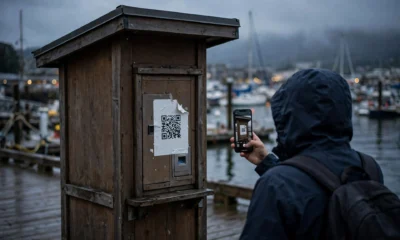
Tourists Scanned. Strangers Collected.
-

 Cybersecurity2 weeks ago
Winnipeg Distributor Loses Payment to Impostor Email
-

 Cybersecurity2 weeks ago
Regina Pharmacy Shut Out of Its Own Prescriptions
-

 Business2 weeks ago
Winter Cargo Vanishes on Paper Trail
-
 Cybersecurity2 weeks ago
Nova Scotia Town Goes Dark Overnight
-
 Cybersecurity2 weeks ago
Sudbury Boss’s Voice Calls From Another Phone
-

 Tech2 weeks ago
Charlottetown Vaccines Hang on a Glitch
-

 Tech2 weeks ago
Cold Storage Warms While Dashboard Glows Green