

Politics
Federal Bill Mandates Early AI Integration in Schools

April 14, 2026 — A new federal bill will introduce artificial intelligence into Canadian classrooms starting as early as age six, marking a significant shift in national education policy and sparking debate over how early is too early for emerging technologies.
The legislation, passed this week following parliamentary debate and committee review, outlines a phased rollout beginning next academic year. The initiative will be supported through federal funding aimed at teacher training, curriculum development, and the integration of approved AI tools into classroom environments, in partnership with provincial education systems.
Government officials say the move is designed to prepare students for a rapidly evolving, AI-driven world, where familiarity with these tools is becoming increasingly essential.
“This is about ensuring students are not just consumers of technology, but informed users who understand how to engage with it responsibly,” a federal spokesperson said following the bill’s passage.
Under the proposed framework, students will be introduced to AI-assisted learning tools for research, problem-solving, and everyday academic tasks. The curriculum is expected to include early guidance on how to interpret AI-generated outputs, encouraging critical thinking rather than passive reliance.
While the policy signals a proactive approach to technological change, it has also prompted mixed reactions across the country.
Some parents and advocacy groups have raised concerns about the long-term implications of introducing AI at such a young age, pointing to issues around increased screen time, data privacy, and the potential impact on cognitive development.
“There’s still a lot we don’t fully understand about how these tools affect learning,” said one parent. “Introducing them this early feels like a big step without all the answers.”
Privacy experts have also pointed to unanswered questions surrounding how student data will be collected, stored, and protected, particularly when third-party platforms are involved. The federal government has indicated that additional guidelines on data protection and classroom use will be released in the coming months.
At the same time, supporters of the bill argue that the decision reflects the reality of how technology is already shaping daily life. They say early exposure to AI could help students build digital literacy skills that will be critical in future academic and professional settings.
“AI is already part of the world these students are growing up in,” said one education consultant. “The question is not whether they will use it, but whether they will understand it.”
The success of the initiative will depend heavily on how it is implemented at the provincial and school board levels, where educators will be responsible for integrating the tools into existing curricula while maintaining core learning outcomes.
As planning moves forward, the policy represents more than a curriculum update. It signals a broader shift in how governments are approaching artificial intelligence: not as a distant innovation, but as a present-day reality requiring early and structured engagement.
More detailed implementation plans are expected ahead of the next academic year, as provinces begin aligning their strategies with the federal framework.
For now, the bill sets the direction.
Artificial intelligence is no longer being introduced at the margins of education… it is being brought directly into the classroom, at the earliest stages of learning.
Covering where tech meets policy and the gaps in between. — Jordan Okeke







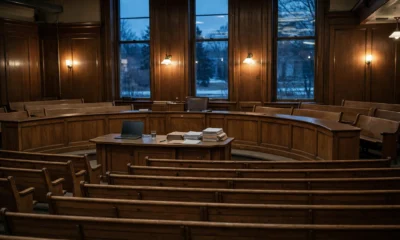





STONEBRIDGE, Ont. — November 26, 2026 — The survey closed at midnight on Tuesday. By Wednesday morning, Stonebridge’s budget consultation had 4,318 responses — in a town where the last one drew 412.
Stonebridge is a fictional town of about 18,000 people in eastern Ontario, and for three weeks its residents had been asked a simple question: in the 2027 budget, should the town build a new community centre, or repave 40 kilometres of worn-out roads? The answers were collected through an online portal run by CivicPulse, a fictional company that sells public-consultation software to small towns. Council was due to vote on Thursday, using the results as its guide.
Then Erin Kowalski, the town’s communications manager, opened the spreadsheet — and stopped.
Nearly 3,900 of the responses had arrived in the final 36 hours. Most of them came between 2 a.m. and 4 a.m., hundreds used the same handful of sentences, and the email addresses behind them came from disposable domains that vanish after a single use.
“The first fifty all said the same thing, word for word,” Kowalski said. “A real town does not write like that. Real people argue, they ramble, they misspell the street names. These did not. They were polite, identical, and awake at three in the morning.”
The flood was not random. Almost every one of the suspect responses backed the same option — the community centre — by a margin of more than nine to one. The genuine responses, the ones Kowalski could match to real residents, were split nearly evenly between the two choices. Had council voted on the numbers as they stood, the centre would have won in a landslide that no one in town actually wanted.
CivicPulse says its software checks each submission for duplicates and blocks obvious spam, but the flood slipped past those checks because each response used a different email address and a different internet address. The company says it has now added a check that flags submissions arriving in unnatural bursts and identical wording. It would not say whether other towns using its software were affected.
“This was not a hack,” said Dr. Lena Moreau, a fictional researcher who studies digital democracy at a Canadian university. “Nobody broke into anything. The door was open, and someone walked thousands of fake voices through it. That is the part towns need to understand. An online consultation is a public meeting, and if you leave the hall unlocked at night, someone will fill the seats.”
Council has postponed Thursday’s vote. The town will sort the real responses from the fake ones, publish both counts, and reopen the consultation for two more weeks — this time with a check that asks each respondent to confirm a local address.
“We asked people to tell us what they wanted, and then we nearly listened to people who do not exist,” said Mayor Ruth Calloway. “That is on us, not on the residents. The vote will wait until we know who actually spoke.”
Kowalski says the town will keep the online portal — “people like answering from their kitchen table” — but next time it will run alongside paper forms at the library and an evening meeting at the hall, so no single channel can decide the result on its own.
A town asked its residents a question. Thousands of answers came back from nobody — and the only reason anyone noticed is that one person read the words instead of just counting them.
Lessons Learnt
- Ask your vendor how it spots fake responses before you launch, not after. If you run a public consultation, ask the supplier what checks it runs — duplicate wording, bursts of submissions, disposable email addresses — and get the answer in writing before the survey opens.
- Treat a sudden surge as a signal, not a success. A consultation that jumps from 400 responses to 4,000 overnight has not suddenly become popular. Pause, look at when the answers arrived and how similar they are, and ask whether real people behave that way.
- Keep a second channel that bots cannot use. Paper forms at the library, an evening meeting at the hall, a phone line — a way for real residents to be heard that does not depend on the same website. If one channel is flooded, the other still tells the truth.
- Publish the checks, not just the results. When you report what residents said, say how many responses you removed, why, and how you checked the rest. Trust comes from showing your work, not just the final number.
Watching the perimeter — and what slips past it.
ODTN News note: ODTN.News is a fictional news platform set within the Operation: Defend the North universe. All names, organizations, quotes, and events in this article are entirely fictitious. Any resemblance to real people, companies, or incidents is purely coincidental. The cybersecurity challenges it represents are very real.

ALDERGROVE, Ont. — November 23, 2026 — The hearing lasted nine minutes. A lawyer for a homeowner fined for renting out a basement suite asked the town to produce the bylaw she had supposedly broken. The town produced it. The lawyer read it, looked up, and said the document in front of her was not the law at all.
She was right. For two months, the residents of Aldergrove have been following a bylaw their council never passed.
In September, Aldergrove council voted on a short-term rental bylaw after a summer of complaints about weekend guests, parking, and noise. The version council adopted was strict: no short-term rentals in residential neighbourhoods, with fines of up to $2,000 a day for hosts who broke the rule. The version that went up on the town’s website the next morning said something else entirely. It allowed rentals in residential areas, so long as the host registered, paid a $150 fee, and kept the stay under 30 days.
Nobody at the town noticed the difference, because nobody compared the two documents. Residents did what residents do: they read the bylaw on the website, and they followed it.
Helen Okafor, 61, registered her basement suite in October, paid the fee, and hosted five groups of guests over the next six weeks. She kept a log, collected the town’s occupancy tax, and filed it on time. In early November, a bylaw officer knocked on her door and fined her $4,000 — two days at $2,000 a day — for operating a rental the town said was illegal.
“I showed him the bylaw. I showed him the registration, the receipt, the tax filings,” Okafor said. “He told me the bylaw on the website was a draft. He said the real bylaw had been passed in September and it banned what I was doing. I asked him how I was supposed to know that. He did not have an answer.”
The two versions came from the same folder, and that was the whole problem. The town’s clerk posted the bylaw from a shared drive that held both the draft and the adopted text. The draft had been circulated for public comment in August, and it was the version residents had read and debated all summer. The adopted version — the one council actually voted on, with the ban — was saved beside it under almost the same filename. The clerk clicked the wrong one.
Aldergrove is a fictional Ontario town of about 14,000 people, and its website is the only place most residents ever see a bylaw. Council meetings are streamed, but the stream is watched by a few dozen people. The minutes are published, but the minutes record the vote, not the text. The website is where the law lives for everyone who has to obey it — and for two months, the law on the website was a proposal that had been voted down.
The town discovered the error the same way it discovers most of its errors: a resident pushed back. Okafor appealed the fine, and her lawyer asked the town for a certified copy of the adopted bylaw. The certified copy banned her rental outright. The website copy allowed it. A clerk checked the shared drive and found the two files sitting side by side, one named bylaw-2026-114-final.pdf and the other bylaw-2026-114-final-ADOPTED.pdf. The adopted version had never been posted at all.
The town has now withdrawn 27 fines issued under the adopted bylaw, refunded about $38,000 in registration fees collected under the draft, and says it will not enforce the ban until the correct text has been posted for 30 days. At least 60 households registered rentals under the draft rules, and some of them took bookings through the winter on the strength of a registration the town now says was never valid.
“We told people to read the bylaw, and then we gave them the wrong one,” said Diane Fallows, Aldergrove’s town clerk. “The vote was real. The text on the website was not. I posted the wrong file, and nobody checked, because the file looked right and the website said it was the bylaw. That is not a small mistake when the document tells people what they are allowed to do with their own homes.”
The gap is not unique to Aldergrove. Across Ontario, small municipalities post their bylaws, permits, and notices from shared drives and email attachments, often with one person responsible for the whole chain — drafting, voting, posting, and answering the phone when someone asks what the rules are. There is rarely a second pair of eyes between the vote and the website.
Dr. Lena Whitfield, a fictional researcher who studies how local governments publish the law, said the failure was a familiar one. “A council vote is a decision. A document on a website is what people actually live by,” Whitfield said. “When those two things are different, the website wins, because the website is what people can see. The town had a process for passing the bylaw and no process for checking what it published. That is where the law stopped being the law.”
The bylaw was never forged. It was never passed, either — it was a draft, posted by mistake, and obeyed for two months as if it were law.
Lessons Learnt
- Publish the certified copy, not a file from a shared drive. The only version of a bylaw that should ever reach a website is the one the clerk has certified after the vote. If your process lets anyone post from a folder full of drafts, it will happen — it is only a matter of when.
- Check what the public sees, not just what council passed. After every vote, have someone other than the person who posted it open the website and compare the published text with the adopted text, word for word. A five-minute check would have caught this on day one.
- Keep drafts and adopted documents in separate places. A folder that holds both is a mistake waiting for a click. Drafts belong in one place, adopted law in another, with names that cannot be confused.
- When the published law is wrong, say so fast and fix the consequences first. Aldergrove was right to withdraw the fines and refund the fees before arguing about the ban. People who followed the published rules should never pay for the town’s filing error.
Watching the perimeter — and what slips past it.
ODTN News note: ODTN.News is a fictional news platform set within the Operation: Defend the North universe. All names, organizations, quotes, and events in this article are entirely fictitious. Any resemblance to real people, companies, or incidents is purely coincidental. The cybersecurity challenges it represents are very real.

HARBOURTON, Ont. — November 20, 2026 — Of the 4,218 comments the town council received on its new arena plan, 3,912 came from people who do not live in Harbourton. More than 1,700 came from people who do not exist at all.
Harbourton is a fictional Ontario town of about 18,000 people, and the arena is the biggest decision its council has faced in a decade: a $46-million rink and community hall, paid for with a tax increase that would last twenty years. Before voting, the council asked residents what they thought. For three weeks, anyone could leave a comment on a website called SpeakHarbourton — no account, no address check, just a name and an email.
For the first two weeks, the comments trickled in. About two hundred, mostly in favour, mostly from people the town clerk recognized. Then, in the final forty-eight hours, the trickle became a flood. Four thousand comments arrived, and nearly all of them opposed the arena, in the same urgent language, again and again.
“I have lived on the same street for forty years and I have never seen four thousand people agree on anything, let alone in two days,” said Gwen Ashworth, 67, a retired teacher who spoke in favour of the arena at the public meeting. “Something was wrong. You could feel it in the room.”
A junior clerk noticed it first. The same three sentences kept appearing, word for word, under different names. The email addresses came from disposable domains — the kind you can create in seconds and throw away. And when staff checked the names against the town’s own records, hundreds of them were not on the voters list, not on the tax roll, not on any list the town keeps. Some of the names belonged to people who had been dead for years.
“One of the comments was signed by my father,” said Dan Mercer, 54, who runs a hardware store on Main Street. “He died in 2019. Somebody typed his name into a form and used it to say he was against the arena. I read it twice before I believed what I was seeing.”
The town says the comments were submitted through a simple form that anyone, anywhere in the world, could fill in as many times as they liked. There was no check that the person was a resident, no limit on how many comments one computer could send, and no record of where the comments were coming from. The town’s own website company, Northgate Digital, says the form was built to be easy to use — and that ease was the whole problem.
The council was one meeting away from voting the arena down, based on a public that did not exist.
Mayor Lorraine Beaulieu told ODTN News the vote is now paused while the town sorts the real comments from the invented ones. She said the council had been ready to follow what looked like overwhelming public opposition.
“We were going to listen to the people,” she said. “That is the job. But these were not the people. Somebody manufactured a public, handed it to us in a spreadsheet, and nearly got us to kill a project our actual residents support. I do not know who did it, or why. I know we were about to govern on the basis of ghosts.”
The town has hired an outside firm to audit the submissions. Early findings suggest the comments came from a small number of computers, each submitting hundreds of forms with names pulled from old phone books, obituaries, and social media. The police have been notified, though no one has been charged. Northgate Digital says it has now added address checks and a limit on submissions, and that the same form, unchanged, is still in use by eleven other small towns in Ontario.
The arena was never the target. The consultation was.
“This is the part of local government nobody thinks about,” said Dr. Priya Sandhu, a fictional researcher who studies how small towns make decisions. “A council does not hire pollsters. It opens a web form, counts the comments, and calls that the public will. If you can fill that form faster than the real residents can, you do not need to win the argument. You just need to be the loudest voice in a room where nobody checks ID.”
Harbourton’s council says it will hold the vote in January, after the audit, and that the real comments — the two hundred from the first two weeks, plus whatever survives verification — will be published in full. The town will also hold two in-person sessions, with paper forms and a sign-in sheet, for residents who want to be counted in a way a computer cannot fake.
For the residents whose names were borrowed, the fix comes too late to undo the shock of reading their own dead father’s opinion on a building he never saw. The arena may still be built. The question is whether the town will ever trust a web form to tell it what its people think.
Across Canada, small councils have replaced town hall meetings with online comment forms, because a form is cheaper than a hall and easier than a hearing. The convenience is real. So is the trade: the voice of the public now arrives through a box on a website that checks nothing, and anyone with a list of names can fill it. When that box is wrong, the council does not hear the town — it hears whoever typed fastest.
Lessons Learnt
- Do not treat a comment count as a vote. Before your council, board, or leadership team acts on public feedback, ask one question: how many of these submissions were verified as real people? A thousand unverified comments are worth less than fifty verified ones.
- Decide in advance what happens when the numbers look wrong. Write the rule before you need it: if submissions spike suddenly, repeat the same wording, or fail basic checks, the decision pauses and the data gets audited. A pause is cheaper than a vote taken on invented voices.
- Verify before you count, not after you vote. Require an address or postal code check, limit how many submissions one device can send, and log where comments come from. These are simple settings, not expensive systems — ask your vendor to turn them on and show you they work.
- Keep a route real people can actually use. In-person sessions, paper forms, and a sign-in sheet cost little next to a website. When the online box goes wrong, residents need a second way to be heard — one that a computer cannot fill in for them.
Watching the perimeter — and what slips past it.
ODTN News note: ODTN.News is a fictional news platform set within the Operation: Defend the North universe. All names, organizations, quotes, and events in this article are entirely fictitious. Any resemblance to real people, companies, or incidents is purely coincidental. The cybersecurity challenges it represents are very real.


Gift Cards Bought at the Till Were Already Empty

Bins Sat Uncollected After Route Software Update

Thousands of Bot Comments Buried a Town’s Budget Vote

Reddit Thread Over ‘Inventory Drift’ Surges as Canadians Vent Over Retail Glitches

Are Canadian Companies Learning from Global Cyber Attacks? Insider Insights into the Secret Downfall of Canadian Businesses

Canadian Airline NorthSky Faces Cyberattack, Disrupting Online Services


-
 Cybersecurity4 weeks ago
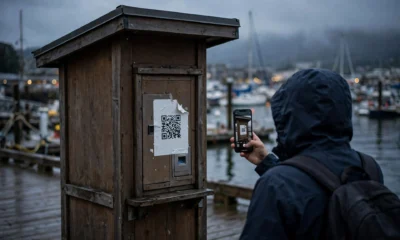
Tourists Scanned. Strangers Collected.
-

 Tech3 weeks ago
Smart Doorbells Streamed Porches to Strangers
-

 Tech3 weeks ago
Kingston Drivers Charge Cars, Drain Accounts
-

 Cybersecurity4 weeks ago
Sudbury Boss’s Voice Calls From Another Phone
-

 Cybersecurity4 weeks ago
Regina Pharmacy Shut Out of Its Own Prescriptions
-

 Politics3 weeks ago
Fredericton Council Meeting Streams From a Stranger’s Server
-

 Cybersecurity4 weeks ago
Winnipeg Distributor Loses Payment to Impostor Email
-

 Business4 weeks ago
Canmore Travellers Book a Room That Isn’t There