

Business
Months-Long Social Engineering Campaign Leads to $310 Million Loss at NorthRiver Exchange


April 7, 2026 — A prolonged and highly coordinated social engineering operation targeting NorthRiver Exchange has resulted in the unauthorized transfer of approximately $310 million in digital assets, according to sources familiar with the response.
The incident, which unfolded over nearly six months, is drawing attention across the cybersecurity community for its unconventional approach. Rather than exploiting software vulnerabilities or deploying malware, investigators say the attackers focused on building trust both online and in person, before leveraging that trust to gain access to legitimate systems and workflows.
Security teams have attributed the activity to a group now being tracked as Silent Ledger Collective.
According to multiple sources, the operation began with the creation of carefully constructed digital identities. These personas were designed to appear credible within professional and cryptocurrency-focused communities, complete with consistent activity, industry engagement, and verifiable backgrounds.
Over time, the individuals behind these identities became active participants in discussions, networking spaces, and industry events, gradually establishing themselves as legitimate actors within the ecosystem.
What distinguishes this campaign from more traditional cyber incidents is its progression beyond the digital environment. Investigators say members of the group engaged in real-world interactions, meeting with professionals and stakeholders connected to NorthRiver Exchange under the guise of investors, collaborators, or strategic partners.
These interactions were described as routine at the time and did not raise immediate suspicion.
By the later stages of the operation, the group is believed to have developed trusted relationships with individuals who had proximity to NorthRiver’s operational environment. This trust, rather than any technical exploit, became the primary access vector.
Instead of breaching systems directly, the attackers appear to have gained access through legitimate channels either by influencing internal processes, obtaining authorized credentials, or operating within established workflows. Because the activity aligned with expected user behavior, it did not trigger traditional security alerts.
“The challenge here is that nothing looked inherently malicious from a systems perspective,” one source involved in the investigation said. “The actions themselves were valid. It was the intent behind them that wasn’t.”
Once sufficient access was established, the group initiated a series of transactions using authenticated mechanisms. These transactions, while unauthorized in intent, were executed in a manner consistent with normal operations, allowing them to proceed without immediate detection.
By the time irregularities were identified, approximately $310 million in digital assets had already been transferred out of controlled accounts.
NorthRiver Exchange has not publicly confirmed the number of systems or accounts impacted but acknowledged that the incident involved “unauthorized activity conducted through legitimate access pathways.”
The company has since launched a comprehensive internal review, focusing on access governance, transaction authorization protocols, and third-party relationship management. Additional controls are being introduced, including enhanced verification requirements for high-value transactions and expanded behavioral monitoring to identify anomalies that fall outside of technical indicators alone.
Cybersecurity experts say the incident underscores a broader shift in the threat landscape, where attackers increasingly target human trust rather than technical weaknesses.
“This is a reminder that security isn’t just about defending systems—it’s about validating relationships,” said one industry analyst. “When an attacker can operate inside trusted boundaries, traditional defenses become far less effective.”
The blending of online persona development with in-person interaction is also raising new concerns about the convergence of physical and digital attack surfaces, particularly in industries where networking and partnership-building are core to operations.
While investigations into the full scope of the campaign remain ongoing, the incident is already being cited as a case study in how long-term social engineering can bypass even mature security environments.
There were no exploited vulnerabilities, no malware deployments, and no perimeter breaches.
Instead, the operation succeeded by embedding itself within the very systems of trust organizations rely on to function.
Watching the perimeter — and what slips past it. — Ayaan Chowdhury



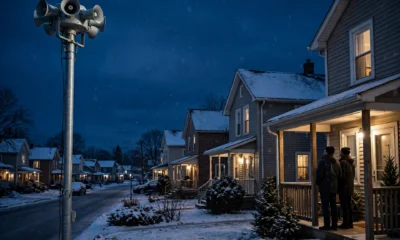









BIRCHWOOD, Ont. — November 22, 2026 — Seventy-three small businesses in Birchwood paid for insurance that did not exist. Between them they handed over about $412,000 in premiums — and not one of them was ever covered.
The first to find out was Marta Ellison, 48, who runs a café on Birchwood’s main street. A burst pipe in October flooded her kitchen, warped the floorboards, and forced her to close for nine days. She filed a claim the same week, expecting the liability policy she had bought in the spring to cover the repairs. The insurer’s reply was short: it had no record of her, no policy in her name, and no broker by the name on her certificate.
“I had the certificate framed behind the counter,” Ellison said. “It had the policy number, the coverage amounts, the insurer’s logo, everything. I paid $3,800 for it. The woman on the phone said the policy number didn’t exist. She said the certificate was a piece of paper with a made-up number on it.”
Birchwood is a fictional Ontario town of about 14,000 people, and most of its small businesses buy their insurance through brokers — someone local, or someone they find online, who arranges the policy and sends the certificate. This spring, a broker calling itself Northgate Shield Brokers began advertising commercial liability coverage to Birchwood businesses at prices well below what local brokers quoted. Its website looked polished and professional. It listed an office address, a phone number, and a registration number. It took applications online, issued certificates within a day, and accepted payment by e-transfer.
The office address was a mailbox rental. The phone number rang a mobile. The registration number belonged to a different firm, in a different province, that had never heard of Northgate Shield.
Ellison is not the only one. ODTN News has heard from a bike shop, a daycare, a landscaping company, and a bakery — all of them bought policies from Northgate Shield, all of them paid by e-transfer, and all of them received certificates that looked real. The bike shop owner, Devon Achebe, 41, paid $4,600 for a policy covering his stock and his workshop. When a customer slipped on his shop floor in September and threatened to sue, he called the insurer named on his certificate and was told the same thing Ellison heard: no policy, no record, no such broker.
“They sent me a certificate with a gold seal on it,” Achebe said. “It looked more official than the real one I had before. I never thought to check whether the company behind it was real. Why would I? They had a website, they had reviews, they answered the phone.”
The Financial Services Regulatory Authority of Ontario says Northgate Shield Brokers is not licensed in the province, and that the registration number on its website belongs to a firm in Manitoba that has no connection to it. The website is now offline, the phone number is disconnected, and the e-transfer payments — sent to an address in the broker’s name — have not been recovered. Police say they are investigating, though no one has been charged.
The businesses were not careless. They were sold a professional-looking lie, at a price that made sense, by a broker that answered the phone.
Dr. Lena Moreau, a fictional researcher who studies how small firms buy services online, said the scam worked because it copied every signal a real broker gives off — and because the businesses had no cheap way to check any of them.
“A café owner is not going to phone a regulator before buying insurance,” Moreau said. “She is going to look at the website, look at the price, and look at the certificate. The website was convincing, the price was attractive, and the certificate was a forgery that only an insurer could spot. The check that would have caught this — a two-minute call to the insurer on a number from the insurer’s own website — is the one check nobody does, because nobody thinks a certificate of insurance could be fake.”
Across Canada, small businesses increasingly buy insurance, licences, and permits online, because a website is faster than an appointment and cheaper than a broker’s office. The convenience is real. So is the trade: the certificate on the wall now carries the weight of a promise, and when the company behind it does not exist, the first person to find out is the one standing in a flooded kitchen, holding a policy number that was never real.
Lessons Learnt
- Check the broker with the regulator before you pay. In Ontario, the Financial Services Regulatory Authority lists every licensed broker. A two-minute search tells you whether the firm is real — do it before the first payment, not after a claim.
- Call the insurer on a number from their own website. Do not trust the phone number on the certificate. Look up the insurer yourself, call them, and ask them to confirm the policy number and your name. If they have no record, you have no coverage.
- Never pay a premium by e-transfer to a personal address. A real insurer or broker takes payment through traceable channels. An e-transfer to a name you cannot verify is money you will not get back.
- Treat a price far below the market as a warning, not a bargain. If one broker quotes half what every other broker quotes, ask why — in writing — before you sign. A deal that good usually means something is missing, and what is missing is the coverage itself.
Watching the perimeter — and what slips past it.
ODTN News note: ODTN.News is a fictional news platform set within the Operation: Defend the North universe. All names, organizations, quotes, and events in this article are entirely fictitious. Any resemblance to real people, companies, or incidents is purely coincidental. The cybersecurity challenges it represents are very real.

ALDERBROOK, Ont. — November 19, 2026 — Between Friday evening and Monday morning, 214 people called Mendez Family Bakery in Alderbrook. Not one of them spoke to anyone at the bakery.
Carla Mendez, 48, owns the bakery, and she found out the way most of her neighbours did — from a customer standing at her counter on Monday morning, asking where the wedding cake was.
“I called three times on Saturday to order a cake for my daughter’s wedding,” the customer told her. “A man answered, he was very polite, he took the order, and he asked me to send a $200 deposit by e-transfer. I sent it. He even gave me a pickup time.”
Mendez had never spoken to the man. She had never taken the order. The $200 went to an account she has never seen, and the cake was never baked.
Alderbrook is a fictional Ontario town of about 14,000 people, and twelve of its small businesses — the bakery, a garage, a pharmacy, a florist, a dental clinic, and seven others — all get their phone service from the same fictional company, NorthCall. Instead of a phone line into each shop, NorthCall runs the numbers through its own system online, and the calls travel over the internet to the phone on the counter. Sometime on Friday evening, the calls stopped arriving at the shops. They went somewhere else instead.
The phones were not broken. They were still answering — just not to the people who owned them.
Gordon Hale, 61, runs Hale’s Auto Repair on the edge of town. His customers spent the weekend calling to book winter tire changes, the busiest job of the year. The person who answered told them the garage was booked solid until December, and that they could hold a spot with a $150 deposit, paid by card over the phone.
“The first I heard of it was Monday, when a man came in with his car and asked why I had charged him $150 for a booking I had never made,” Hale said. “I told him I had not charged him anything. He showed me the charge on his phone. It was my garage’s name on the call, my number, and a stranger’s voice taking his money. I have been in this town thirty years. People trust my number. That is the whole business, right there — they call, I answer. This weekend, somebody else answered.”
NorthCall says the calls were rerouted by changing the forwarding rules on its customer portal — the same screen a business owner uses to send calls to a mobile after hours. The change was made with the login of a phone installer who had set up NorthCall systems in Alderbrook two years ago. The installer’s account could change the forwarding on every number he had ever installed, and it was never closed when his work in the town ended. It was protected by a password alone — no second check, no approval step, nothing beyond the login.
“We trusted that account because it belonged to someone who had done good work for us,” said Peter Novak, NorthCall’s operations manager. “We never asked what it could still reach after he stopped working for us. Somebody else asked, and they found out. We have closed the account, restored every number, and we are reviewing every login that can change a customer’s call routing.”
A phone number used to be a wire into a shop. Now it is a setting on somebody else’s website — and whoever can change the setting can answer the phone.
For the twelve businesses, the weekend was the busiest of the month, and it is gone. The bakery lost a weekend of cake and catering orders it will never get back. The garage lost bookings it cannot reschedule before the snow. The pharmacy spent Monday calling patients to explain that the person who took their prescription refill over the phone was not the pharmacy. NorthCall says it does not yet know how many callers paid deposits to the strangers who answered, or how much money was taken in total. The police are involved.
“It was not a break-in. Nobody smashed a window, nobody took a till,” said Anne Kowalski, chair of the Alderbrook Business Association. “They just answered our phones for us, for three days, and took the money our customers were trying to give to us. A shop’s phone number is the front door. If someone else is standing in it, you are closed — and you do not even know it.”
“People think of a phone call as a direct line to the shop they dialled,” said Dr. Rachel Kim, a fictional researcher who studies how small businesses rely on cloud services. “But a cloud phone number is not a wire. It is a rule in a company’s system, and the rule says where the call goes. If that rule can be changed from anywhere, by anyone with the right login, then the number on your shop window belongs to whoever changed the rule last. Your customers will never know the difference. The voice sounds polite. The order sounds normal. The only thing that has changed is where the money goes.”
In this fictional case, NorthCall says every number is back with its owner, and that no forwarding rule can now be changed without a second approval from the business itself. The twelve businesses say they will keep taking orders by phone — but Mendez says she will call her own number from her mobile every morning before she opens, just to hear who answers.
The shops were open all weekend. Their phones were answered all weekend. The only thing missing was the shops themselves.
Across Canada, small businesses have moved their phones, their bookings, and their payments onto systems run by other companies, because a cloud phone is cheaper than a phone line and easier than a switchboard. The convenience is real. So is the trade: the number on the window now lives in a portal the shop does not run, and the person who answers it is whoever the portal says should answer. When that changes without the shop knowing, the customers keep calling — and the shop never hears a thing.
Lessons Learnt
- Know who can change where your calls go — and ask for a list. Call your phone provider and ask which accounts can change your number’s routing. If a former installer, a reseller, or an old employee can still reach it, have that access closed. A number you cannot control is not your number.
- Call your own business number from your mobile once a month. It takes a minute. If a stranger answers, or the greeting sounds wrong, you find out the same day — not on Monday, after a weekend of lost orders.
- Put your payment instructions in writing, where customers can check them. List on your website, your receipts, and your door how you do — and do not — take deposits. When a caller asks for money in a way that contradicts what is written down, your customers have a reason to stop and call back.
- Keep a second way for customers to reach you. Put a mobile number or an email address on your door and your website, separate from your main line. If your main number is ever rerouted or goes dead, your customers still have a door that opens.
Watching the perimeter — and what slips past it.
ODTN News note: ODTN.News is a fictional news platform set within the Operation: Defend the North universe. All names, organizations, quotes, and events in this article are entirely fictitious. Any resemblance to real people, companies, or incidents is purely coincidental. The cybersecurity challenges it represents are very real.
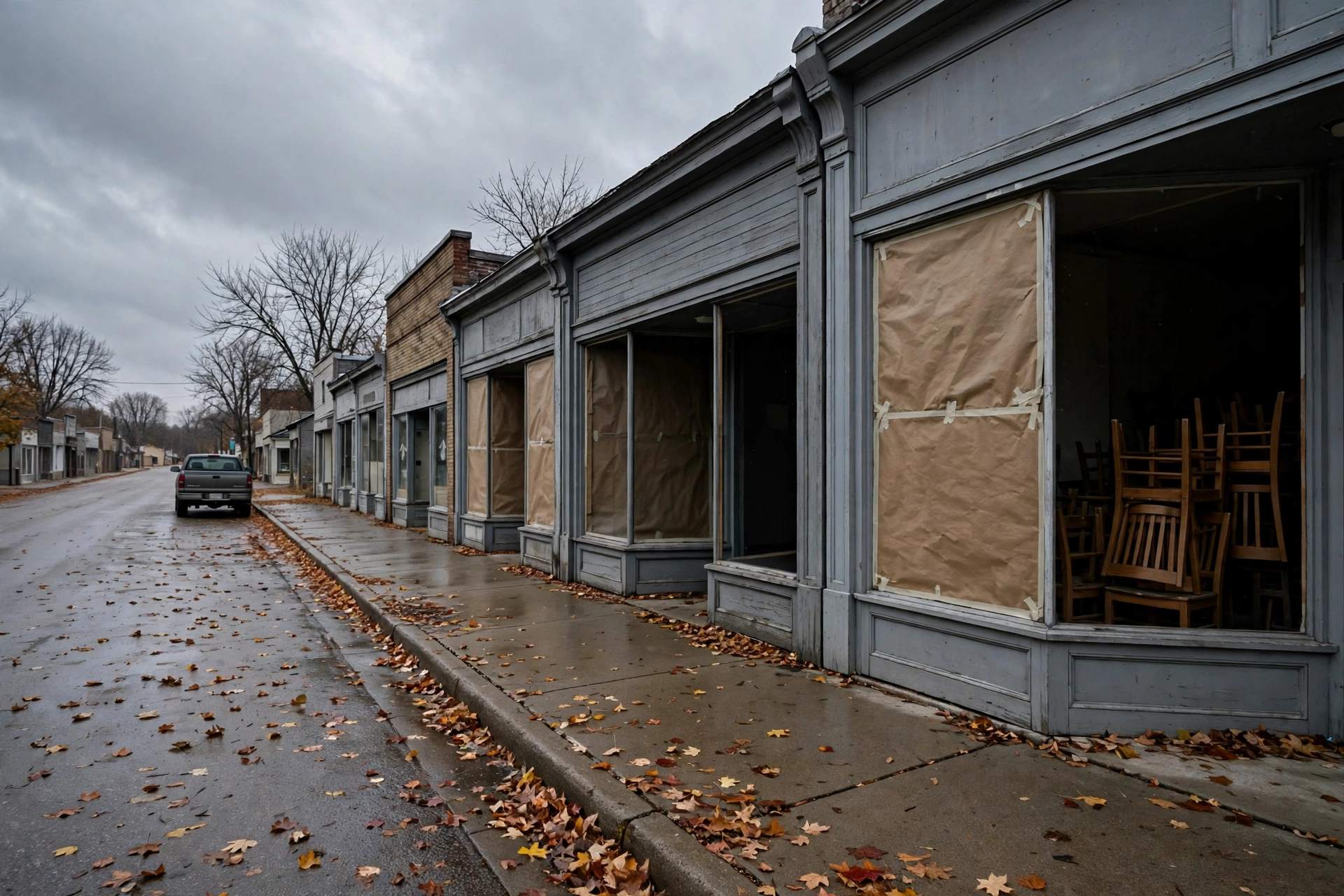
TARNWICK, Ont. — November 16, 2026 — The first loan was for $18,000, approved in nine minutes, for a bakery that has never baked a loaf. The forty-seventh was for $96,000, for a machine shop with no machines, no staff, and an address that turns out to be an empty lot behind the bus depot.
Tarnwick is a fictional Ontario town of about 21,000 people, and its Small Business Fund was supposed to be the town’s proudest idea: low-interest loans to help real shops, garages, and cafés survive a hard year. Between July and October, the fund approved 47 loans worth $2.3 million. This week, the town discovered that not one of those 47 businesses exists.
The money did not go to struggling shopkeepers. It went to storefronts that were never there, and the fund’s own paperwork said every one of them was real.
The fund’s checks looked solid on paper. Each application carried a business registration number, a phone number, a website, and two references. The fund’s staff verified the numbers against a registry, called the phones, and visited the websites. Every check came back clean — because the registry entries, the phones, the websites, and the references had all been set up by the same people applying for the money.
The one check that would have caught it was a visit to the address. The fund used to send someone to every applicant’s door before approving a loan. That practice was paused in the spring, when two staff members left and were never replaced, and the fund decided the paperwork checks were enough. Nobody told the town council the visits had stopped.
“We were approving loans faster than ever, and we took that as a sign the program was working,” said Elaine Marsh, the fictional fund’s director. “Forty-seven approvals in four months felt like forty-seven small businesses getting a chance. It was forty-seven empty rooms. The paperwork was perfect because the paperwork was the product. There was never a business behind it.”
The fund trusted documents that anyone could print. The documents trusted the fund right back.
Meanwhile, real businesses in Tarnwick were being turned away. Tom Beckett, who runs a fictional hardware store on Main Street, applied for $25,000 in August to replace a roof that leaks every time it rains. He was refused — the fund said his revenue history was too thin. “I have been open eleven years. I pay my taxes in this town, I hire kids from this town, and I got a no in three weeks,” Beckett said. “Somebody with a website and a phone number got a yes in nine minutes. I would like to know what my eleven years were worth.”
The town says the money was wired to accounts that were emptied within days, and it does not expect to recover most of it. The fund has frozen all new lending, and the town says it will not restart the program until every application is checked in person, every registration number is confirmed with the province directly, and no loan is approved on paperwork alone.
“These funds exist because a loan from a bank is too slow or too hard for a small shop,” said Dr. Helen Okafor, a fictional researcher who studies how small-business lending is abused. “So towns build a faster, friendlier process — and then they forget that the slow parts were the parts doing the checking. Speed is not a service if the money leaves town and never comes back.”
Tarnwick’s fund was built to move fast for real businesses. It moved fastest for the ones that were never there.
Across Canada, towns run loan funds, grant programs, and relief schemes on the same kind of trust: a form, a phone call, a website, and the belief that nobody would bother faking a small business for $18,000. In Tarnwick, somebody bothered 47 times — and the town’s real shopkeepers are the ones still waiting for help.
Lessons Learnt
- Never approve money on paperwork alone. Before any loan or grant is paid, someone from your organization should visit the address, meet the owner, and see the business operating. A visit is not bureaucracy — it is the one check that cannot be faked from a laptop.
- Ask your team what checks were quietly dropped. When staff leave or budgets tighten, verification steps get paused and nobody announces it. Leaders should ask, in plain terms: what did we stop checking, and when did we stop?
- Verify registrations with the source, not the applicant. A registration number on a form is a claim, not proof. Confirm it directly with the issuing authority, and treat a phone number or website supplied by the applicant as their own marketing, not evidence.
- Protect the real applicants first. Every dollar paid to a business that does not exist is a dollar a real shopkeeper cannot borrow. When a program moves fast, ask who is being left behind by that speed — and slow down for them.
Tarnwick’s town council meets Thursday to decide whether the fund continues at all. Beckett says he will be there, roof still leaking, application still open.
Watching the perimeter — and what slips past it.
ODTN News note: ODTN.News is a fictional news platform set within the Operation: Defend the North universe. All names, organizations, quotes, and events in this article are entirely fictitious. Any resemblance to real people, companies, or incidents is purely coincidental. The cybersecurity challenges it represents are very real.


A Broker Sold Coverage That Never Existed

Warrants Followed Hearings That Never Happened

Parents’ Lunch Payments Bought Meals Nobody Ate

Reddit Thread Over ‘Inventory Drift’ Surges as Canadians Vent Over Retail Glitches

Are Canadian Companies Learning from Global Cyber Attacks? Insider Insights into the Secret Downfall of Canadian Businesses

Canadian Airline NorthSky Faces Cyberattack, Disrupting Online Services


-
 Cybersecurity3 weeks ago
Tourists Scanned. Strangers Collected.
-

 Tech2 weeks ago
Smart Doorbells Streamed Porches to Strangers
-

 Tech3 weeks ago
Kingston Drivers Charge Cars, Drain Accounts
-

 Cybersecurity3 weeks ago
Sudbury Boss’s Voice Calls From Another Phone
-

 Cybersecurity3 weeks ago
Regina Pharmacy Shut Out of Its Own Prescriptions
-

 Cybersecurity3 weeks ago
Winnipeg Distributor Loses Payment to Impostor Email
-

 Politics3 weeks ago
Fredericton Council Meeting Streams From a Stranger’s Server
-

 Tech3 weeks ago
Charlottetown Vaccines Hang on a Glitch