

Retail Watch
Paid Orders Walked Out With the Wrong People

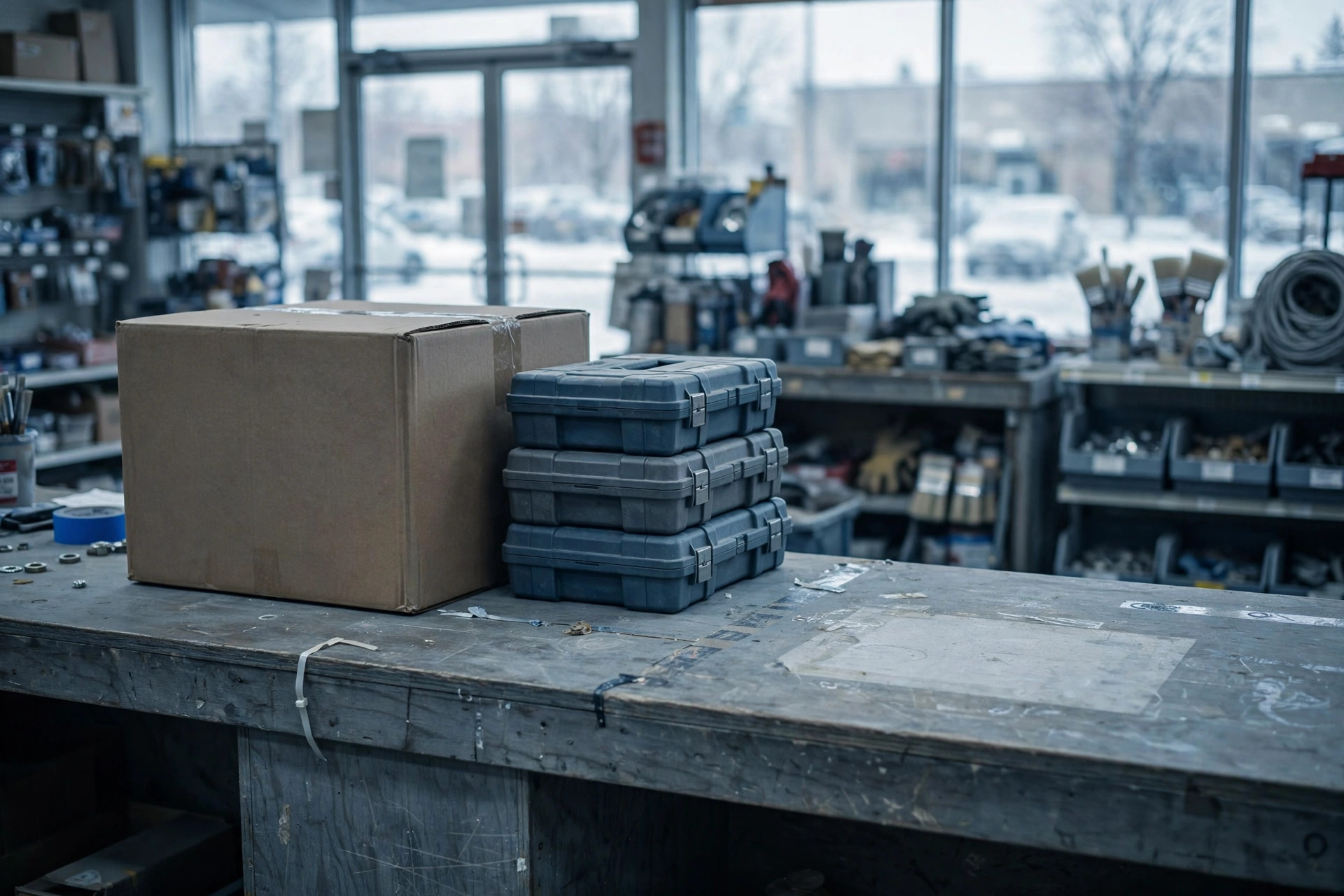
**STONEBRIDGE, Ont. — November 21, 2026 —** The snowblower was paid for, boxed, and waiting behind the counter at Ironwood Hardware in Stonebridge. When Gordon McAllister arrived on Thursday to collect it, the box was gone — handed over two days earlier to a man who had never paid for it, and who had shown the staff nothing more than four digits.
McAllister, 64, a retired teacher, had ordered the snowblower online the week before and paid $899 in full. The store’s pickup system, called ReadyPickup, sent him a text with a four-digit collection code. He drove to the store expecting a five-minute pickup. Instead, a clerk told him the order had already been collected.
“She looked it up and said, ‘Somebody picked that up on Tuesday,'” McAllister said. “I said, ‘That somebody was not me.’ She showed me the screen. It just said collected. No name. No signature. Nothing.”
Stonebridge is a fictional Ontario town of about 21,000 people, and Ironwood Hardware is a fictional Ontario hardware chain with twelve stores across the province. ReadyPickup is how all twelve stores handle online orders: a customer pays on the website, the system sends a four-digit code, and the customer shows the code at the pickup counter. Staff hand over the order. That is the whole check.
**The code, it turns out, was never a secret. It was the last four digits of the order number — and the order numbers ran in sequence.**
Anyone who placed an order could see their own number. Anyone who tried the next number in line, or a few numbers in a row, could walk into any Ironwood store, quote a code, and leave with somebody else’s purchase. There was no request for identification, no check of the name on the order, and no record of who collected what — only that the code had been entered and the box had left the building.
Ironwood says 214 orders were collected by the wrong people across its twelve stores in the first two weeks of November, worth about $168,000 in goods. Snowblowers went first, then portable generators, patio heaters, and power tool sets — the expensive, resalable things people buy before winter. The real customers started calling within days, arriving for orders that were already gone.
Diane Foster, 57, ordered a generator online after a storm knocked out power to her street last year. She arrived at the Stonebridge store on a Saturday morning to find her order marked collected.
“I paid $649 for that generator,” Foster said. “The girl at the counter was very nice. She said the code had been used on Friday. I said, ‘I was at work on Friday.’ She just looked at me. What was she supposed to do? The computer said it was gone.”
Celia Navarro, Ironwood’s head of operations, told ODTN News the chain had built ReadyPickup to be fast — the promise was that a customer could be in and out in two minutes — and that speed was the flaw.
“We designed it around trust,” Navarro said. “We assumed the only person who knew the code was the person who paid. We never asked what would happen if the code was something anyone could work out. By the time we understood that, the orders were already out the door.”
**The chain says it has now changed the system: collection codes are eight digits, generated at random, and staff must check photo ID for any order over $100.** Customers whose orders were taken will be refunded or given a replacement, though the store says some items, including several snowblower models, are now out of stock until December.
Dr. Helen Okafor, a fictional researcher who studies how shops verify pickup orders, said the failure was a familiar one. “A four-digit code is fine for a coffee,” she said. “It is not fine for a $900 snowblower. The check has to match the value of what is leaving the store. Ironwood checked the code. It never checked the person.”
Across Canada, hardware and home-goods chains have rushed into click-and-collect, because a pickup counter is cheaper than a delivery truck and faster than a queue at the till. The convenience is real. So is the trade: the handover now rests on a code on a screen, and when the code is guessable, the counter becomes the easiest place in the store to take something without paying.
**The orders were never stolen from the shelf. They were handed over at the counter.**
**Lessons Learnt**
– **Make pickup codes random, not sequential.** If a code is part of the order number, or runs in order, anyone can guess the next one. Codes should be random, single-use, and impossible to work out from another customer’s order.
– **Check ID for anything worth taking.** A code proves someone saw a text. It does not prove they paid. For orders over a set value — say $100 — ask for photo ID and match the name on the order before anything leaves the counter.
– **Write down who collected what.** Record the name, the time, and the code used for every pickup. When a customer says their order is gone, that record is the only way to find out what happened — and to show it was not them.
– **Reconcile pickups against payments every day.** Compare the list of orders marked collected with the orders that were really picked up by the right person. If the two lists do not match, stop and look — before a week’s worth of orders leaves the store.
*Watching the perimeter — and what slips past it.*
**ODTN News note:** ODTN.News is a fictional news platform set within the Operation: Defend the North universe. All names, organizations, quotes, and events in this article are entirely fictitious. Any resemblance to real people, companies, or incidents is purely coincidental. The cybersecurity challenges it represents are very real.






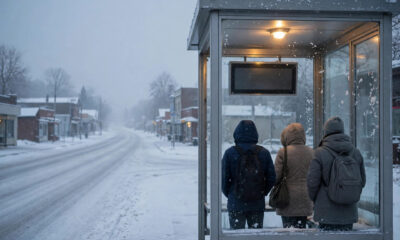


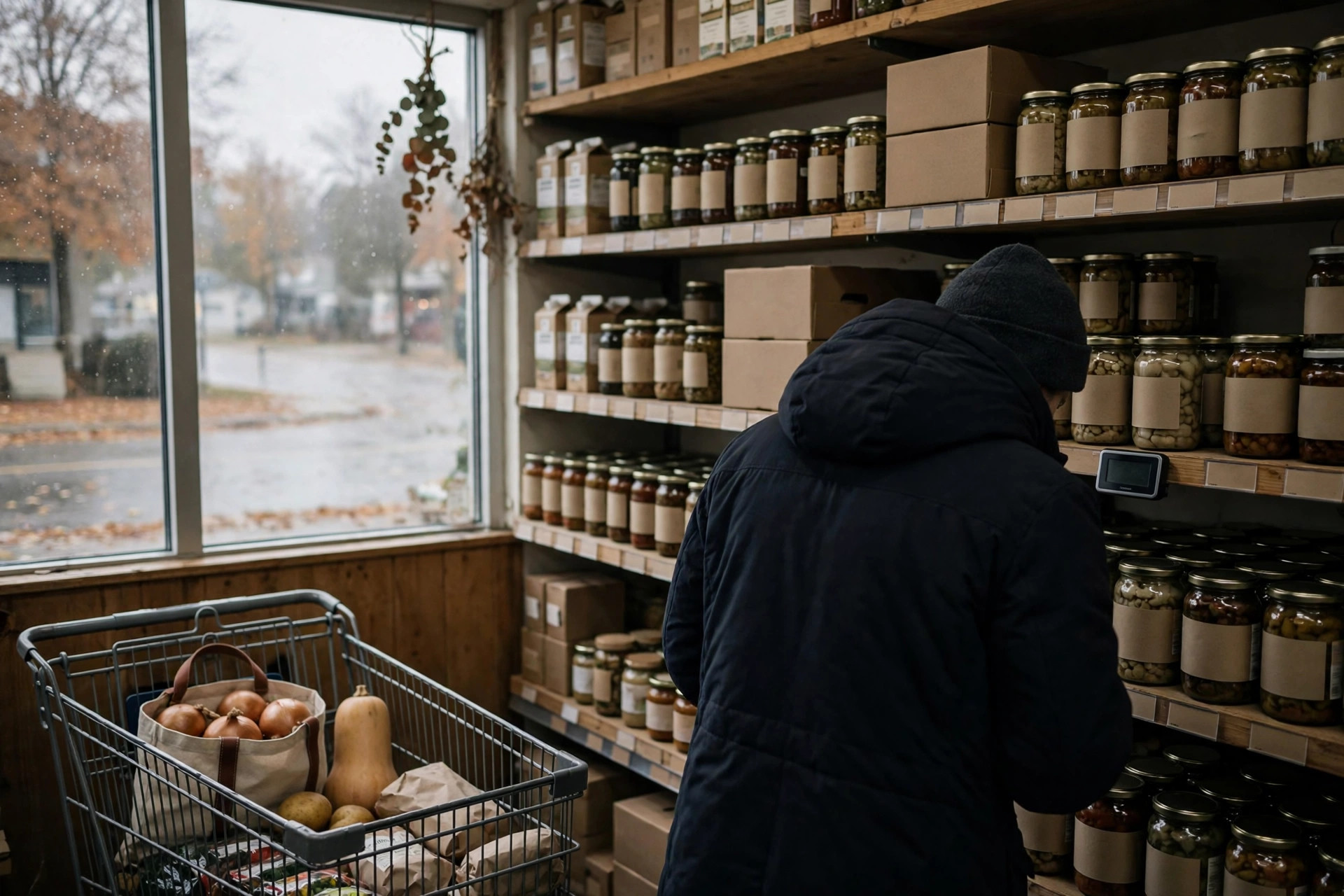
JUNIPER FALLS, Ont. — November 18, 2026 — Elaine Marsh was halfway through unloading her cart at the till when the cashier read out the total. She stopped, the bag of apples still in her hand, and asked her to say it again. It was $38 more than the number Marsh had added up in her head as she walked the aisles.
“I shop the same way every week, and I add it up as I go,” said Marsh, 63, outside the Harvest Lane store on Tuesday morning. “I am not guessing. I know what a jar of pasta sauce costs, because I buy the same one every week. The shelf said $3.49. The till said $5.19. I asked the girl at the till which one was right, and she said she did not know. She just scans what the computer tells her.”
Marsh was not the only shopper doing the sums in her head and coming up short. Juniper Falls is a fictional Ontario town of about 18,000 people, and Harvest Lane is a fictional grocery chain with 42 stores across the province. This year the chain replaced the paper price tags on its shelves with small electronic labels — little screens that change the price on their own whenever head office sends out a new price file. Nobody in the store prints a tag, walks the aisle, or sticks anything to a shelf any more. The price on the shelf arrives overnight, from a computer somewhere else.
Nobody in the store changed a single price on Tuesday. The prices changed themselves, overnight — and they changed wrong.
Harvest Lane says a price update sent out late on Monday mixed up two price lists. The shelf labels received last week’s prices, including sale prices from a promotion that had already ended, while the tills charged this week’s regular prices. The two systems disagreed on hundreds of items in every store, and the disagreement only became visible at the till, one shopper at a time, as the morning went on. The pasta sauce was $3.49 on the shelf and $5.19 at the till. A bag of coffee was $8.99 on the shelf and $12.49 at the till. A box of cereal was $4.29 on the shelf and $6.79 at the till.
“We found out the same way our customers did — at the till, one receipt at a time,” said Lena Moreau, manager of the Juniper Falls store. “My staff did not change those prices. My staff cannot change those prices. The labels update themselves overnight, and the first time anyone in this store sees the number is when a customer is standing at the shelf looking at it. On Tuesday morning, the number on the shelf and the number in the till were two different numbers, and the till always wins.”
For the shoppers who paid before they noticed, the difference is still sitting on their receipts. Harvest Lane says it is still counting how many shoppers were overcharged across its 42 stores, and that anyone who brings in a receipt from Tuesday will be refunded the difference. The chain says the wrong price file has been replaced and the shelf labels now match the tills. It says it is reviewing how price files are checked before they are sent out to the stores.
“I paid it, because what else do you do when your groceries are already in bags on the belt?” Marsh said. “I have the receipt in my purse. I will go back for the $38. But I should not have to go back. The price on the shelf is supposed to be the price. That is the whole point of a price on a shelf.”
The price on the shelf is now a file, sent from somewhere else overnight — and nobody in the store can see whether it is right until a shopper pays the wrong amount.
“A paper price tag is changed by a person standing in front of the shelf, looking at the number,” said Dr. Anil Desai, a fictional researcher who studies retail technology. “An electronic label is changed by a file sent to forty-two stores at once, by someone who never sees a shelf. When that file is wrong, it is not wrong in one store — it is wrong everywhere, at the same time, on hundreds of items. And the person who finds out is not the person who sent the file. It is the shopper at the till, holding a jar that costs one price on the shelf and another price on the receipt.”
In this fictional case, Harvest Lane says refunds are available at any of its stores with a Tuesday receipt, and that shelf labels and tills now show the same prices. Marsh says she has kept her receipt — and she plans to check the shelf price against the till price, item by item, on her next shop.
A shelf price used to be a promise made in the store. Now it is a file sent overnight — and a file can be wrong in forty-two stores before anyone in any of them notices.
Across Canada, grocery chains are replacing paper tags with electronic shelf labels, because a price that changes itself overnight is cheaper than paying someone to walk the aisles with a pricing gun. The convenience is real. So is the trade: the number a shopper trusts now travels from a head-office computer to a little screen on a shelf, with no one in the store checking it along the way. When the file is wrong, the shelf still shows it — and the shopper finds out at the till, holding a receipt that does not match the shelf they just shopped from.
Lessons Learnt
– Test a price update in one store before it reaches all of them. Send the new price file to a single store first and check it there. A mistake caught in one store is a fix. A mistake sent to forty-two stores at once is a morning of wrong prices.
– Compare the shelf and the till every morning, automatically. Run a nightly check that matches every shelf label price against the till price and flags any item where the two disagree. A mismatch found before the doors open costs nothing. A mismatch found by a shopper costs a refund — and their trust.
– Keep a one-click way back to yesterday’s prices. Every price update should be reversible in minutes, not hours. If a bad file goes out, the team should be able to put the old prices back across all stores while they work out what went wrong.
– Flag any price that jumps further than it should. Set a simple rule: if a price changes by more than a set amount overnight, hold it for a human to look at before it reaches a shelf. Big jumps are usually mistakes, and a person can spot in seconds what a file cannot.
The refunds at Harvest Lane are available now with a Tuesday receipt, and the chain says the shelf labels and the tills agree again. Marsh says she has kept hers — and she plans to check the shelf against the till, item by item, on her next shop.
Watching the perimeter — and what slips past it.
ODTN News note: ODTN.News is a fictional news platform set within the Operation: Defend the North universe. All names, organizations, quotes, and events in this article are entirely fictitious. Any resemblance to real people, companies, or incidents is purely coincidental. The cybersecurity challenges it represents are very real.
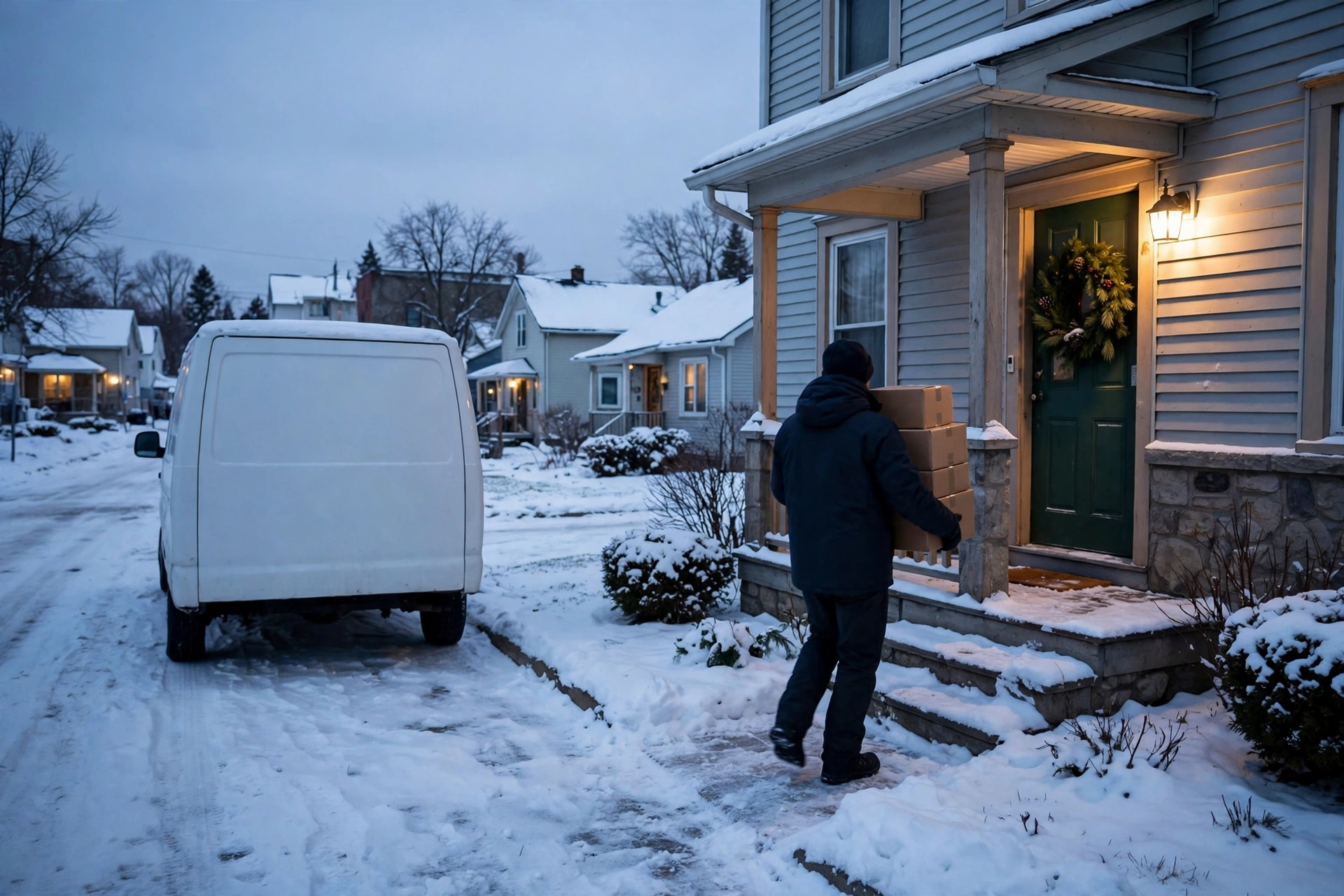
MAPLETON, Ont. — November 15, 2026 — The parcel on Dana Whitfield’s porch was addressed to her. The one inside it was not. The box held a child’s winter coat, size six, in a colour her daughter would never wear — and the label on the coat belonged to a family three streets away, who had opened their own delivery that morning to find Whitfield’s new kettle staring back at them.
Mapleton is a fictional Ontario town of about 24,000 people, and Maple & Main is a fictional home-goods chain with a warehouse on its edge. This week the chain began its Christmas delivery run: 41,000 parcels booked for front doors across the region before December. By Tuesday, more than 3,600 of them had arrived at the wrong house.
The parcels were not lost. They were delivered — carefully, on time, and to the wrong address, because the list the drivers were following had been quietly shuffled.
The chain says its delivery manifest — the list that tells each driver which parcel goes to which door — was changed from outside the warehouse. Street numbers were swapped between neighbours. House numbers were moved one door along. A driver following the manifest did everything right and still left the wrong box on the wrong step, because the manifest itself was wrong and nothing on the route flagged it.
“We had drivers calling in because the name on the parcel did not match the name on the door, and we told them to deliver it anyway,” said Cole Barrett, the fictional chain’s regional operations manager. “The manifest is the truth on a delivery run. A driver does not argue with it. Nobody in that warehouse had any reason to think the list had been touched, because the list had always been right before.”
By Wednesday, the chain’s help line was taking calls from shoppers who had received a stranger’s order, shoppers whose orders had never arrived, and shoppers who had opened a box to find someone else’s Christmas. The chain says no payment details were taken and no money was demanded. The addresses were the target.
Nobody stole a parcel. Nobody broke into the warehouse. They just rearranged the list — and 3,600 Christmases rearranged themselves around it.
It is the kind of change that is almost impossible to catch on the day. A driver checks the number on the parcel against the number on the manifest, and both agree — because both were changed together. A customer signs for a box with their name on the outer label, and only finds the mistake when the box is open. By then the driver is three streets away, following the same wrong list to the next wrong door.
“The danger was not a break-in,” said Dr. Amira Haddad, a fictional researcher who studies how retailers run their delivery networks. “It was that forty drivers trusted one list, and that list could be changed by anyone with an old contractor login. The parcels were never the target. The order of the work was.”
In this fictional case, the chain says the manifest system has been taken offline. Drivers are working from printed lists checked against the original orders, the way they did before the system arrived, and the chain says it will not put the screens back until every account has a new password, a second login check, and a limit on where it can be used from. The chain is also contacting every customer whose parcel went to the wrong door, and it says the misdelivered orders will be re-sent before Christmas.
The lesson of Mapleton’s week is not about parcels. It is about the quiet lists that decide what goes where — and what happens when the wrong person gets to rewrite them.
Across Canada, retailers run their Christmas on manifests, route apps, and contractor logins that were set up years ago and never looked at again. When one of those lists takes its orders from the wrong person, the consequences arrive on a doorstep, in the wrong box, a month before Christmas.
Lessons Learnt
- Check the manifest against the order, not just the label. Before a route goes out, compare a sample of parcels against the original customer orders — not against the manifest itself. A list checked against itself will always agree.
- Log every change, and read the log. Record who changed a delivery list, when, and from where — and have someone review it daily in the Christmas rush. A change made at 2 a.m. from an unfamiliar login should raise a flag before the vans leave.
- Lock contractor accounts to the job. Give outside accounts access only to what they need, only while they need it, and only from approved locations. An old login that still works from anywhere is an open door.
- Give drivers a way to question the list. A driver who spots a name that does not match a door should be able to pause that delivery and check it, without being penalised for slowing the run. The person on the step is the last check — make it count.
The fictional chain says the misdelivered parcels are being collected and re-sent, and the Christmas run is back on schedule. The drivers are still following a list — but this week, someone is checking it first.
Watching the perimeter — and what slips past it.
ODTN News note: ODTN.News is a fictional news platform set within the Operation: Defend the North universe. All names, organizations, quotes, and events in this article are entirely fictitious. Any resemblance to real people, companies, or incidents is purely coincidental. The cybersecurity challenges it represents are very real.
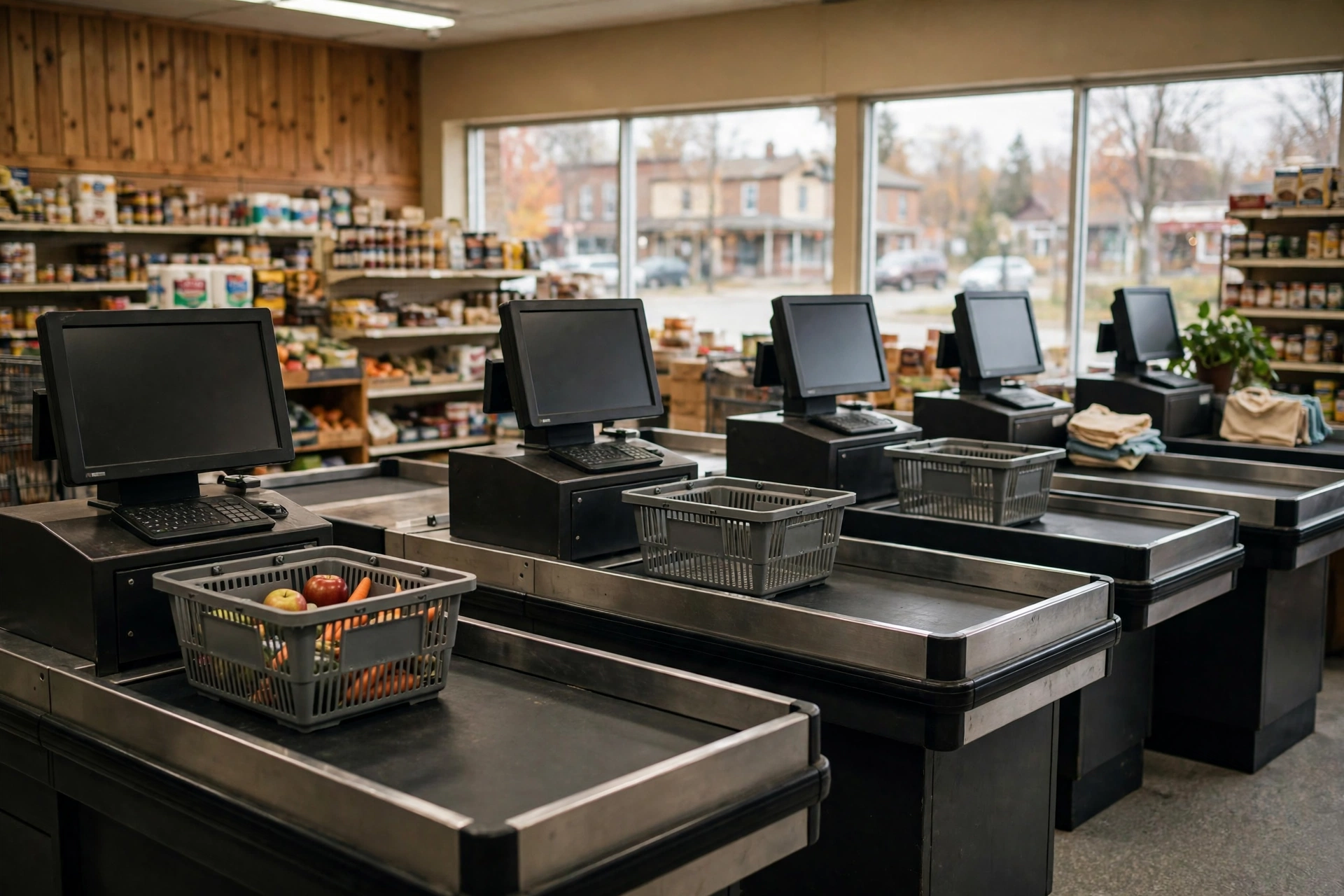
FOX HOLLOW, Ont. — November 12, 2026 — By noon on Saturday, the queue at Marlowe’s Market in Fox Hollow stretched past the bread aisle — and nobody in it was moving. The tills had stopped, the card readers were dark, and the shoppers standing with full baskets had no way to pay for the food they had already picked up.
Most of them had already paid once. Some had paid twice. None of them knew it yet.
Marlowe’s Market is a fictional independent grocer serving the town of about 12,000 people, and Saturday is its busiest trading day of the week. Just after 9 a.m., a software update pushed overnight to the store’s tills by its fictional payments vendor, Tillpoint Systems, began charging some card payments a second time. By the time staff noticed the duplicate charges on their own end-of-morning reports, more than 300 shoppers had been through the tills, and the store’s payment system had frozen altogether.
More than 300 shoppers were charged twice at one small-town grocer — and then the tills stopped working entirely.
“I tapped my card, the machine beeped, and the cashier told me it hadn’t gone through,” said Ruth Calloway, a fictional Fox Hollow resident who had come in for her weekly shop. “So I tapped again. It went through the second time, or so I thought. It was only that evening, when I checked my banking app, that I saw both payments had gone out. I paid for one basket of groceries twice, and I still had to leave half of it behind because the tills had stopped by then.”
The store says the duplicate charges were not caused by anything the shoppers did. The update had been sent to every Tillpoint terminal in the fictional chain’s three stores, and it duplicated a share of card transactions before the system seized up. Staff switched to cash-only trading for the rest of the day, and by mid-afternoon the queue had thinned to a handful of customers paying with notes and coins while the rest left their baskets at the front of the store.
The shoppers did nothing wrong. The tills charged them twice anyway, and then refused to take a payment at all.
The fictional grocer says it has now identified the affected transactions and will refund every duplicate charge automatically, without shoppers needing to claim it. The refunds are expected to land within five working days. The tills were back running on Sunday morning, after the vendor rolled the update back, though the store says it will not accept another overnight update on a Friday again.
“This was a Saturday-morning update on the busiest day of the week, with no one watching the tills as the first customers came through,” said Dr. Priya Sandhu, a fictional retail-systems researcher who studies payment failures. “A shop does not need a hacker to lose a weekend’s trading. It only needs one bad update, pushed at the wrong hour, to a system nobody is monitoring. The duplicate charge is the part people notice. The frozen tills are the part that costs the store the day.”
In this fictional case, no card details were stolen and no shopper’s account was left open to further charges. The harm was simpler and closer to home: money taken twice for a single shop, a Saturday’s trading lost, and a queue of people sent home without the food they had come for.
The defence is not a sharper eye at the till. It is checking what actually left your account, and never assuming the first beep meant the payment failed.
That advice applies well beyond one grocer. Across Canada, small shops, markets, and cafés all run their tills through a single vendor’s software, and a single update can reach every terminal at once. When a card reader says a payment has failed, the money may still have left the account — and the only way to know is to look.
Lessons Learnt
- Check your bank app the same day. If a card payment fails at the till, look at your account before you tap again. A failed beep does not always mean no money left your account.
- Keep the receipt, even for a failed payment. The time, the amount, and the terminal number on it are what a shop needs to find a duplicate charge and refund it.
- Keep a little cash for the weekly shop. When the tills go down, cash is the only way to pay — and the shops that stay open are the ones that can still take it.
- If you run a shop, never push an update on your busiest day. Test it on one till first, watch the first transactions yourself, and have a way to roll it back before the queue forms.
The fictional grocer says every duplicate charge will be refunded automatically, and the tills are running again. The shoppers who paid twice will get their money back. The Saturday they lost is gone for good.
Watching the perimeter — and what slips past it.
ODTN News note: ODTN.News is a fictional news platform set within the Operation: Defend the North universe. All names, organizations, quotes, and events in this article are entirely fictitious. Any resemblance to real people, companies, or incidents is purely coincidental. The cybersecurity challenges it represents are very real.


Paid Orders Walked Out With the Wrong People

A Broker Sold Coverage That Never Existed

Warrants Followed Hearings That Never Happened

Reddit Thread Over ‘Inventory Drift’ Surges as Canadians Vent Over Retail Glitches

Are Canadian Companies Learning from Global Cyber Attacks? Insider Insights into the Secret Downfall of Canadian Businesses

Canadian Airline NorthSky Faces Cyberattack, Disrupting Online Services


-
 Cybersecurity4 weeks ago
Tourists Scanned. Strangers Collected.
-
 Tech2 weeks ago
Smart Doorbells Streamed Porches to Strangers
-
 Tech3 weeks ago
Kingston Drivers Charge Cars, Drain Accounts
-
 Cybersecurity3 weeks ago
Sudbury Boss’s Voice Calls From Another Phone
-

 Cybersecurity3 weeks ago
Regina Pharmacy Shut Out of Its Own Prescriptions
-
 Cybersecurity4 weeks ago
Winnipeg Distributor Loses Payment to Impostor Email
-

 Politics3 weeks ago
Fredericton Council Meeting Streams From a Stranger’s Server
-
 Tech3 weeks ago
Charlottetown Vaccines Hang on a Glitch