

Cybersecurity
Christmas Donations Flowed to a Cloned Charity


JUNIPER FALLS, Ont. — November 28, 2026 — Grace Nakamura meant to buy Christmas presents for children she will never meet. She typed the name of her town’s toy drive into a search engine, clicked the first result, and gave $150 by credit card. A receipt arrived by email within seconds. It thanked her by name, carried the toy drive’s logo, and wished her a happy holiday. The money never reached a single child.
Juniper Falls is a fictional town of about 16,000 people in southwestern Ontario, and its toy drive is a fixture of the town’s December — volunteers collect new toys and cash donations, wrap them at the community hall, and deliver them to families who cannot afford Christmas presents. This year the drive put its donation page online for the first time, so people could give from home. Someone else put a second page online first.
The copy was built to be found before the real thing. It sat at the top of the search results, paid for like an advertisement, and it took donations for nine days before anyone at the toy drive knew it existed.
Nakamura, 61, is not the only donor who was caught. The toy drive says it has now heard from 640 people who gave money through the copied page, and the donations add up to at least $52,000. Most gave between $25 and $200. Some gave more, and several say their credit cards were later charged for small purchases they never made — the kind of test charges fraudsters run before trying a bigger one.
“I have given to this toy drive for twelve years,” Nakamura said. “I knew the name, I knew the logo, and the page asked for exactly what the real one would ask for. There was nothing on that screen that told me to stop. I only found out because I phoned the community hall to ask why my tax receipt had not arrived, and they told me they had never heard of me.”
The copied page worked because it asked for nothing unusual. It used the toy drive’s name, its colours, and photographs taken from the real page. The only difference was the web address, which was one letter off from the genuine one — and the small word “Ad” beside the search result, which most donors never noticed. The money went to accounts the fraudsters controlled, and the page even sent back a convincing receipt, so donors had no reason to check.
Peter Sanderson, who chairs the toy drive, says the volunteers discovered the copy only when the receipt calls started coming in. “A woman phoned on Wednesday and asked where her receipt was,” he said. “Then another. Then five more before lunch. We checked our own donation page and it was fine — the money was there, the names were there. The calls were about gifts we had never received. That was the moment we understood there were two pages, and ours was the one nobody was finding.”
Sanderson says the real page is now back at the top of the search results, and the toy drive has asked the search company to take the copy down. It has also reported the fraud to police and to the banks, though it says recovering the money is unlikely. In the meantime, the drive is asking anyone who donated online this month to check their bank statement and to phone the community hall directly if they are unsure where their money went.
The toy drive lost $52,000 in nine days — not because donors were careless, but because the first result on the page was a copy, and a copy with a receipt looks exactly like the real thing.
“This is the season for it,” said Dr. Samuel Adeyemi, a fictional researcher who studies online fraud at a Canadian university. “Charities ask for money in December, people want to give, and they give quickly, on their phones, from a search result. A fraudster does not need to break into a charity’s computers. They only need to build a second front door and pay to have it listed first. The donor walks through the wrong door, the receipt looks real, and the charity never sees a cent. The web address is the only thing that tells the doors apart — and it is one letter long.”
Adeyemi said the pattern shows up every holiday season, aimed at food banks, toy drives, and disaster appeals — any cause people search for in a hurry. “People check the name and the logo,” he said. “They do not check the address bar, and they do not expect a charity page to lie to them. That trust is the whole trick.”
Nakamura got her $150 back from her bank, and she has since donated again — this time by walking into the community hall and handing over cash. “I will still give,” she said. “I just will not give through a screen I found on a search page. I will go to the hall, or I will phone the number I already have. The children still need the presents, and the people running the drive are still the same good people. Only the door was wrong.”
Sanderson says the toy drive will still hit its target this year, thanks to a rush of in-person donations since the story spread around town. But he says the volunteers have learned something they will not forget: “We put the page online to make giving easier. We never thought about who else might put a page online. Next year, the address will be printed on every poster, every flyer, every notice in the paper — and we will check the search results ourselves, every morning, until Christmas.”
Lessons Learnt
For everyone — a few simple checks before you give money online this holiday season.
- Type the address yourself, or use a link you already trust. Do not donate from the first result in a search — a copied page can pay to sit at the top, marked with a small “Ad”.
- Read the web address letter by letter. A copied page often uses an address one letter off from the real charity’s. If anything looks odd, stop and phone the charity on a number you already have.
- Check your statement the next day. A gift that went to the wrong place shows up fast — and a small charge you do not recognise can be a test run before a bigger one. Tell your bank straight away.
- Keep the receipt and the confirmation email. If the charity has no record of your gift, the receipt is what proves you gave — and it is what your bank needs to get the money back.
ODTN News note: ODTN.News is a fictional news platform set within the Operation: Defend the North universe. All names, organizations, quotes, and events in this article are entirely fictitious. Any resemblance to real people, companies, or incidents is purely coincidental. The cybersecurity challenges it represents are very real.











COPPERTON, Ont. — November 25, 2026 — At 6:12 a.m. on Tuesday, Maya Chen plugged her SUV into a fast charger off Highway 401 near Coppertown and waited for the screen to wake up. It did — with a ransom note.
Chen, 34, was driving her two children to her parents’ house in Kingston, a trip she had made a dozen times. She had planned the stop the way electric-car drivers do: 20 minutes at the charger, enough range to finish the drive, coffee while she waited. Instead the charger locked her cable in place, the screen went dark except for a message demanding payment in cryptocurrency, and the car sat at 11 percent.
“I called the number on the charger and got a recording,” Chen said. “Then I looked around the lot and every screen said the same thing. There were six of us standing there in the cold, all with the same problem, and nobody from the company answering the phone. I had 40 kilometres of range and a 90-kilometre drive ahead of me.”
Chen was not the only driver caught. VoltHarbour Charging, a fictional Ontario charging network, says about 1,800 drivers were affected across its 214 fast chargers on Tuesday, after ransomware locked the system that runs them. Chargers that were already in use stopped mid-session. Chargers that were idle refused to start. Some held drivers’ cables locked in place for hours. The company says the chargers themselves were not damaged, and no payment-card data was taken — but the network was unusable for most of the day, and some sites stayed dark into Wednesday.
Coppertown is a fictional Ontario town of about 9,000 people, and VoltHarbour’s chargers are the kind drivers find at highway rest stops, grocery-store parking lots, and town squares — the fast chargers that make a long drive possible. A driver pulls in, taps a card or opens the app, and the charger talks to a central system that checks the account, starts the session, and bills for the electricity. If that central system goes down, the chargers have nothing to talk to. They stop.
The ransomware did not break into the chargers. It broke into the office system that tells them what to do — and the chargers obeyed the silence.
VoltHarbour says the attackers got in through a remote-access server the company had meant to replace months earlier. The server was still online, still reachable from the internet, and still running software with a known flaw the company had not patched. Once inside, the attackers moved through the company’s network until they reached the charger-management platform, encrypted it, and left the ransom note that drivers saw on the screens.
The company says it did not pay. It rebuilt the platform from backups, a job that took most of Tuesday and part of Wednesday, and brought chargers back online in waves. Drivers who were stranded were told to call roadside assistance, and the company says it will cover towing costs for anyone who ran out of charge. It has not said how much the outage cost, or whether the attackers took any company data before encrypting the system.
“This was not a sophisticated attack on the chargers,” said Lena Moreau, a fictional cybersecurity consultant who advises energy and transport firms. “The chargers were the victims, not the target. The target was an old server in an office that nobody had gotten around to replacing. Once the attackers were inside, the charger system was just another computer on the same network — no wall between the office and the equipment that drivers depend on. When you connect physical things to a network, the network’s weakest point becomes their weakest point too.”
Moreau said the pattern is becoming familiar: a piece of equipment that lives in the physical world — a charger, a pump, a gate — run by software that lives on an ordinary office network, protected only as well as the office is. “Drivers think of a charger as a plug in a parking lot,” she said. “But it is a computer that talks to a server. If the server is held hostage, the plug is useless. And on a cold morning on the highway, useless is not an inconvenience. It is a family stuck with 40 kilometres of range and nowhere to go.”
VoltHarbour says it has now taken the old server offline, patched the systems the attackers touched, and separated the charger network from the company’s office network so that a break-in on one side cannot reach the other. It says it will also publish a status page so drivers can check whether chargers are working before they set out.
Chen made it to Kingston on a tow truck, three hours late, her children asleep in the back seat. She has charged at home since, and she says she will check the charger’s status before every highway trip from now on — something she never thought she would have to do.
“I plan my trips around those chargers,” she said. “I assumed they would just work. I never thought about the computer behind them, or who else could get into it. Now I do.”
The chargers were not hacked. The office behind them was — and on a cold Tuesday morning, 1,800 drivers found out that a plug in a parking lot is only as safe as the server that runs it.
Lessons Learnt
- Separate the machines that run things from the office network. Chargers, pumps, gates, and other connected equipment should sit on their own network segment, with no direct path from office computers or email. If an attacker gets into the office, they should hit a wall — not a charger.
- Retire old remote-access servers on a deadline, not a wish list. A server that is reachable from the internet and overdue for replacement is an open door. Give every internet-facing system an owner and a retirement date, and take it offline when the date passes, patched or not.
- Patch the flaws attackers actually use. The flaw in VoltHarbour’s server was already known, with a fix already available. Check internet-facing systems against published flaws every month, and patch the ones that let an attacker in from outside first.
- Give drivers a way to check before they leave. A public status page, or an offline mode that lets a charger run a basic session without phoning home, turns a network outage into a delay instead of a stranding. If your equipment serves the public, plan for the day its server goes dark.
Watching the perimeter — and what slips past it.
ODTN News note: ODTN.News is a fictional news platform set within the Operation: Defend the North universe. All names, organizations, quotes, and events in this article are entirely fictitious. Any resemblance to real people, companies, or incidents is purely coincidental. The cybersecurity challenges it represents are very real.

WILLOWMERE, Ont. — November 22, 2026 — “The clerk looked at her screen, then she looked at me, and she said, ‘Sir, your hearing was Tuesday.’ It was Thursday. I had the paper in my hand. It said Thursday.”
Frank Delorme, 52, a roofer from Willowmere, had driven to the courthouse on Thursday morning for a hearing about a disputed invoice — a civil matter he had been trying to settle for eight months. He arrived twenty minutes early, sat on the wooden bench outside Courtroom 2, and waited for his name to be called. It never was.
When the clerk checked, the hearing was not on the day’s docket at all. It had been listed for Tuesday — a day Delorme had spent on a roof in minus eight degrees, unaware he was supposed to be in court. By Thursday, a bench warrant had already been issued for his failure to appear. He spent that night in custody, over a hearing that had been moved without anyone telling him, on a date he had never been given.
Willowmere is a fictional Ontario town of about 16,000 people, and its courthouse posts the daily docket online through a system called CourtBoard. Defendants, witnesses, and lawyers check it the night before, or the morning of, to confirm the time and the courtroom. For most people, the docket on the screen is the only notice they get.
Over two weeks in November, 214 hearings on that docket were moved, and 38 were deleted outright. The people named in them were not told. The court did not know it had happened until the warrants started coming back.
Delorme is not the only one. ODTN News has heard from 19 people who missed hearings they never knew had moved — a landlord who lost a default judgment because the hearing happened while she was at work, a witness in a theft case who arrived to find the trial had been held the day before, a young father who learned about his missed date from a police officer at his front door. In total, the court says 47 bench warrants were issued for failure to appear during those two weeks, all on hearings that had been changed on the public docket.
The court says the docket was changed through a single editing link — one web address that opened the docket for editing, with no login, no password, and no record of who made the change. Court staff had used the link for two years, passing it around by email whenever someone new needed to update the list. At some point, the same link was printed on a paper notice pinned to the board in the courthouse lobby, under the heading “Staff docket access,” where anyone walking past could read it and copy it down.
Anyone with the link could move a hearing, delete a hearing, or change a courtroom — and the system kept no record of who had done it, or when.
Diane Calloway, Willowmere’s court administrator, told ODTN News the link had been created as a shortcut, back when the docket first went online, and that nobody had ever gone back to ask what it could do.
“We built it so our own staff could update the list quickly, and we never stopped to think about who else could open it,” Calloway said. “It was on an email chain. It was on a notice in the lobby. We treated it like an internal tool, but it was sitting on the public internet, and it could change the one document that decides whether a person walks into a courtroom or gets arrested for not being there.”
The court says it does not know who changed the hearings, or why. Some of the changes look like deliberate interference — hearings in a single high-profile fraud case were moved three times in four days. Others look like accidents, or like someone testing what the link could do. The police have been notified, though no one has been charged.
The warrants were real even though the hearings were not. A bench warrant does not check whether the docket was right. It only checks whether the person showed up. Delorme was released the next morning, once a judge saw the docket had been altered, but the night in custody, the missed day of work, and the arrest record are his to carry.
The court says it has now cancelled all 47 warrants issued on hearings that were moved or deleted during the two weeks, and that it is contacting every affected person by phone and by letter. Hearings that were held without the right people present are being rescheduled. The docket is now edited only through staff logins, with a record kept of every change, and the public list is checked against the judge’s own book every morning before court opens.
“It was not a break-in. Nobody forced a door,” said Dr. Ruth Kaminski, a fictional researcher who studies how small courts depend on software they do not own. “Somebody found a link that was lying around in plain sight, and they used it to rewrite the record that tells people when to be in court. The court trusted the screen because the court built the screen. But the screen was open to anyone, and the people who paid for that were the ones who believed it.”
Across Canada, small courts, tribunals, and municipal offices have moved their public notices online, because a website is cheaper than a mailed letter and easier than a phone call. The convenience is real. So is the trade: the date on the screen now carries the weight of a summons, and when the screen is wrong, the first person to find out is the one standing in a hallway with a paper that says Thursday, being told their hearing was Tuesday.
Lessons Learnt
- Guard a public record like it matters. If a date on your website can put someone in custody, protect it the way you would protect the file itself — staff logins, approval for changes, and a record of who changed what and when.
- One shared link is not access control. If anyone with a link can change the record, anyone can change it. Give each person their own login, and take it away the day they stop needing it.
- Check the public version against the real one every day. Before court opens — before your office opens — compare what the public sees with the record your own team works from. If the two do not match, stop and look.
- Tell people through a channel you control. A hearing date should never rest on a single screen. Confirm changes by phone or by letter, not just by editing a page and hoping the right person checks it again.
Watching the perimeter — and what slips past it.
ODTN News note: ODTN.News is a fictional news platform set within the Operation: Defend the North universe. All names, organizations, quotes, and events in this article are entirely fictitious. Any resemblance to real people, companies, or incidents is purely coincidental. The cybersecurity challenges it represents are very real.
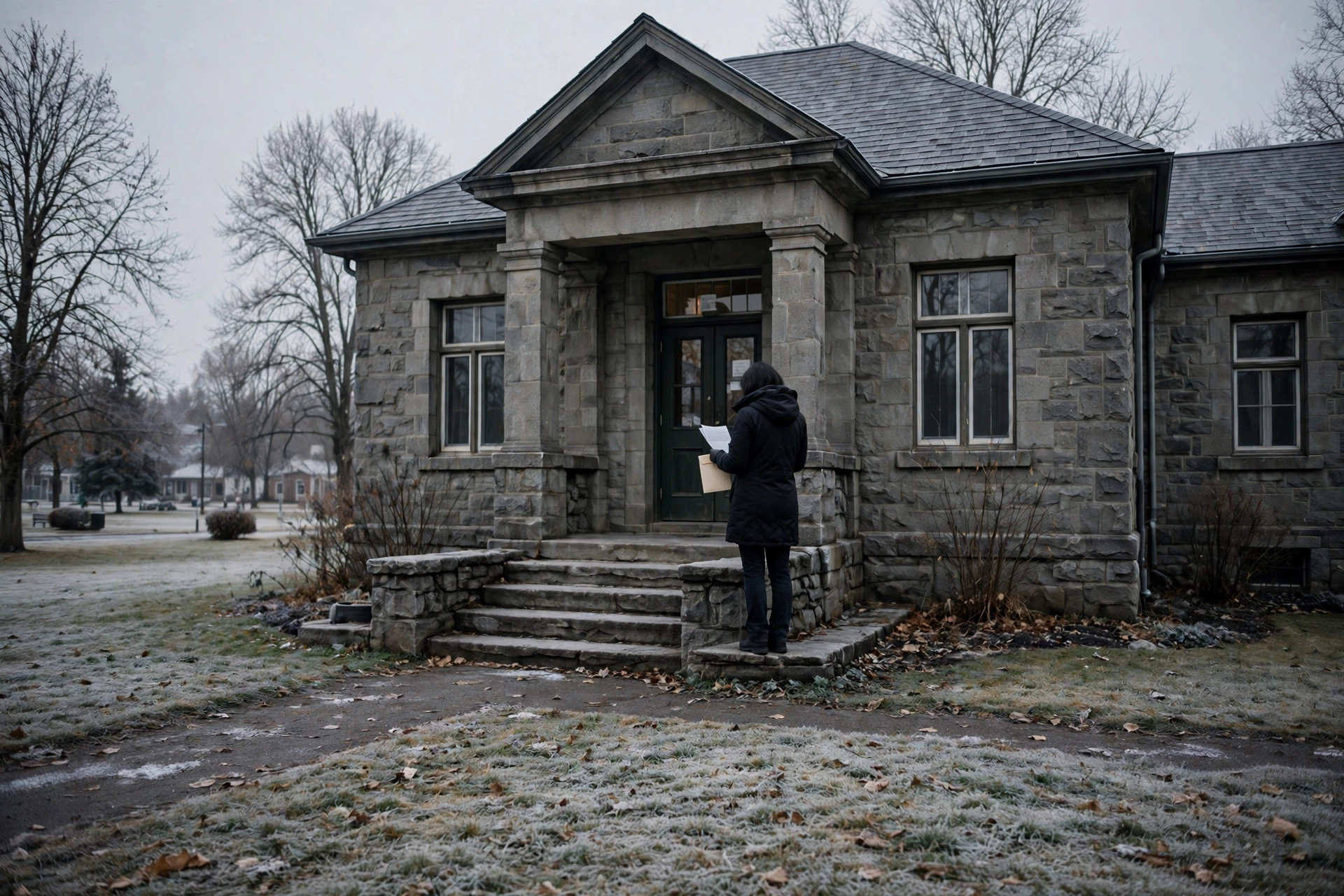
TAMARACK FALLS, Ont. — November 19, 2026 — The town says 612 households paid their property tax on time this fall. Its own ledger says not one of them did.
Ingrid Halvorsen, 57, paid $2,840 through the town’s online portal on October 28, the day before the deadline. She has the confirmation number, the receipt in her email, and the money gone from her bank account. Last week the town sent her a letter saying she owes the full amount, plus a late fee, and that a lien could follow.
“I did what the town told me to do,” Halvorsen said, standing in her kitchen with the letter in one hand and the receipt in the other. “I went to the town’s website, I clicked the link the town sent me, I paid. The money left my account the same day. Now the town is telling me I never paid, and charging me extra for the privilege of being told that.”
Tamarack Falls is a fictional Ontario town of about 19,000 people, and this fall it moved property tax payments online for the first time, through a fictional payment company, PayBridge. Residents logged in, entered their roll number, and paid by bank transfer or card. Between September and the October 29 deadline, 612 households paid through the portal — about $940,000 in total. This week the town discovered that almost none of that money ever reached the town’s account.
The residents paid. The town billed. The money went somewhere else entirely.
Town treasurer Marta Kowalchuk says the payments were redirected before they ever arrived. PayBridge’s portal was reached through the town’s own website, and the page residents saw looked exactly like the town’s — same colours, same logo, same roll-number field. But the bank details behind the payment button had been changed. The money went to accounts the town has never seen, and the accounts were emptied within days.
“We told people to pay online, and we told them it was safe, because it was our website and our portal,” Kowalchuk said. “The page was ours. The payment button was not. Somebody got into the company’s system and swapped the account the money goes to, and nobody on our side or theirs noticed, because the confirmations still went out and the receipts still looked right. The only thing that was wrong was where the money landed.”
For the households caught in it, the damage is double. The money is gone from their accounts, and the town’s system still shows them as unpaid — which means late fees, collection letters, and, for some, the threat of a lien on their home. Kowalchuk says the town will waive every late fee and cancel every collection letter for the 612 households, and that no lien will be filed while the investigation runs. But the town cannot return money it never received, and it does not yet know whether the banks can recover any of it.
“I paid on time, in full, through the link the town sent me,” Halvorsen said. “I have the receipt. I have the confirmation number. And I am being treated like someone who ignored the bill. The receipt says paid. The town says unpaid. Somebody has to decide which one of those is true, because I cannot pay the same tax twice.”
A receipt used to mean the money arrived. Now it only means the money left.
PayBridge says an intruder reached its system through a staff account that had no second login check, and changed the town’s payout details in September, weeks before the deadline. The company says it has restored the correct account, closed the staff account, and is reviewing how its client accounts are protected. It says the problem affected only Tamarack Falls, and that it is working with the banks and the police.
“We trusted the portal because the town told us to, and the town trusted the portal because the company told them to,” said Dr. Fiona Gallagher, a fictional researcher who studies how towns collect money online. “Nobody in that chain ever checked the one thing that mattered — that the money actually arrived where it was supposed to go. A confirmation email tells you that you clicked pay. It does not tell you that the town got paid. Those are two different facts, and in Tamarack Falls, only one of them was true.”
In this fictional case, the town says it will accept the receipts of all 612 households as proof of payment while the investigation runs, and that it will not charge late fees or file liens against any of them. The town says it is reviewing every other payment the same company handles, and that it will not take online tax payments again until the money’s destination is checked against the town’s own account every day. Halvorsen says she has kept her receipt — and she plans to check, herself, that the town’s ledger shows her as paid, before the next bill arrives.
The town told residents to pay online. The residents did. The money never arrived — and the only proof anyone has is a receipt the town’s own system does not believe.
Across Canada, towns are moving tax bills, water bills, and permit fees online, because a portal is cheaper than a counter and faster than the mail. The convenience is real. So is the trade: the moment a resident clicks pay, the money travels through a company’s system the town does not run and cannot see into. If the destination inside that system is changed, the receipt still arrives, the confirmation still looks right — and the town finds out only when the ledger comes up short.
Lessons Learnt
- Check that the money actually arrived, not just that you paid. After paying any bill online, look for the payment on the other side — a statement, a balance, a confirmation from the town or company itself. A receipt proves the money left. It does not prove it landed.
- Save the receipt and the confirmation number together. Keep the email, the confirmation number, and the bank statement showing the money leaving your account in one place. If a payment ever goes missing, those three things together are your proof.
- If a bill says you owe money you already paid, call before you pay again. Do not pay a second time to make the letters stop. Call the office, give them the confirmation number, and ask them to check their own records first.
- Be suspicious of any payment link that arrives by email or text. Go to the town or company’s website yourself and find the payment page there, instead of clicking a link in a message. A link in an email can lead anywhere — the real website can only lead to the real page.
The town says the 612 households will not be charged late fees and no liens will be filed while the investigation runs. Halvorsen says she has kept her receipt — and she plans to check the town’s ledger herself before the next bill arrives.
Watching the perimeter — and what slips past it.
ODTN News note: ODTN.News is a fictional news platform set within the Operation: Defend the North universe. All names, organizations, quotes, and events in this article are entirely fictitious. Any resemblance to real people, companies, or incidents is purely coincidental. The cybersecurity challenges it represents are very real.


Lobster Shipments Spoiled After Monitors Went Dark

Christmas Donations Flowed to a Cloned Charity

Gift Cards Bought at the Till Were Already Empty

Reddit Thread Over ‘Inventory Drift’ Surges as Canadians Vent Over Retail Glitches

Are Canadian Companies Learning from Global Cyber Attacks? Insider Insights into the Secret Downfall of Canadian Businesses

Canadian Airline NorthSky Faces Cyberattack, Disrupting Online Services


-

 Tech3 weeks ago
Smart Doorbells Streamed Porches to Strangers
-

 Tech4 weeks ago
Kingston Drivers Charge Cars, Drain Accounts
-

 Cybersecurity4 weeks ago
Sudbury Boss’s Voice Calls From Another Phone
-

 Cybersecurity4 weeks ago
Regina Pharmacy Shut Out of Its Own Prescriptions
-

 Politics3 weeks ago
Fredericton Council Meeting Streams From a Stranger’s Server
-

 Business4 weeks ago
Canmore Travellers Book a Room That Isn’t There
-

 Tech4 weeks ago
Charlottetown Vaccines Hang on a Glitch
-

 Public3 weeks ago
Guelph Parents Pay for Ice Time Already Sold