

Politics
Council Heard From Residents Who Don’t Exist


HARBOURTON, Ont. — November 20, 2026 — Of the 4,218 comments the town council received on its new arena plan, 3,912 came from people who do not live in Harbourton. More than 1,700 came from people who do not exist at all.
Harbourton is a fictional Ontario town of about 18,000 people, and the arena is the biggest decision its council has faced in a decade: a $46-million rink and community hall, paid for with a tax increase that would last twenty years. Before voting, the council asked residents what they thought. For three weeks, anyone could leave a comment on a website called SpeakHarbourton — no account, no address check, just a name and an email.
For the first two weeks, the comments trickled in. About two hundred, mostly in favour, mostly from people the town clerk recognized. Then, in the final forty-eight hours, the trickle became a flood. Four thousand comments arrived, and nearly all of them opposed the arena, in the same urgent language, again and again.
“I have lived on the same street for forty years and I have never seen four thousand people agree on anything, let alone in two days,” said Gwen Ashworth, 67, a retired teacher who spoke in favour of the arena at the public meeting. “Something was wrong. You could feel it in the room.”
A junior clerk noticed it first. The same three sentences kept appearing, word for word, under different names. The email addresses came from disposable domains — the kind you can create in seconds and throw away. And when staff checked the names against the town’s own records, hundreds of them were not on the voters list, not on the tax roll, not on any list the town keeps. Some of the names belonged to people who had been dead for years.
“One of the comments was signed by my father,” said Dan Mercer, 54, who runs a hardware store on Main Street. “He died in 2019. Somebody typed his name into a form and used it to say he was against the arena. I read it twice before I believed what I was seeing.”
The town says the comments were submitted through a simple form that anyone, anywhere in the world, could fill in as many times as they liked. There was no check that the person was a resident, no limit on how many comments one computer could send, and no record of where the comments were coming from. The town’s own website company, Northgate Digital, says the form was built to be easy to use — and that ease was the whole problem.
The council was one meeting away from voting the arena down, based on a public that did not exist.
Mayor Lorraine Beaulieu told ODTN News the vote is now paused while the town sorts the real comments from the invented ones. She said the council had been ready to follow what looked like overwhelming public opposition.
“We were going to listen to the people,” she said. “That is the job. But these were not the people. Somebody manufactured a public, handed it to us in a spreadsheet, and nearly got us to kill a project our actual residents support. I do not know who did it, or why. I know we were about to govern on the basis of ghosts.”
The town has hired an outside firm to audit the submissions. Early findings suggest the comments came from a small number of computers, each submitting hundreds of forms with names pulled from old phone books, obituaries, and social media. The police have been notified, though no one has been charged. Northgate Digital says it has now added address checks and a limit on submissions, and that the same form, unchanged, is still in use by eleven other small towns in Ontario.
The arena was never the target. The consultation was.
“This is the part of local government nobody thinks about,” said Dr. Priya Sandhu, a fictional researcher who studies how small towns make decisions. “A council does not hire pollsters. It opens a web form, counts the comments, and calls that the public will. If you can fill that form faster than the real residents can, you do not need to win the argument. You just need to be the loudest voice in a room where nobody checks ID.”
Harbourton’s council says it will hold the vote in January, after the audit, and that the real comments — the two hundred from the first two weeks, plus whatever survives verification — will be published in full. The town will also hold two in-person sessions, with paper forms and a sign-in sheet, for residents who want to be counted in a way a computer cannot fake.
For the residents whose names were borrowed, the fix comes too late to undo the shock of reading their own dead father’s opinion on a building he never saw. The arena may still be built. The question is whether the town will ever trust a web form to tell it what its people think.
Across Canada, small councils have replaced town hall meetings with online comment forms, because a form is cheaper than a hall and easier than a hearing. The convenience is real. So is the trade: the voice of the public now arrives through a box on a website that checks nothing, and anyone with a list of names can fill it. When that box is wrong, the council does not hear the town — it hears whoever typed fastest.
Lessons Learnt
- Do not treat a comment count as a vote. Before your council, board, or leadership team acts on public feedback, ask one question: how many of these submissions were verified as real people? A thousand unverified comments are worth less than fifty verified ones.
- Decide in advance what happens when the numbers look wrong. Write the rule before you need it: if submissions spike suddenly, repeat the same wording, or fail basic checks, the decision pauses and the data gets audited. A pause is cheaper than a vote taken on invented voices.
- Verify before you count, not after you vote. Require an address or postal code check, limit how many submissions one device can send, and log where comments come from. These are simple settings, not expensive systems — ask your vendor to turn them on and show you they work.
- Keep a route real people can actually use. In-person sessions, paper forms, and a sign-in sheet cost little next to a website. When the online box goes wrong, residents need a second way to be heard — one that a computer cannot fill in for them.
Watching the perimeter — and what slips past it.
ODTN News note: ODTN.News is a fictional news platform set within the Operation: Defend the North universe. All names, organizations, quotes, and events in this article are entirely fictitious. Any resemblance to real people, companies, or incidents is purely coincidental. The cybersecurity challenges it represents are very real.

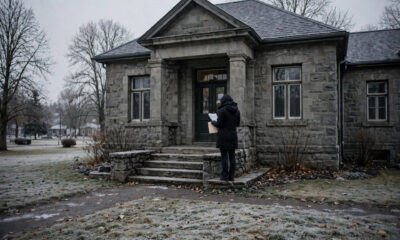




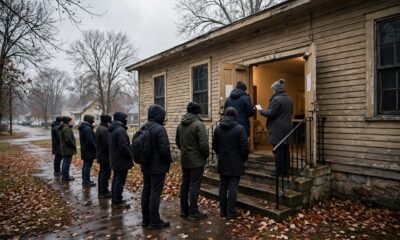

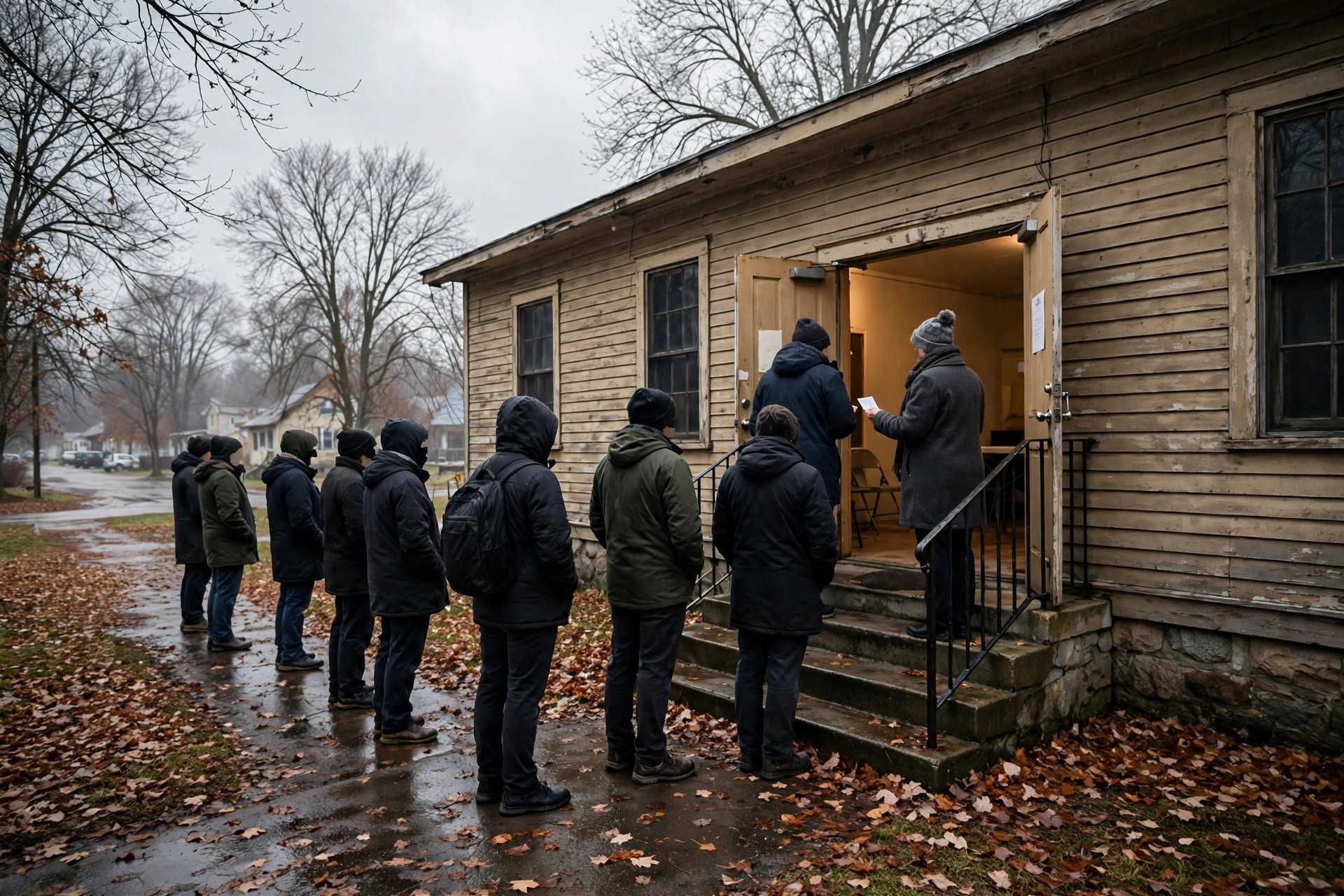
WILLOWMERE, Ont. — November 17, 2026 — “I have voted in every election in this town since 1978,” said Margaret Ellison, 74, standing outside the Willowmere community hall on Monday morning with her voter card in her hand. “They told me I was not on the list. I have lived on the same street for forty-one years.”
Ellison was not the only one. By noon on election day, 912 voters across Willowmere’s 14 polling stations had been told the same thing: their names were not on the voter list, and they could not be given a regular ballot. Some had registered to vote years ago. Some had updated their address online only weeks earlier. All of them were gone from the list all the same.
Willowmere is a fictional Ontario town of about 24,000 people, and Monday was its municipal election — mayor, council, and school board. The voter list is kept in an online system run by a fictional company, CivicRoll, which the town hired three years ago to replace its paper records. Voters register, check their polling station, and update their address through CivicRoll’s portal, and on election day the polling stations pull the list from the same system. On Monday, the list that came back was missing 912 names.
The names did not fall off the list by accident. Someone took them off.
Town clerk Diane Calloway says the town’s own records were untouched. The paper applications, the registration forms, the files the town keeps in its own office — all of them were still there, with all 912 names in them. The deletions happened inside CivicRoll’s system, sometime over the weekend, in the records of voters who had used the online portal in the last three weeks.
“We checked the paper first, because the paper does not lie to you,” Calloway said. “Every one of those 912 people is a real voter, in a real house, on a real street in this town. Their names were in our files on Friday. By Monday morning, they were not in the system. The only place they were missing was the list the polling stations were using.”
CivicRoll says an intruder got into the portal using a town employee’s login, and that the login had no second check — no code sent to a phone, no approval step, nothing beyond a password. The company says the password had been shared among several staff members and had not been changed in more than a year. Once inside, the intruder ran a routine-looking cleanup that marked hundreds of recent registrations as duplicates and deleted them. The company says it has closed the account, restored the list from its own backup, and is reviewing how its staff accounts are protected.
For the voters who were turned away, the fix came too late to be simple. The town allowed them to cast affidavit ballots — signed statements, sealed in envelopes, counted only after their registration is verified against the paper files. Calloway says every affidavit ballot will be counted, but the count will take days, and two council races are close enough that 912 ballots could change the result. The town will not declare a winner in those races until the verification is finished.
“I stood in line for forty minutes, and then they handed me an envelope and told me to sign it and hope,” said Harpreet Gill, 52, who registered online in October after moving to Willowmere from another town. “I did everything right. I registered, I got my card, I showed up. And on the day that matters, my name was just not there. An envelope is not a ballot. It is a promise that someone will sort it out later.”
A voter list that lives on one company’s server is only as safe as that company’s weakest password.
“People think of a voter list as a book in a town hall,” said Dr. Elena Vasquez, a fictional researcher who studies election systems. “But in Willowmere, the list is not a book. It is a database on a vendor’s server, changed through a web portal, by anyone with the right password. If that password is shared, never changed, and protected by nothing else, then the list is not guarded at all — it is just sitting there, waiting for someone to walk in and edit it. And the people who pay for that are not the vendor. They are the voters standing outside the hall with a card that says they belong.”
CivicRoll says no other town’s records were affected, and that the deleted names have been restored from backup. The company says it is adding a second login check to every staff account and will require passwords to be changed every 90 days. The town says it will keep a printed copy of the full voter list at every polling station from now on, and that no future election will depend on a single digital list with no paper behind it.
The affidavit ballots are being verified against the town’s paper files this week. Calloway says the two undecided council races will be called once the count is complete. Ellison says she will be back at the community hall for the next election — and she will bring her paper voter card, her driver’s licence, and a copy of her property tax bill, just in case.
Nine hundred and twelve people did everything they were asked to do, and on election day the system told them they did not exist.
Across Canada, towns and cities are moving voter lists, registration, and election records onto vendor systems, because a portal is easier to run than a filing cabinet. The convenience is real. So is the trade: the list that decides who can vote now lives on a server the town does not control, behind a password the town does not own, and when that password fails, the voters find out at the door of the polling station — on the one day of the year when it matters most.
Lessons Learnt
- Keep a paper copy of the list that decides who votes. Print the full voter list before election day and keep a copy at every polling station. When the digital list goes wrong, paper is what lets a voter cast a ballot instead of going home.
- Never let one shared password guard a public record. Every staff account on an election system should belong to one person, need a second check to log in, and be changed on a schedule. A password shared by a whole office and unchanged for a year is not a lock — it is an open door.
- Test the list before the day it matters. Check a sample of recent registrations against the live system the week before the election, and again the morning of. A problem found on Friday is a fix. A problem found on Monday is 912 voters in an envelope.
- Tell voters plainly and fast when something goes wrong. Say what happened, where to go, what to bring, and what happens to their ballot. People will accept a delay if they understand it — they will not accept being told they do not exist.
The affidavit ballots in Willowmere are being counted this week, and the two undecided council races will be called when the verification is done. Ellison says she has already put her voter card in her coat pocket for next time — along with her driver’s licence and her tax bill.
Watching the perimeter — and what slips past it.
ODTN News note: ODTN.News is a fictional news platform set within the Operation: Defend the North universe. All names, organizations, quotes, and events in this article are entirely fictitious. Any resemblance to real people, companies, or incidents is purely coincidental. The cybersecurity challenges it represents are very real.
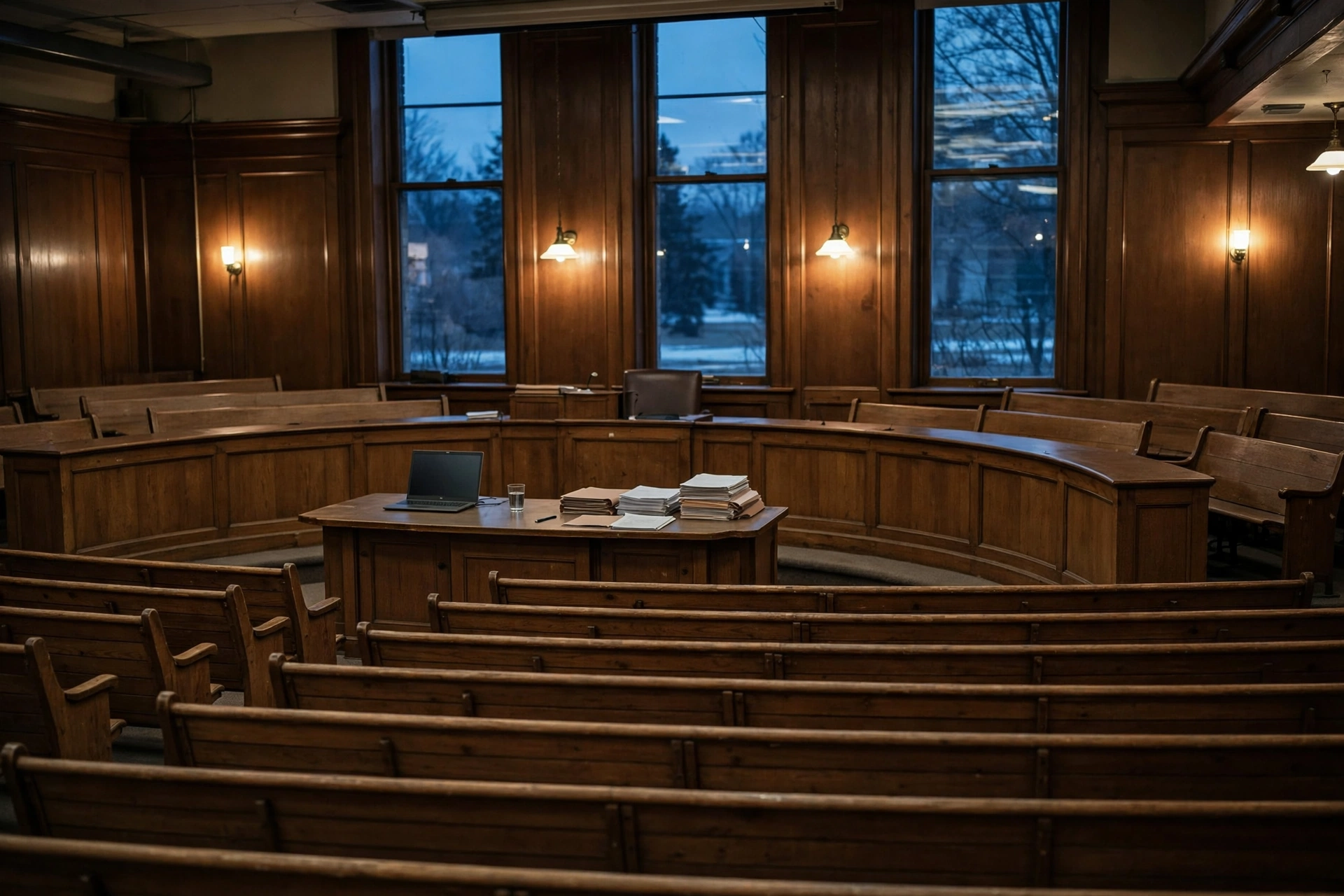
ALDERMERE, Ont. — November 14, 2026 — “We thought the town had finally spoken,” said Councillor Ruth Calloway, standing in the empty council chamber on Friday morning. “It turned out the town had barely said a word.”
Aldermere is a fictional Ontario town of about 18,000 people, and for two months it has been asking its residents a question that will shape the town for a generation: where should the new community hospital go? The choice was between the old fairgrounds near downtown and a field on the north edge of town. The town opened an online consultation, and the responses poured in — 11,400 of them. The council was scheduled to vote on Monday, guided by what the town had said.
Then staff started reading the submissions, and the town’s voice turned out to belong mostly to people who do not live there.
The same sentences kept appearing, word for word, under different names. Hundreds of submissions arrived in bursts in the middle of the night. Many came from internet addresses far outside the region, some from outside the country altogether. When the town checked the submissions against its own records, only about 900 could be confirmed as coming from Aldermere residents. The rest could not be verified at all — and the unverified ones favoured the north-edge site by nine to one. Among the verified residents, the town says, the split was nearly even.
“We were about to make a thirty-year decision for this town based on a pile of comments that were never ours,” Calloway said. “The fairgrounds or the north field — that is a real argument, and real people in this town disagree about it honestly. But we were not hearing them. We were hearing a crowd that had been assembled somewhere else.”
The town says it does not know who was behind the flood of submissions, or why they favoured one site over the other. There is no evidence any money changed hands, and no one has claimed responsibility. The consultation portal asked for a name and a postal code, but it did not check either one against anything. A submission took less than a minute, and there was nothing to stop one person — or one program — from sending hundreds.
The vote is off. The consultation is paused. And the town is now checking every single submission by hand.
Town clerk Elias Thorne says his staff will go through all 11,400 responses one by one, matching names and postal codes against the town’s own records and setting aside anything that cannot be confirmed. The council will not vote until that work is done, and the town says it will publish the numbers — how many submissions were verified, how many were not, and how the verified residents actually split — before any decision is made.
“We built the consultation to be easy to use,” Thorne said. “We did not build it to be hard to abuse. Those are two different things, and we only thought about the first one.”
The hospital question is not going away. Aldermere’s current hospital is more than sixty years old, its emergency room overflows every winter, and the council has been arguing about the new site for three years. The consultation was supposed to settle the argument with the voice of the town. Instead, it showed the town something else: that an open form on the internet is not the same thing as the public speaking.
A public consultation that anyone in the world can fill in is not a consultation. It is a mailbox with no lock on it.
“People picture election interference as something that happens to a country,” said Dr. Lena Okafor, a fictional researcher who studies how towns make decisions online. “But the same trick works at the smallest scale, and it may work better there. A town council is deciding where a hospital goes. Nobody is watching the consultation form. Nobody is checking the names. And a few thousand submissions, sent at the right moment, can move a decision that will stand for thirty years. The town did not lose control of its hospital. It lost control of its own mailbox — and nearly mistook the mail for the town.”
In this fictional case, the town says the consultation portal has been taken offline. Residents who want to weigh in can now do so in person at town hall, by phone, or by mail — and every submission will be checked against the town’s records before it is counted. The council says it will set a new vote date once the review is complete, and that the hospital decision will be made on the verified views of Aldermere residents, not on the loudest pile of comments.
Lessons Learnt
- Verify before you count. Before treating public feedback as the voice of the town, check that it actually came from the town. A name and a postal code nobody verifies are not verification.
- Do not let one channel decide a big question. Pair an online form with in-person sessions, phone calls, and mail. If one channel looks wildly different from the rest, that is a warning, not a mandate.
- Slow down when the numbers look too good. A nine-to-one split on a question real residents are divided over should make leaders pause, not rush to vote. A lopsided result is a reason to check the input, not to trust it.
- Publish the method, not just the result. Say how many submissions were verified, how they were checked, and what the verified voices actually said. If the public can see how the count was made, they can trust the decision it supports.
The fictional town says its hospital decision is on hold, and the council chamber that was supposed to vote on Monday will sit empty instead. The hospital will still be built. The question is whether the town that gets it will be the one that chose it.
Watching the perimeter — and what slips past it.
ODTN News note: ODTN.News is a fictional news platform set within the Operation: Defend the North universe. All names, organizations, quotes, and events in this article are entirely fictitious. Any resemblance to real people, companies, or incidents is purely coincidental. The cybersecurity challenges it represents are very real.
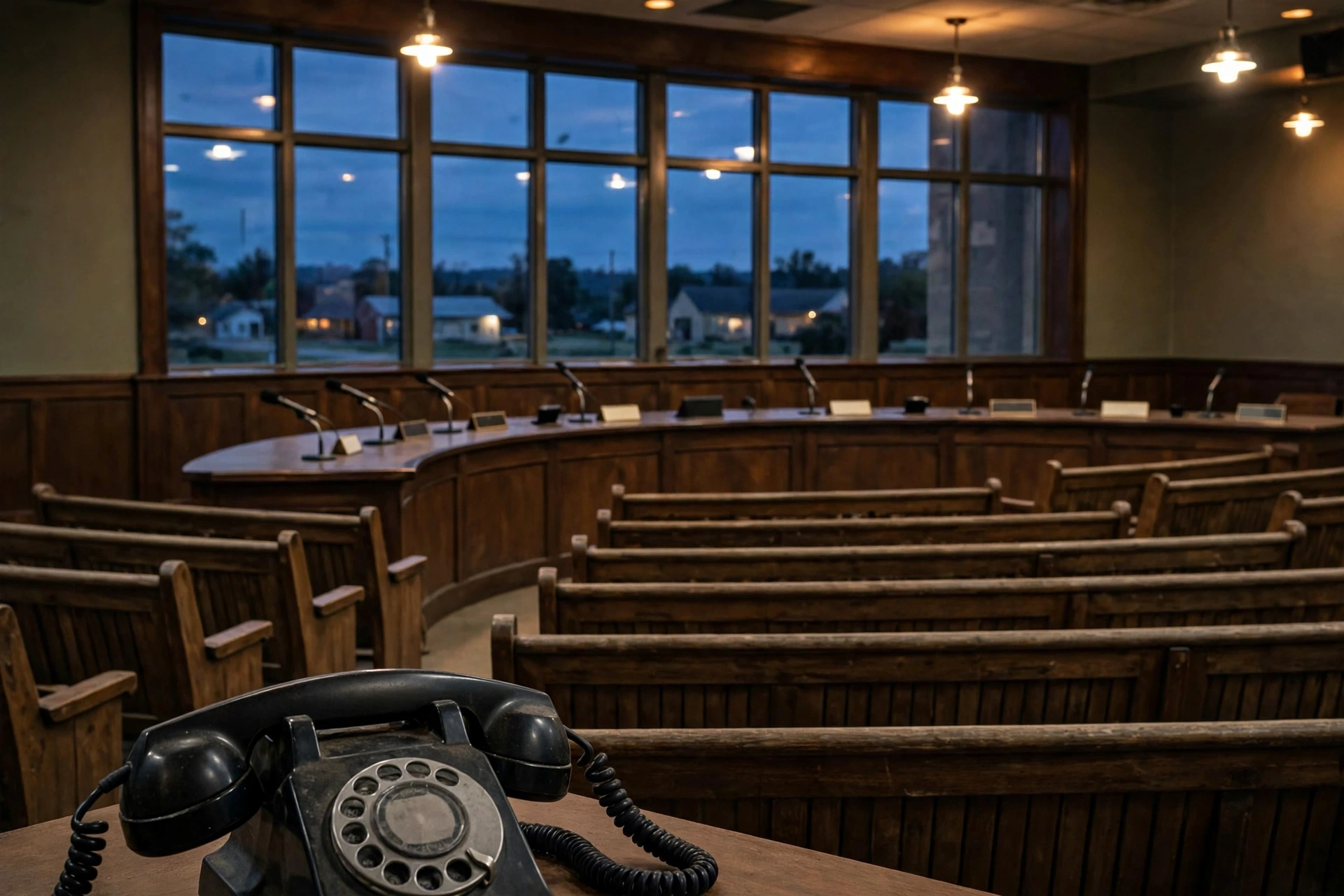
JUNIPER FALLS, Ont. — November 11, 2026 — The call came at 7:04 p.m., four minutes after the vote was supposed to begin. Town Clerk Maren Ellison picked up the phone in the council chamber and heard the voice of Councillor Tom Beckett, apologizing — he was stuck on the highway, the budget vote could not wait, and he wanted his yes recorded by phone. Eleven minutes later, a second call arrived, this time in the voice of Councillor Sara Delgado, saying her car had broken down and her no should be recorded the same way. Neither councillor was on the phone. Both were on their way to the building.
Beckett and Delgado are two of the seven councillors in Juniper Falls, a fictional Ontario town of about 19,000 people, and Tuesday night was the vote on its $48-million budget — the one that funds the new fire hall, the winter road clearing, and the water-main repairs residents have waited two years to see. By 9:30 p.m., the vote had collapsed, the chamber was empty, and more than two hundred residents who had waited through the evening went home with no decision at all.
A town’s $48-million budget vote collapsed in a single evening — because two phone calls sounded exactly like the councillors they pretended to be.
The voices were not impersonations. They were clones, built from the town’s own public record. Juniper Falls livestreams every council meeting and archives the recordings online, which means hours of clean audio of every councillor speaking — their cadence, their pauses, the way Beckett says “look, folks” before every answer and Delgado always opens with “thank you, Madam Clerk.” The attackers needed only a few minutes of that audio to build a voice that could hold a phone conversation.
“It was him. It was his voice, his phrasing, his laugh at the end of the sentence,” Ellison said. “The only thing wrong was the story. Tom Beckett does not drive the highway at that hour, and he would never ask me to record a vote by phone — everyone in that building knows a vote by phone does not exist. But for about ninety seconds, I believed him, because the voice in my ear was his.”
The second call is what gave the scheme away. Delgado’s cloned voice asked for the opposite vote, and when Ellison asked for a callback number, the line went quiet — then dead. Twenty minutes later, the real Beckett walked into the chamber, followed by the real Delgado, and the room understood what had almost happened: two invented votes, cast in two real voices, on the biggest decision of the town’s year.
The attackers did not need to break into the council chamber. They only needed the recordings the town had already published.
Voice cloning works on local government precisely because local government is public by design. Council meetings are streamed, archived, and searchable, so anyone can collect clean samples of every elected voice in town. And a clerk’s office is built to be helpful — it answers the phone, it takes messages, and on a vote night it is under pressure to keep the meeting moving. A familiar voice asking for a small favour, at the busiest hour of the evening, is the hardest call in the building to question.
“People think of deepfakes as videos on the internet. The real risk to a town is a phone call,” said Dr. Ingrid Halvorsen, a fictional audio-forensics researcher who studies synthetic voices. “A council clerk does not get a warning label on a phone call. She gets a voice she has heard a hundred times, asking for something that sounds reasonable, at the exact moment she is trying to start a meeting. The recording did the attacker’s work for them — the town published the training data itself.”
In this fictional case, the calls stopped after the two attempts, and no vote was recorded from either of them. The fictional town says its phone provider traced both calls to numbers that were disconnected within the hour, and the recordings of the meetings remain online — the town will not take down its public record, because residents rely on it. The budget vote has been rescheduled, which pushes the fire-hall funding and the road contracts into December, at the earliest.
The fictional town says it has since changed how vote nights work. No vote is ever taken by phone, and no instruction from a councillor is accepted on a call alone — the clerk now calls the councillor back on a number the town already has on file before acting on anything. Council staff have a code word, changed every meeting, that a councillor must give before any urgent request is honoured. And every call to the clerk’s office on a vote night is now logged, with the number and the time, before anyone picks up the discussion.
The defence is not a sharper ear for cloned voices. It is never accepting a vote, an instruction, or an urgent request from a phone call alone.
That advice applies well beyond one small-town budget. Across Canada, councils, school boards, and community organizations all publish recordings of their meetings, and all of them take phone calls from people whose voices their staff know. A cloned voice needs only a public archive and a busy evening to stand beside the real thing. The defence is not a cleverer audio detector. It is a habit of calling back on a number you already trust, and of treating any urgent instruction on the phone as unconfirmed until the person proves it another way.
For towns and councils, the checklist is short: never take a vote or an instruction by phone — confirm it by calling back on a number already on file; use a code word for urgent requests, and change it every meeting; and log every call to the clerk’s office on a vote night before the meeting starts. For residents, it is equally simple: if a decision is delayed, ask why, and treat any message claiming a councillor voted by phone as a warning sign, not a fact.
The fictional town says the budget will be voted on again, in person, with every councillor in the room.
The voices were never theirs. The votes were never cast. And the difference — one callback, made to a number the town already had instead of trusting the voice on the line — was all it took.
Watching the perimeter — and what slips past it.
ODTN News note: ODTN.News is a fictional news platform set within the Operation: Defend the North universe. All names, organizations, quotes, and events in this article are entirely fictitious. Any resemblance to real people, companies, or incidents is purely coincidental. The cybersecurity challenges it represents are very real.


Council Heard From Residents Who Don’t Exist

Riders Waited for Buses That Never Came

Customers Called the Shop. Strangers Answered.

Reddit Thread Over ‘Inventory Drift’ Surges as Canadians Vent Over Retail Glitches

Are Canadian Companies Learning from Global Cyber Attacks? Insider Insights into the Secret Downfall of Canadian Businesses

Canadian Airline NorthSky Faces Cyberattack, Disrupting Online Services


-
 Cybersecurity3 weeks ago
Tourists Scanned. Strangers Collected.
-

 Tech2 weeks ago
Smart Doorbells Streamed Porches to Strangers
-
 Cybersecurity3 weeks ago
Sudbury Boss’s Voice Calls From Another Phone
-

 Cybersecurity3 weeks ago
Winnipeg Distributor Loses Payment to Impostor Email
-

 Tech2 weeks ago
Kingston Drivers Charge Cars, Drain Accounts
-

 Cybersecurity3 weeks ago
Regina Pharmacy Shut Out of Its Own Prescriptions
-
 Tech3 weeks ago
Charlottetown Vaccines Hang on a Glitch
-

 Business3 weeks ago
Winter Cargo Vanishes on Paper Trail